
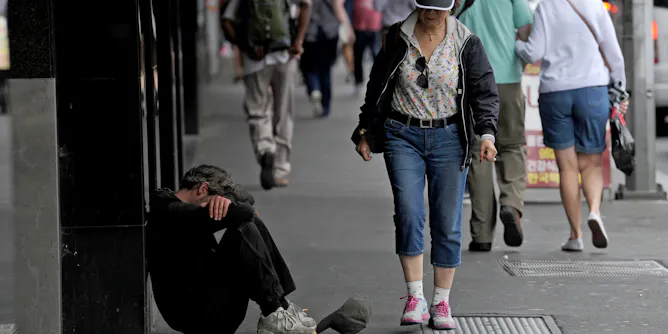
Analysis shows that rising inequality over the past 20 years makes it harder to increase taxes and makes citizens less willing to pay them.
Articles on Organisation for Economic Co-operation and Development (OECD)
Displaying 101 - 120 of 190 articles
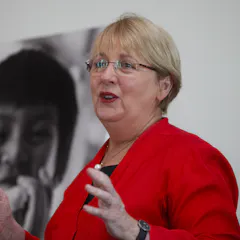
Labor’s Jenny Macklin said that under a Coalition proposal, Australia would have the highest pension age in the developed world. Is that right?

Tanya Plibersek, shadow minister for education, told reporters recently that Australia is slightly below average when it comes to international funding for our schools. Is that right?
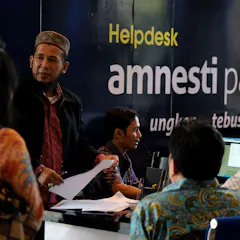
The success of the first phase prompted financial observers to hail Indonesia’s tax amnesty program as one of the most successful in the world.
Oxfam is right to highlight disparities in wealth.
New measure of 32 countries’ economic balance places UK and US near bottom of the pile.
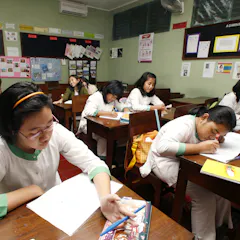
The latest PISA report shows Indonesian girls outperforming boys in all subjects. But, overall, Indonesian students are low performers among students of PISA-participating countries.

Liberal MP Craig Kelly said businesses and households in Australia are paying twice as much as Americans for their electricity. Is that true?

The direct line between world education policy and Donald Trump looks like this.

There are still a few real-world tests the Diverted Profits Tax or “Google Tax” will have to face before the government can claim it’s among the toughest in the world.

Negotiations regarding a legal framework for the oceans – an area covering roughly half the Earth’s surface – are being dominated by OECD members.
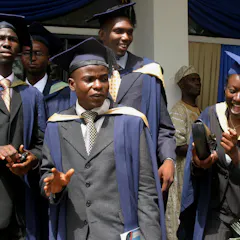
Global economic realities shouldn’t deter African universities from continuing to push for massification. But they must do so armed with knowledge, lessons from elsewhere and strong funding models.
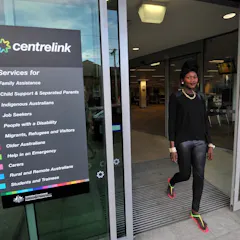
Working life is becoming more fluid, if not precarious. We need to look at how our education systems are preparing young people for a changing workplace.
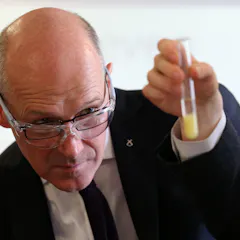
The Scots thought their education system was world-beating, until the OECD started publishing rankings.
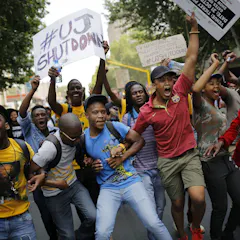
Academia is being asked to do less for more, and universities are at financial breaking point. This has implications for all South Africans.
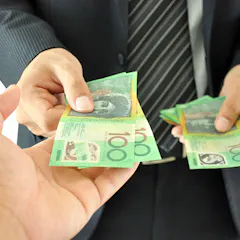
Australia has become collectively richer but much more unequal in recent decades.
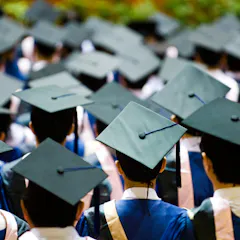
The way the higher education sector uses data from the OECD is often technically correct, but substantively misleading.

Migrants have been accused of ‘clogging up the NHS’. But where would the NHS be without them?
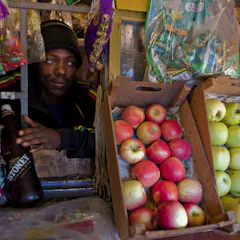
Some economists have touted the rising middle class as a panacea for Africa’s challenges. But a more realistic diagnosis of what makes up a middle class is needed.
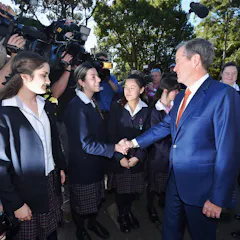
Both parties are proposing to spend more on education, yet there is no guarantee that either will lift outcomes substantially.
Top contributors
-

Distinguished Professor, Faculty of Education, Brock University
-
Professorial Fellow, University of Canberra
-
Lecturer in Economics and Social Statistics, UCL
-
Deputy CEO (Research), Australian Council for Educational Research
-
Adjunct Professor, Curtin Law School and Curtin Business School, Curtin University
-
Associate Professor, University of Sydney
-
Honorary Senior Fellow, Melbourne School of Psychological Sciences, The University of Melbourne
-
Professor, Crawford School of Public Policy, Australian National University
-
Professor of International Economics of Education, Science and Technology, Maastricht University
-
Deputy Vice-Chancellor, Education, Murdoch University; Professor of Measurement, Assessment and Evaluation, Murdoch University
-
School Education Program Director, Grattan Institute
-
Director, Peter Noonan Policy Impact Program, Mitchell Institute, Victoria University
-
Research group leader, principal investigator, and ATTRACT-fellow, University of Luxembourg
-
Adjunct associate professor, Southern Cross University
-
Senior Lecturer, Department of Banking and Finance, Monash University