

France agreed to postpone implementing its law to tax US technology giants as negotiators from nearly 140 countries seek agreement on reforms to the international tax system.
Articles on Organisation for Economic Co-operation and Development (OECD)
Displaying 61 - 80 of 190 articles
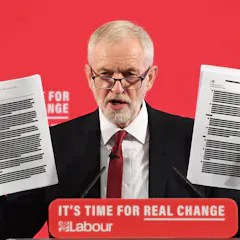
There is probably not much appetite in the private sector for running vast swathes of the NHS.

Digital transactions generate massive amounts of revenue and the Kenyan government wants to ensure that online traders pay their fair share of taxes.

Australian education is still going backwards from where we started in 2000 – new PISA results show.

Implementing educational policies that promote long-term achievement and attainment is possible, but requires going beyond news headlines.

For years, we’ve heard Australia’s spending on tertiary education is some of the lowest in the OECD. This is only true if you ignore GDP growth. Real spending was actually going up, until 2016.
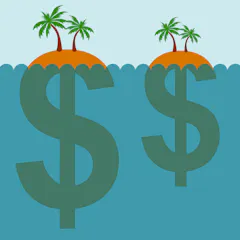
Governments around the world lose about US$125 billion in revenues every year because of profit shifting to tax havens.

Australia’s university sector is one of the most attractive for international students. So why not try to keep them when they graduate rather than lose the talent we’ve helped train and educate?

Populism is on the rise in countries where inequality has been fairly stable over time, as well as countries where inequality has grown.
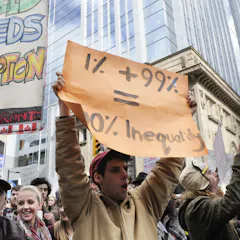
High levels of inequality damage our health, harm social cohesion and act as a brake on economic performance.

There are many reasons to be skeptical about PISA rankings, and their use to compare student achievement or to identify best practices or solutions for educational problems.

Research shows that the provinces vary widely in their ability to produce academic results for money they spend, and PEI shows the most efficient results.

While the purpose of education can’t be reduced to promoting economic growth, every child out of school represents both lost opportunities — and huge economic costs — for countries.

The stakes could be highest for students around the world as education systems decide how to respond to the changing shape of global standardized testing.

Until recently, paying a bribe or kickback to secure a contract abroad was seen as the cost of doing business in a foreign land. The SNC-Lavalin case has underscored the need to rethink the approach.

Brexit has stimulated the debate about the net economic benefits of EU membership. New findings show these are not clearly positive.

Australia’s government insists it is on track to surpass its emissions reduction commitments under the Paris Agreement. But while that may be true, it will only happen with some clever accounting.

Culturally-responsive student assessment and evaluation is key to student success in diverse, globalized societies.

Reports that Australian classrooms are some of the most disruptive in the world are based on the experiences of 15-year-old students alone, and focus on science classes.

On one measure our company tax rate is the third-highest, but we like it that way because it allows us to give big tax refunds to local shareholders, many of them retirees.
Top contributors
-

Distinguished Professor, Faculty of Education, Brock University
-
Professorial Fellow, University of Canberra
-
Lecturer in Economics and Social Statistics, UCL
-
Deputy CEO (Research), Australian Council for Educational Research
-
Adjunct Professor, Curtin Law School and Curtin Business School, Curtin University
-
Associate Professor, University of Sydney
-
Honorary Senior Fellow, Melbourne School of Psychological Sciences, The University of Melbourne
-
Professor, Crawford School of Public Policy, Australian National University
-
Professor of International Economics of Education, Science and Technology, Maastricht University
-
Deputy Vice-Chancellor, Education, Murdoch University; Professor of Measurement, Assessment and Evaluation, Murdoch University
-
School Education Program Director, Grattan Institute
-
Director, Peter Noonan Policy Impact Program, Mitchell Institute, Victoria University
-
Research group leader, principal investigator, and ATTRACT-fellow, University of Luxembourg
-
Adjunct associate professor, Southern Cross University
-
Senior Lecturer, Department of Banking and Finance, Monash University