

Whether capturing them on film, containing them in amusement parks, or subjecting them to scientific experiments, our curiosity about whales and dolphins has compelled us to capture them out of the ocean.
Articles on Orcas
Displaying all articles
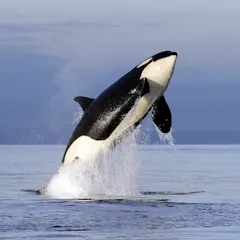
Public and political conversations about environmental management often reduce complex issues to binary opposing opinions.
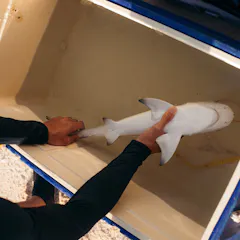
Rather than a clever survival tactic, tonic immobility might just be ‘evolutionary baggage’.
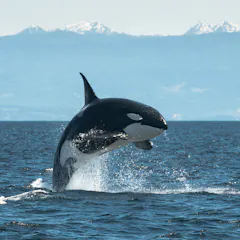
For the first time, orcas have been seen making and using tools out of seaweed. The reason? Most likely as a form of social grooming.

The key to understanding shifts in climate and life on Earth is sustained long-term research. Enabling this research to take place should be a priority for universities and governments.
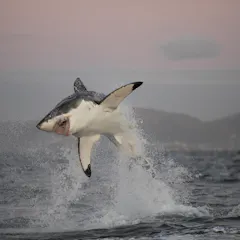
The majestic white shark that once drew many tourists to South Africa’s western and southern Cape regions has all but disappeared. The only explanation can be a sharp decline in the population.
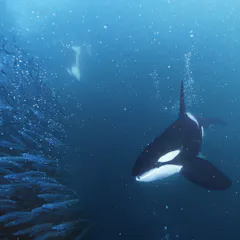
The accumulation of synthetic pollutants found in the blubber of killer whales is impacting the marine mammals’ health. Urgent action is needed to tackle the issue.
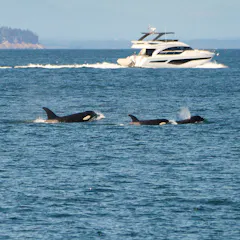
A few marine mammals in apparent revolt pushed meme-makers into overdrive. But a scholar who thinks about justice and human-animal relations suggests something deeper is behind the schadenfreude.
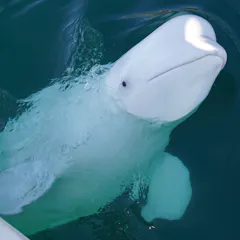
Unusual human-wildlife interactions raise questions about managing the risks. What’s driving these wacky whale antics? How and when should we intervene?
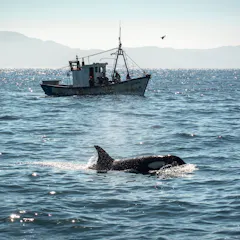
Orcas appear to be imitating the behaviour of one in particular by damaging sailboat rudders.

By analyzing small samples of killer whale fat, scientists can learn about the diets of different killer whale populations. This has implications for our understanding of changing ecosystems.
CC BY-NC-ND13.6 MB (download)
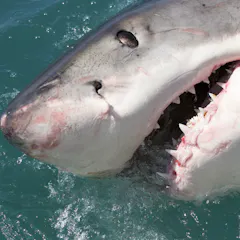
A pair of killer whales are hunting and preying on South Africa's great white sharks, forcing the sharks to flee.

Whale species at higher risk of predation from killer whales are more adversely affected by the sound of sonar.
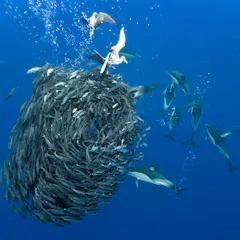
There are some important issues to consider to best help marine species such as Atlantic puffins, bottlenose dolphins and orcas.
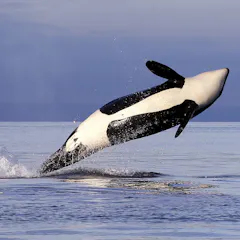
Scientists had been uncertain about why killer whales are dying in the northeastern Pacific Ocean. A new study takes an in-depth look and provides the tools to help prevent additional deaths in the future.

Life in captivity causes observable harm to the structure and function of large mammals’ brains.
Top contributors
-

Whale Scientist and Lecturer, Faculty of Science and Engineering, Macquarie University
-
Postdoctoral Fellow, Department of Biological Sciences, Simon Fraser University
-
Honorary Professor at Bangor University; Director of Sea Watch Foundation, Bangor University
-
Professor of Neuroscience, Colorado College
-
Directrice de recherche en Bioacoustique à l'UMRAE, Cerema
-
Adjunct professor, Veterinary Pathology, University of British Columbia
-
Professor of Biology, University of St Andrews
-
Research Associate at the Department of Ichthyology and Fisheries Science and Shark Scientist and Founder Oceans Research Institute, Rhodes University
-
Postdoctoral Researcher in management and conservation of white sharks, Stellenbosch University
-
Reader in Biology, University of St Andrews
-
Associate Professor Emerita of Comparative Literature, University of California, San Diego
-
Marine biologist, Rhodes University
-
Research fellow, University of St Andrews
-
Professor of Biology, Trent University
-
Assistant Professor, Faculty of Media, Art, and Performance, University of Regina