

Many users of digital platforms resign themselves to being monitored. That’s surveillance apathy - and it’s worse in society’s most marginalised groups.
Articles on Online privacy
Displaying 101 - 120 of 282 articles

Consumers can’t read, understand or use information in companies’ privacy policies. So they end up less informed and less protected than they’d like to be. New research shows a better way.

Virtual private networks help citizens around the world evade state surveillance – how long until more governments take action?
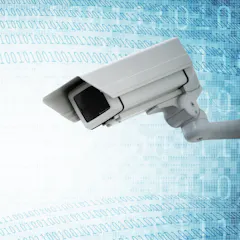
What governments and companies think they know about us – whether or not it’s accurate – has real power over our actual lives.
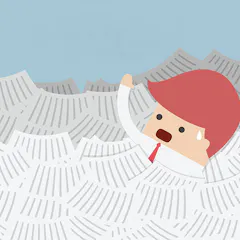
Nobody can understand the legal language in privacy policies. Can artificial intelligence digest the text and produce a human-readable explanation?
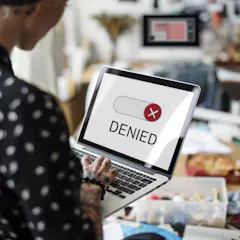
You need to start thinking about what will happen to your online data when you die.

When smartphone apps get permission to access your location or other activity, they often share that data with other companies that can compile digital profiles on users.

Where people get advice about online safety may affect how safe they are.

When we think about Google and health, we usually think about patients searching online for health information. But you may be surprised to hear that doctors Google you.

The Tor Project is upgrading its protections for internet users’ privacy and anonymity. A scholar and volunteer member of the nonprofit effort explains what’s changing and why.

Governments and campaigners are keeping schtum when it comes to webcamming. It’s time to break the silence.

Having a nationwide firewall means trusting the same people who spy on communications.

If there are forward-thinking minds within Labour that could bring fresh thinking to internet issues, they didn’t get the call.

The backlash against the Census suggests the Australian Bureau of Statistics didn’t do enough to convince Australians it needed to collect their private information or that it’d be kept safe.

What if someone made your house a site for Pokémon battles?
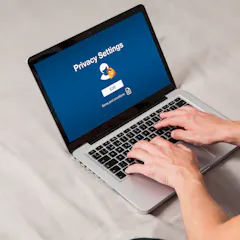
A simple kite mark could let you know that you aren’t signing away your rights when you download a new app.
How hard is it to find out what information has been removed from search engine results? What about identifying who asked for it to be removed?
Will the Lords give the Investigatory Powers Bill the scrutiny it deserves?

Twitter users caught up in any emergency situation are usually quick to share their experience with followers. That information can be useful to authorities.

There are advantages, too.
Top contributors
-

Associate Professor, Faculty of Law & Justice; Lead, UNSW Public Interest Law & Tech Initiative, UNSW
-
Professor of Cybersecurity, Head of School of Computer Science and Informatics, De Montfort University
-
Head, The Cyber Academy, Edinburgh Napier University
-
Director of UWA Centre for Software Practice, The University of Western Australia
-
Associate Professor, School of Law, University of Canberra
-
Associate Professor in Telecommunications Engineering, Swinburne University of Technology
-
Professor of Internet Studies, Curtin University
-
Dean of Global Business, The Fletcher School, Tufts University
-
Survey Research Fellow, Oxford Internet Institute, University of Oxford
-
Senior Lecturer in Technology, The Open University
-
Senior Lecturer, Communications and Media Studies, Monash University
-
Senior Lecturer in Networking, The Open University
-
Professor specialising in Internet law, Bond University
-
Professor of Global Politics and Cybersecurity, UCL
-
Distinguished Professor and C. Ben Dutton Professor of Law, Indiana University