

To deter Google and other big tech companies from misleading users about data collection, the Federal Court should impose heavy fines.
Articles on Online privacy
Displaying 41 - 60 of 282 articles

Australia has hesitated in the past to adopt a strong privacy framework. A new government review provides an opportunity to improve data protection rules to an internationally competitive standard.

Manufacturers will increasingly track the products they sell to make recycling them more profitable.

Differential privacy lets people to share data anonymously, but people need to know more about it to make informed decisions.

The documentary educates viewers about the problems social networks present to both our privacy and agency online. But it doesn’t really tell us how to fight the tide.

There are calls for better web design standards to ensure greater personal data and privacy protection.

A digital ID will only work if people are allowed to keep control of their data.

Two-factor authentication is certainly an added layer of security as we traverse the online world. But it comes in various forms, and they’re not all equally protective.

Children need to learn how to manage their own accounts and passwords as an extension of their identity.

Self-regulation by the technology industry has failed to keep people safe online. That’s a job for government.

Private mode browsing is a useful way to cover your online tracks. Just don’t read too much into the word ‘private.’

The US is also ‘looking at’ banning the Chinese social media app.

Zoom’s privacy and security shortcomings are just the latest videoconferencing vulnerabilities. Knowing each platform’s risks can help people avoid many of the downsides of virtual gatherings.

Data privacy regulations are being adopted to protect internet users. Today, humans need to read those rules to ensure compliance. New research suggests machines could interpret them in real time.

Hey Alexa, who are you sharing my data with?
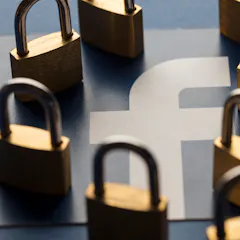
Facebook is planning to put end-to-end encryption on all its messaging services soon. But governments aren’t happy about it, as it could make it harder to catch criminals.

Many sites offer the ability to ‘opt out’ of targeted advertisements, but doing so isn’t easy. Simplifying and standardizing opt-outs would help improve privacy on the web.

Web browsers are introducing encryption technology that could stop governments spying on you – and catching criminals.

The law is out of step with technology that means anyone can manipulate your images in hyper-realistic ways.

Privacy starts with the body and extends to digital data. There are few rules governing what companies can do – yet people can’t effectively protect their own privacy.
Top contributors
-

Associate Professor, Faculty of Law & Justice; Lead, UNSW Public Interest Law & Tech Initiative, UNSW
-
Professor of Cybersecurity, Head of School of Computer Science and Informatics, De Montfort University
-
Head, The Cyber Academy, Edinburgh Napier University
-
Director of UWA Centre for Software Practice, The University of Western Australia
-
Associate Professor, School of Law, University of Canberra
-
Associate Professor in Telecommunications Engineering, Swinburne University of Technology
-
Professor of Internet Studies, Curtin University
-
Dean of Global Business, The Fletcher School, Tufts University
-
Survey Research Fellow, Oxford Internet Institute, University of Oxford
-
Senior Lecturer in Technology, The Open University
-
Senior Lecturer, Communications and Media Studies, Monash University
-
Senior Lecturer in Networking, The Open University
-
Professor specialising in Internet law, Bond University
-
Professor of Global Politics and Cybersecurity, UCL
-
Distinguished Professor and C. Ben Dutton Professor of Law, Indiana University