
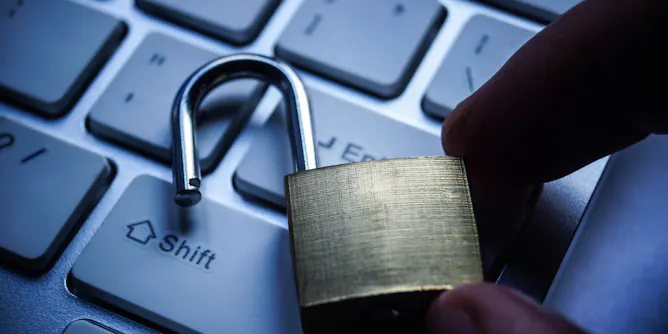
An entire industry exists to trade on your personal data - everything from your shopping habits to your political views and medical conditions. The results can genuinely harm consumers.
Articles on Online privacy
Displaying 61 - 80 of 282 articles
There’s no way an independent assessor will be able to actually monitor how Facebook might violate or abuse users’ privacy in key ways.
The Australian Competition and Consumer Commission says the sheer dominance of Google and Facebook has distorted other businesses’ ability to compete on their own merits.
People could be asked to prove their identity to continuing posting political content or adverts on Facebook.

Even governments in democracies with strong traditions of rule of law find themselves tempted to abuse these new abilities.
Consumers want better protection for their data, and businesses want clear national laws. Yet there is virtually no consensus about what a broad privacy law should entail.

CEO Mark Zuckerberg’s claimed intent to focus on privacy will be hard to execute, will not happen soon and does not address major concerns about the company’s role in society.

While shifting cyber safety education beyond privacy is a step in the right direction, teachers already have to contend with an overcrowded curriculum.
If you’re worried your phone is recording your private conversations, look closer at the data you’ve already agreed to give away.

Blockchain technologies can support users in controlling access to their data through smart contracts that both empower and protect users.
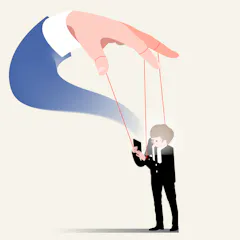
Academic research highlights the dangers – personal and societal – of giving too much time and attention to social media.

Experts describe their research into how smartphones collect and share private personal information with tracking companies and advertisers.

Websites are trying to get around GDPR rules on giving you control over your data.

How do women decide whether – and what – to say about their pregnancy loss experiences on social media?

Begun as part of efforts to preserve online anonymity and privacy, Freenet, Tor and the Invisible Internet Project are, like the rest of the web, home to both crime and free expression.
Allowing the police unfettered use of vast databases of information will begin to tilt the balance of power towards totalitarianism.

What to make of Grindr’s acquisition by a Chinese corporate group.
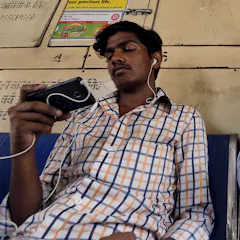
Three trends suggest people in less developed nations – who are coming online in greater numbers – use and trust the internet very differently those in more developed economies.

Something good could come from the Cambridge Analytica scandal if we used the same data to fix society, rather than profit from it.

Data breaches are fact of modern life. It’s likely each of us will have our personal information compromised at some point. Here’s how to reduce the risk and limit the damage if and when it occurs.
Top contributors
-

Associate Professor, Faculty of Law & Justice; Lead, UNSW Public Interest Law & Tech Initiative, UNSW
-
Professor of Cybersecurity, Head of School of Computer Science and Informatics, De Montfort University
-
Head, The Cyber Academy, Edinburgh Napier University
-
Director of UWA Centre for Software Practice, The University of Western Australia
-
Associate Professor, School of Law, University of Canberra
-
Associate Professor in Telecommunications Engineering, Swinburne University of Technology
-
Professor of Internet Studies, Curtin University
-
Dean of Global Business, The Fletcher School, Tufts University
-
Survey Research Fellow, Oxford Internet Institute, University of Oxford
-
Senior Lecturer in Technology, The Open University
-
Senior Lecturer, Communications and Media Studies, Monash University
-
Senior Lecturer in Networking, The Open University
-
Professor specialising in Internet law, Bond University
-
Professor of Global Politics and Cybersecurity, UCL
-
Distinguished Professor and C. Ben Dutton Professor of Law, Indiana University