
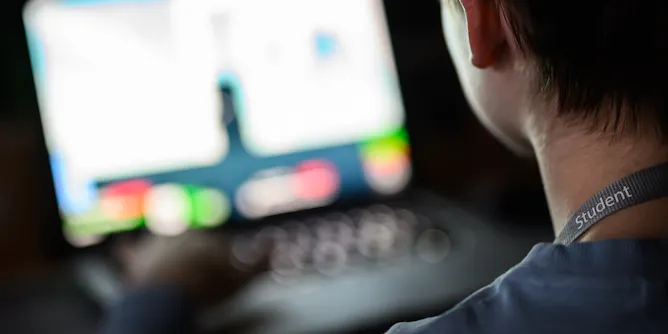
Young people are viewing harmful content unintentionally, according to new research from the Classification Office. But parents need to resist simply taking away devices.
Articles on Online harm
Displaying 21 - 40 of 45 articles

Even if the new safety codes are approved, kids could still access online porn and deepfake apps because of flawed age assurance technology.

The report contains 67 recommendations – none of which address misinformation and disinformation.

New research appears to have uncovered a large concentration of young women engaging in harmful online sexual behaviours.

The trial is testing age verification, age estimation and age inference. All three options come with problems.
Internal data from the ABC show the harmful content moderators are exposed to weekly, sometimes even daily. But the organisation’s response is one many others can learn from.

For years, the YouTuber has posted increasingly unhinged content, building a platform around various controversies and mukbang videos.
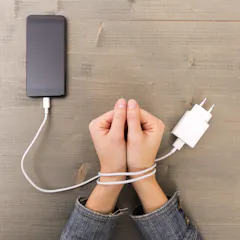
A new study reveals just how digitally dependent most New Zealanders are now. Disconnecting requires conscious effort – and it could even cost you money.
There are various methods for estimating or verifying an online user’s age, none of them foolproof. Importantly, is this the social media future we want?

A new parliamentary committee will look into how social media operates in Australia, including how children access it. Regulating the industry won’t be easy.
Sometimes it’s easy to point to figures like Andrew Tate and assume they are the problem. But they are more likely a symptom of it.

There’s nothing surprising about the fake explicit images going viral. It happens to women celebrities frequently – but anyone can be targeted.

Research explains how to handle the kind of online ‘firestorm’ that X (formerly Twitter) owner Elon Musk is currently experiencing.
The tragic case of a 12-year-old boy who experienced sextortion highlights the importance of practical advice for parents on having conversations about sex, sextortion and healthy device habits.

The platform formerly known as Twitter faces a A$610,500 penalty from the eSafety Commissioner.
There seems to be a vacuum for these influencers to fill.
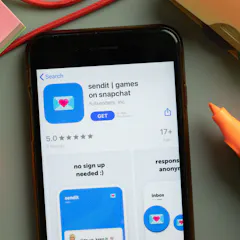
Anyone who has trawled through an internet forum will have seen how anonymity can change people. What happens when young people are thrown into the mix?

How we get the balance right between using social media to hold people to account versus the risk of invading people’s privacy depends on the context, of course, and is ultimately about power.

Younger people aged 18 to 28 were more likely to be negatively impacted by manipulative designs on websites and apps.

The online safety bill will make it mandatory for pornography websites to verify the age of users.
Top contributors
-

Professor of Information Sciences & Director, Social Change Enabling Impact Platform, RMIT University
-
Adjunct Associate Professor, School of Law; Academic Co-Lead, CSAM Deterrence Centre, University of Tasmania
-
Professor of Cybersecurity, School of Computing and Information Systems, The University of Melbourne
-
Research Fellow in Public Health, The University of Queensland
-
Senior Lecturer in Pedagogy and Education Futures, La Trobe University
-
Lecturer, Deakin Law School, Deakin University
-
Professor of Global & Language Studies, RMIT University
-
Professor of Creative Economies, Birmingham City University
-
Associate Professor of Interdisciplinary Studies, Royal Roads University
-
Professor, Queensland University of Technology
-
Professor, Canada Research Chair in Determinants of Child Development, Owerko Centre at the Alberta Children’s Hospital Research Institute, University of Calgary
-
Senior Lecturer (Associate Professor) in Marketing and Strategy, Cardiff University
-
Associate Professor, Faculty of Law & Justice; Lead, UNSW Public Interest Law & Tech Initiative, UNSW
-
Associate Professor in Criminology, University of Surrey
-
Professor of Digital Communications and Culture, The University of Sydney, University of Sydney