

The online Agartha trend blends occult pseudoscience with neo-Nazism and weaponised irony to open a doorway to radicalisation.
Articles on Online extremism
Displaying 1 - 20 of 27 articles

Many young people are radicalised through personal relationships, rather than online. It’s our responsibility as a society to protect them.

If you’re a parent worried about your child’s unfamiliar online world, a fear-based response is unlikely to work. What is needed is open communication.
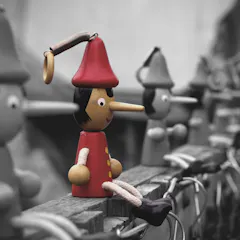
These people share conspiracy theories to promote conflict, cause chaos, recruit and radicalize potential followers, make money, harass, or even just to get attention.
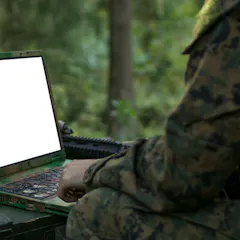
A scholar of militia activity observes extremists stepping back into the public sphere after a few years of being less visible.
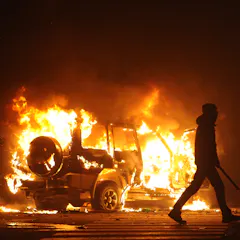
Online extremism is a unique challenge – terrorists use methods that can’t be captured by standard content moderation. So, what can we do about it?

Learning how online misogynists use language can help teachers and parents intervene in radicalisation.

An automatic system to determine political ideology from online posts could be a powerful tool against online radicalisation.
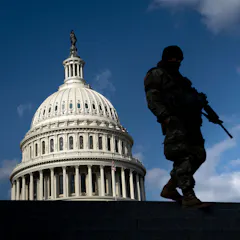
The rise in contemporary right-wing political extremism – and violence – can be traced back to events in the 1990s.

Social media algorithms are akin to a licence to promote junk food or tobacco to children.
Leftwing YouTubers are aiming to get their videos in front of viewers who typically watch far-right content, by mimicking their keywords and hoping the site’s algorithms will do the rest.

A Facebook ban on QAnon may not be the best way to address the fast-growing far-right conspiracy movement.

The increasing visibility of a wide range of militia and vigilante groups has repeatedly caught local communities and national leaders off guard.
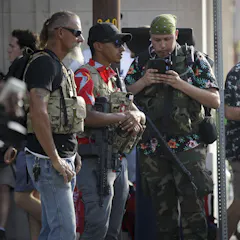
The boogaloos, a far-right community, have taken to wearing Hawaiian shirts. This co-option is far from the spirit of the shirt, which signifies respect for all animated or inanimate beings.

Here’s what you need to know about the largely right-wing social media platform creeping into headlines.

The platform also took down another 2,000 communities, including left-leaning groups. The move comes just months ahead of the 2020 US presidential election.

Researchers look for signals that might distinguish people who are upset and ranting online from those who intend to do real physical harm.
Dozens of countries and hundreds of firms and nonprofits are fed up with digital violence and are working toward greater cybersecurity for all.

We should celebrate the ‘deplatforming’ of the 8chan message board, linked to the El Paso shootings, as a win for the fight against online hate speech. But its removal does not mean the fight is over.

Social media companies struggle to identify and remove hate speech when it’s posted. What can computer science reveal about how hate-filled texts and videos spread online?
Top contributors
-

Adjunct Senior Fellow, School of Psychology, The University of Queensland
-
Project Manager, Concordia University
-
Professor of International Security, Dublin City University
-
Associate Professor of Communication and Media Studies, Pace University
-
University of Hertfordshire
-
Lecturer in Criminology & Sociology, University of Sussex
-
Director of Research, Academic Development and Innovation at the Center on Terrorism, Extremism and Counterterrorism, Middlebury College
-
Executive Director, The Montréal Institute for Genocide and Human Rights Studies, Concordia University
-
Senior Lecturer in the School of Sociology, Australian National University
-
PhD Student, Social Data Science, University of Technology Sydney
-
PhD candidate, School of Humanities, Languages and Social Science, Griffith University
-
Professor specialising in Internet law, Bond University
-
Professor of Computer Science, Elon University
-
Honorary Fellow in Sociology, Australian National University
-
Professor of Journalism, USC Annenberg School for Communication and Journalism