
Beijing’s cyber operations are largely conducted in the shadows. But a recent leak has shed light on how the state is working with private companies to target online activism.
Articles on Online censorship
Displaying all articles
There’s really no such thing as one global internet – it all depends on your perspective. But the internet is poised to fracturing even more.
It’s pretty common to find people who are apathetic about their data being harvested and funnelled into unknown corners. But that’s usually because they don’t know what’s at stake.
For more than a decade, the Russian government has been putting teeth into its doctrine of ‘digital sovereignty’ by steadily increasing censorship of content and control over internet access.
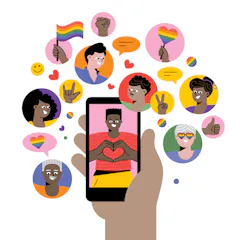
While online communities may not fully address the isolation LGBTQ youth face in-person, they can serve as an important source of social support and a springboard for civic engagement.
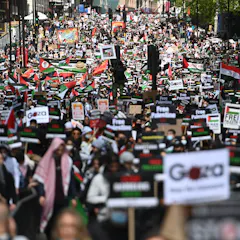
If Palestinians’ freedom of expression is taken away online, this risks further obscuring their ongoing struggle.

Humour is a way for Congolese internet users to prod at cultural traits and political developments – despite censorship being rife.
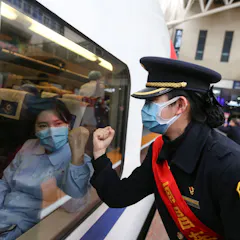
Public criticism of the Chinese government’s handling of coronavirus shows that the Chinese people can overcome both strict censorship and a gaping class divide when they get angry enough.
Private companies – many based in the US – are blocking access to their websites from particular countries around the world. It’s contributing to a splintering of the global internet.
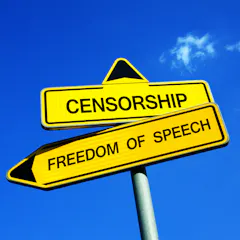
The borderless nature of the internet makes it hard to pull the plug on social media talk that crosses the line.
While they may talk about ‘free speech,’ businesses make decisions about their content based on a very different set of principles.

Google’s secret plan to comply with Chinese censorship laws betrays the values that helped create the tech giant.

A Twitter account used for official purposes is a public forum protected by the First Amendment, a federal appeals court has ruled.
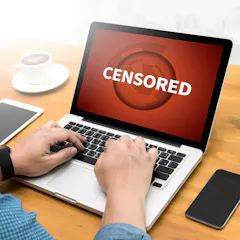
Virtual private networks help citizens around the world evade state surveillance – how long until more governments take action?
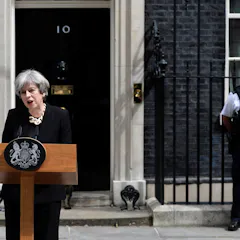
Cracking down on extremism online won’t solve the problem of extremist violence, will inevitably censor speech that’s important to protect and risks harming political dissidents and democracy itself.

It’s a new constitutional question for the internet age: Should the president be allowed to block someone on Twitter?
Comments like ‘little girl needs to keep to herself before daddy breaks her face’ get a free pass in the name of free speech.
Bots have not just been used in the US, but also in Australia, the UK, Germany, Syria and China. To what extent – and how – are they affecting political discourse?
Top contributors
-

Brechner Eminent Scholar in Mass Communication, University of Florida
-
Reader in Computing & Social Responsibility, De Montfort University
-
Postgraduate Teaching Assistant, University of East London
-
Research Fellow in the Australian Research Council Centre of Excellence for Automated Decision-Making and Society (ADM+S), and the Emerging Technologies Lab, Monash University
-
Senior Lecturer, Journalism and Digital Communication, University of Lancashire
-
Professor
-
Lecturer in Networking and Security, Glasgow Caledonian University
-
Professor of Law, University of Connecticut
-
Professor of Media Studies, Queensland University of Technology
-
Senior research scientist, Wellesley Centers for Women, Wellesley College and Director of Youth, Media & Wellbeing Research Lab, Wellesley College
-
Assistant Professor, University of Kinshasa
-
James H. Billington Fellow, Indiana University
-
Senior Lecturer, Communications and Media Studies, Monash University
-
Associate Professor of Modern Languages, Linguistics and Intercultural Communication, University of Maryland, Baltimore County
-
Course Instructor, Fordham University