

Most states require warnings on AI-generated political ads, but studies show these disclosures do little to alter people’s willingness to share the content.
Most states have legislated election deepfakes by requiring a warning
28 states require disclosures on the media
Articles on Free speech
Displaying 1 - 20 of 392 articles

Taylor Mill cut to the heart of issues in political thought such as patriarchy, socio-economic justice and freedom.

The military newspaper earned credibility by informing troops about the good, the bad and everything in between. But the Pentagon’s recent crackdown on the paper is putting that trust to the test.
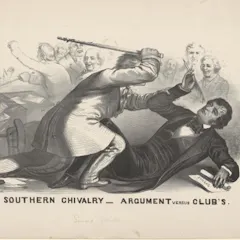
The beating of Sen. Charles Sumner in 1856 by Rep. Preston Brooks over a speech against slavery sparked a nationwide debate over free speech, political violence and the relationship between the two.

It’s no longer uncommon for scheduled university commencement speakers to have their invitations rescinded following backlash over their politics.

The EU’s Media Pluralism Monitor research project assesses the health of national media ecosystems but what about the bigger picture beyond compliance and the risks to Europe’s information space as a whole?
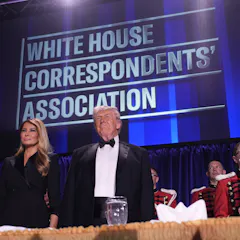
The White House says criticism of the Trump administration encourages political violence. But this presidency has a track record of attacking free speech.

First Choice, the crisis pregnancy center chain that brought the case, argued that merely issuing a subpoena can deter donors from making a gift.

The court decided Colorado’s ban on conversion therapy violated the free speech of a talk therapist.
Nearly 150 universities and colleges have adopted institutional neutrality pledges since 2023.
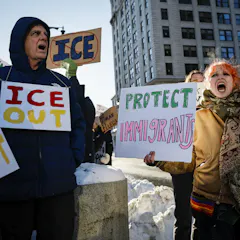
It’s difficult to measure what is lost when an opinion is never voiced and impossible to catalogue the arguments that never form because a speaker calculates the risk and decides silence is safer.
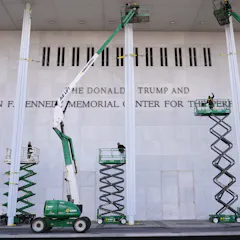
The law is on Trump’s side, in most cases, when his administration names things after him. But citizens still have the right to protest.
Renee Good’s death was the consequence, writes a First Amendment scholar, of a kind of politics in which the state survives by making dissenters illegitimate as citizens.
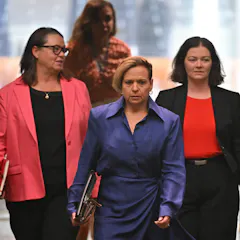
The new laws, which allow ‘hate’ groups to be banned, could also potentially affect people wanting to make legitimate criticisms of a foreign government.

President Donald Trump’s threats against independent media and free speech look a lot like the actions of autocrats elsewhere intent on undermining the institutions meant to keep them in check.

Restricting academic freedom is often thought of in terms of universities telling professors what they can and cannot do or teach. But that isn’t the only scenario.
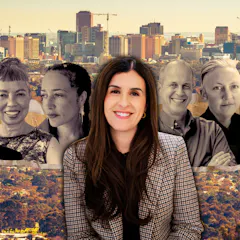
The decision to silence a Palestinian Australian author goes well beyond the standards of the Racial Discrimination Act and ordinary standards of free speech.
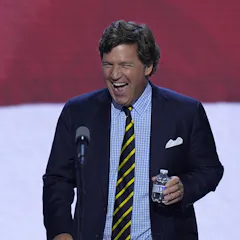
Should all points of view be heard from? Defending certain values and ideas makes it a bit more complicated than simply listening to all sides.
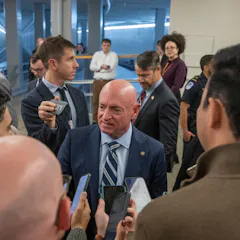
US Sen. Mark Kelly correctly articulated military law when he said service members have a duty to not obey unlawful orders, according to a military law scholar.

Whistleblowers’ stories show how accountability is shifting from formal legal institutions to solidarity networks built outside the state.
Top contributors
-

Senior Research Fellow, Centre for Advancing Journalism, The University of Melbourne
-
Deputy Executive Dean and Associate Dean (Academic), Faculty of Humanities, Arts and Social Sciences, The University of Queensland
-
Deputy Director, Institute for Ethics, Governance & Law, Griffith University
-
Professor Emeritus of Communication and Rhetorical Studies, Syracuse University
-
Associate Professor of Philosophy and Law, Wayne State University; Institute for Humane Studies
-
Professor of Law and Humanities, Queen Mary University of London
-
Brechner Eminent Scholar in Mass Communication, University of Florida
-
Professorial Fellow, University of Canberra
-
Professor of Law; Kim Santow Chair of Law and Social Justice, University of Sydney
-
Programmes Manager and Research Fellow, the Bonavero Institute of Human Rights, Faculty of Law, University of Oxford
-
Professor of Law, University of Dayton
-
Stephanie A. (Sam) Martin is a Friend of The Conversation.
Frank and Bethine Church Endowed Chair of Public Affairs, Boise State University
-
Senior Lecturer in Political Theory and Philosophy, Queen's University Belfast
-
Emeritus Professor of Sociology, University of Technology Sydney
-
University Research Professor of Education, University of Kentucky