

The system of welfare conditionality that underpins Universal Credit is ineffective at moving people off social security and into work.
Articles on Nudge theory
Displaying 41 - 60 of 80 articles

Law professor Cass Sunstein, on why behavioural science is always nudging us
The Conversation20.5 MB (download)
Governments and businesses are using "nudges" to influence our choices, but how? On this podcast episode, Cass Sunstein, a Harvard professor who wrote the book on nudges, unpacks behavioural science.

A new study claiming to debunk this core part of behavioural economics suggests we really need a new and improved model for loss aversion.

A psychological tendency to gamble rather than accept certain losses, may lead to a surge in support for a harder Brexit.

Social media provide shortcuts to things we yearn for, like connection and validation. Media effects scholars explain the psychological benefits we get from Facebook that make it so hard to quit.

Cape Town is testing new strategies to nudge domestic users into reducing their water use.

After two Nobel prize wins for behavioral economists, the burgeoning field has demonstrated its importance in shaping effective economic and government policy.

Rather than simply trying to trick people, the masters of marketing know it’s much easier to understand and work with innate human flaws.

Dropping old, bad habits is hard, but starting new, good ones may not be so difficult. Or so a recent study suggests. Read how a simple sign at an airport made a difference.

Governments gently cajoling people towards better life choices is only one side of the nudge theory.
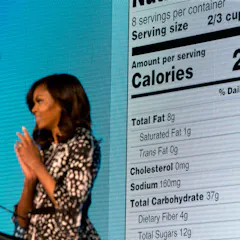
Government initiatives to prod people to make better decisions got a lot of attention after Richard Thaler won a Nobel in economics for his working on nudging.
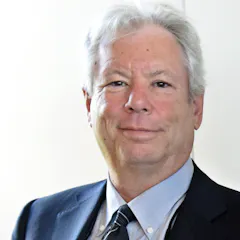
His work on behavioural economics helps us better understand why people make bad financial decisions.

We’re being ‘nudged’ to make good health choices every day. But who decides what’s best? And what happens when we don’t agree?

Behavioural economics is severely limited in its approach to inequality. Fortunately, other psychological approaches are better suited.

A lot of money is spent by food producers and retailers to try and influence the type of food we buy and eat. But what can be done to encourage healthier choices?

Stephen Hawking thinks we need to leave the planet. Do we?

Dozens of governments have been using the insights from the burgeoning field to ‘nudge’ citizens in ways that improve their well-being. But some worry Trump might use it for less altruistic ends.

If the site is increasingly where people are getting their news, what could the company do without taking up the mantle of being a final arbiter of truth?

If we can change people’s behaviour we won’t be so at risk from cyber attacks.

It turns out most of us under-report how many calories we consume – but it’s not entirely our fault.
Top contributors
-

Professor of Cognitive Psychology and Director of the Institute for Climate Risk and Response, UNSW
-
Professor of Policy Impact, University of Leeds
-
Professor of Behavioural Economics, Tasmanian Behavioural Lab, University of Tasmania
-
Business Ethics Lecturer, Cardiff University
-
University Professor, Harvard University
-
Assistant Professor of Economics, University of Leeds
-
Associate Professor in Economics, RMIT University
-
Research fellow, BehaviourWorks Australia, Monash Sustainable Development Institute, Monash University
-
Emeritus Professor of Marketing, University of Birmingham
-
Professor of Economics, Tasmanian Behavioural Lab, University of Tasmania
-
PhD Candidate in Management, Columbia University
-
PhD Candidate, The University of Queensland
-
Research Associate, SAFE SEAS, University of Bristol
-
BehaviourWorks Australia, Monash Sustainable Development Institute, Monash University, Monash University
-
Teaching Fellow, Strategic Defence Studies Centre, Australian National University, Australian National University