

The technology exists, but homeowners aren’t being swayed by subsidies.
Articles on Nudge theory
Displaying 21 - 40 of 80 articles
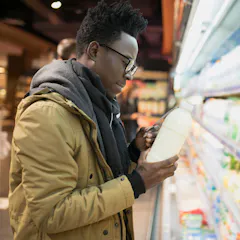
Can you really nudge people into washing their hands more? The evidence is far from perfect.

Too much of our discussion about vaccine hesitancy imagines the problem in rational terms. Perceptions about COVID-19 and vaccines are driven by emotion, not reason.

It is bad practice to compensate people who choose not to do the right thing, and it can create expectations.

How to inject more reality into gamblers’ overestimation of their chances of winning? One simple tool is feedback.

Apps like Klarna, Clearpay and Sezzle have rocketed in popularity during the pandemic.

Governments and companies are using incentives in hopes of getting more Americans to get a COVID-19 shot. A behavioral economist explains how they work.
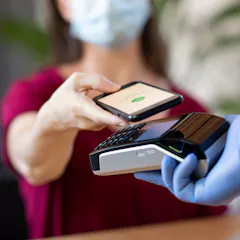
Contactless payments may be convenient – but they also make it easier to overspend.

Deemed consent organ donation means that everyone is assumed to be an organ donor unless they opt out, but assuming consent raises some ethical issues.

Australia’s behavioral economics unit publishes rather than hides the results of its unsuccessful experiments.
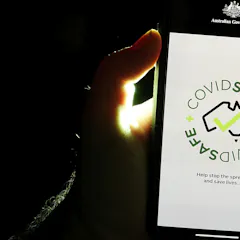
Behavioural economics has three key insights to encourage take-up of the contact-tracing app.
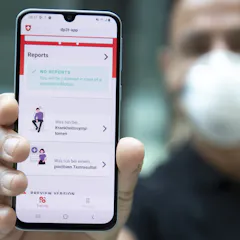
There’s definitely such a thing as society – which is a huge challenge for developing an app that will ward off COVID-19.

For the app to work well, we might need an 80% take-up. Unless it is made mandatory, we’ll need both private and social incentives.

History shows that behavioural factors play a major role in slowing and stopping disease spread.

A scholar who studies consumer decision-making explains just what it is in the human mind that makes people susceptible to nudges toward one behavior or another.

The effectiveness of healthy-eating nudges increases as their focus shifts from thinking, to feeling, to doing.

More than 40 people died in the May 5, 2019 crash, and reports indicate that passengers taking luggage with them may have slowed the evacuation. So what do we need to do to stop such behaviour?

Software makers including Apple have been creating apps aimed at limiting how much time we spend using our smartphones. A behavioral scientist explains how – and whether – they work.
Social media manipulation is tearing societies apart – but it can help put us back together again.

Most pricing structures nudge us to spend more. But there’s a particularly cunning type of pricing that can get us to swap our preference from a cheaper to a more expensive option.
Top contributors
-

Professor of Cognitive Psychology and Director of the Institute for Climate Risk and Response, UNSW
-
Professor of Policy Impact, University of Leeds
-
Professor of Behavioural Economics, Tasmanian Behavioural Lab, University of Tasmania
-
Business Ethics Lecturer, Cardiff University
-
University Professor, Harvard University
-
Assistant Professor of Economics, University of Leeds
-
Associate Professor in Economics, RMIT University
-
Research fellow, BehaviourWorks Australia, Monash Sustainable Development Institute, Monash University
-
Emeritus Professor of Marketing, University of Birmingham
-
Professor of Economics, Tasmanian Behavioural Lab, University of Tasmania
-
PhD Candidate in Management, Columbia University
-
PhD Candidate, The University of Queensland
-
Research Associate, SAFE SEAS, University of Bristol
-
BehaviourWorks Australia, Monash Sustainable Development Institute, Monash University, Monash University
-
Teaching Fellow, Strategic Defence Studies Centre, Australian National University, Australian National University