
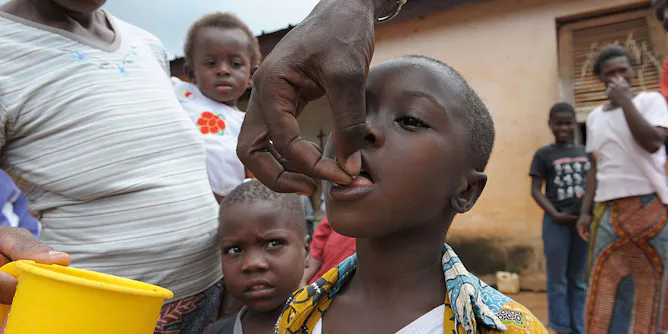
Ivermectin has been a lifesaving drug for people with parasitic infections like river blindness and strongyloidiasis. But taking it for COVID-19 may result in the opposite effect.
Articles on Nobel Prize 2015
Displaying all articles

The Nobel Prize-winning research on neutrinos is expected to push the boundaries of science and technology.
An Angus Deaton school of economics marries data collection with theory to find solutions to real-world problems.

The favourite in the betting won has almost every single US presidential election since 1868 and more recently the Academy Awards. But how well can the market predict the Nobel Prize winners?
Employing a unique literary method that blurred the genres of oral history and documentary prose, the Nobel Prize for Literature winner told the stories of a traumatized people.

By forging to dialogue to achieve consensus, Tunisia’s Quartet are worthy winners.
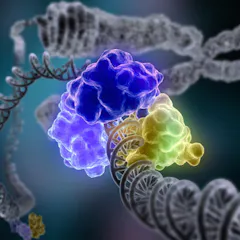
Cells must repair the thousands of bits of DNA damage they incur every day. These cellular mechanisms fend off cancerous tumors, and cancer researchers are working to harness their power.
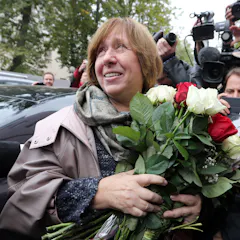
The Belarussian is a worthy winner, but the Nobel is getting further and further away from its lofty origins.

The tiniest of particles could have huge potential to solve the greatest mysteries of the universe - including why there is more matter than antimatter.

Nobel Prize-winning science is almost by definition arcane and complex. While these esoteric fields have their moment in the spotlight, does it matter if the rest of us understand?
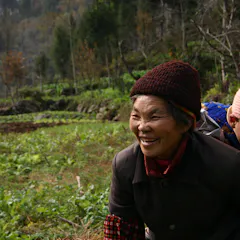
Tu Youyou sifted through 2,000 ancient herbal remedies to develop a drug that now treats hundreds of millions of people a year.
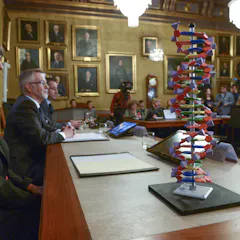
Without natural DNA repair processes we wouldn’t be here. This year’s Nobel Prize winners in Chemistry helped us crack how it all works.
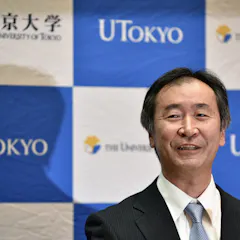
On the journey to discovery with the ‘gifted mentor’ Takaaki Kajita, one of this year’s Nobel Prize winners, from some one who studied with him.
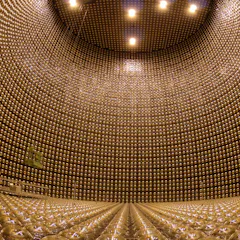
They’re beyond tiny and super mysterious. Neutrinos are an elemental particle that might just help us understand the structure and evolution of the universe.
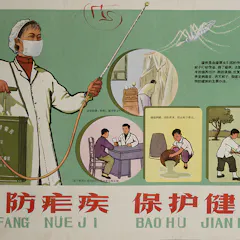
The 2015 Nobel Prize for Medicine went partly for research done during the Chinese Cultural Revolution based on traditional Chinese medicine. Here’s the story of Project 523.
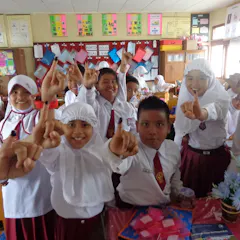
The 2015 Nobel Prize in medicine went to research on remedies derived from natural compounds. Academia is continuing the fight against ‘neglected’ diseases by similarly hunting for new drugs in nature.
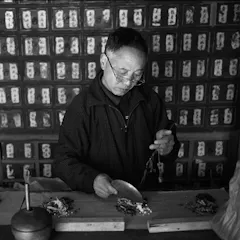
The first Chinese Nobel Prize in medicine was awarded for work based on traditional Chinese medicine. Will traditional medical knowledge now share the spotlight with evidence-based medicine?
Scientists William C Campbell, Satoshi Ōmura and Tu Youyou have been rewarded for their unglamorous but vital work on parasites that has improved the lives of millions.
Top contributors
-

Associate Professor of Sociology, Western Michigan University
-
Professor in the Department of Economics, UCL
-
Associate Professor of Chemistry, Northeastern University
-
Assistant Professor of Chinese, Emory University
-
Professor of Medicinal Plant Science, University of Westminster
-
Director Emerita of the Alan Alda Center for Communicating Science, Stony Brook University (The State University of New York)
-
Reader (Physics and Astronomy), University of Sussex
-
Associate Professor of the History of Medicine, Johns Hopkins University
-
Assistant Professor of Pharmacology and Medicine, Boston University
-
Research Fellow and Director of RISING Global Peace Forum, Coventry University
-
Professor of Chemistry, Northeastern University
-
Professor of Physics, Professor of Astronomy, and Director of the Center for Cosmology and AstroParticle Physics (CCAPP), The Ohio State University
-
Professor, Monash University
-
Professor of Economics and Finance. Director of the Betting Research Unit and the Political Forecasting Unit at Nottingham Business School, Nottingham Trent University
-
Professor of Protozoology, University of Bristol