

While people have long believed that food and dreams are connected, scientific research into this notion has been limited.
Articles on Nightmares
Displaying 1 - 20 of 23 articles

Changing your evening diet could help reduce nightmares, the latest research suggests.
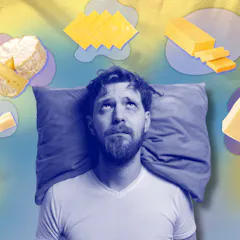
A new study suggests eating dairy products before bed could be linked to nightmares. Here’s why cheese could be a culprit.

Weekly nightmares may triple the risk of premature death and accelerate biological aging, according to new research tracking thousands of adults over 18 years.
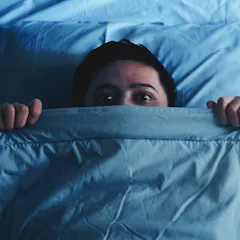
Nightmares and day-time hallucinations often precede lupus flare-ups.

REM sleep behavior disorder is characterized by acting out dreams, which may include shouting, kicking and punching during sleep.
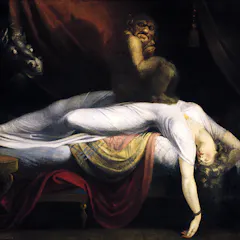
A raft of horror films remind us of the grip troubled sleep once had on our imaginations.

Children who had persistent bad dreams were over six times more likely to develop Parkinson’s disease than children who never had bad dreams.
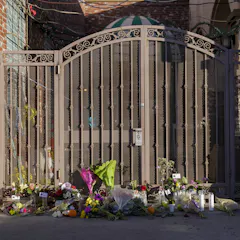
Even people who are only indirectly exposed to these repeat tragedies, such as first responders and those affected by media coverage, can experience profound and long-lasting grief.

Dracula’s power is not in his fangs, but in the way he disturbs the sleep of his victims.

New study finds that middle-aged people who had nightmares every week, are four times more likely to experience cognitive decline.

Gaiman’s dream goes by many names, each inspired by different ideas of what dreams and nightmares have been to people throughout history.
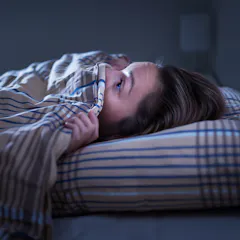
People reported having frequent bad dreams at the beginning of the study were twice as likely to develop Parkinson’s compared with those who had them less than once a week.

Dreams help us regulate our emotions and adapt to stressful events. Repetitive content may represent an unsuccessful attempt to integrate difficult experiences.
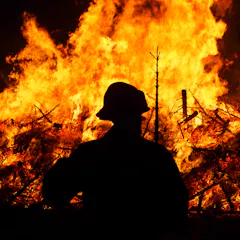
Firefighters are hailed as heroes and pillars of strength, bravery and courage. But the daily stressors and traumas of their jobs take a heavy emotional toll that largely goes unnoticed by the public.

A scholar of the Rwandan genocide argues that while a genocide and a pandemic are very different, the experiences of Rwanda’s survivors may provide lessons on how to heal from pandemic trauma.
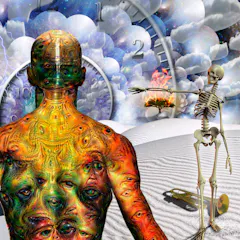
At times of anxiety and trauma an increase in unusual or vivid dreams and nightmares is not surprising.

To some extent, shell-shock still shapes our understanding of PTSD today.

Many hope that marijuana will help their insomnia. A sleep psychologist examines the evidence.

Niamh, age 7, wants to know why we have scary dreams. But after 200 years of study, dreams are still very much a mystery.
Top contributors
-

Clinical Research Fellow, Imperial College London
-
Lecturer in Creative Writing and 19th-Century Literature, Aberystwyth University
-
Lecturer, University of Cambridge; Anglia Ruskin University
-
Professor of Psychiatry, Wayne State University
-
Postdoctoral Research Fellow, Université de Montréal
-
Professor of Psychiatry, Université de Montréal
-
Associate Professor of Neurology, University of Virginia
-
Professor of Religion at the University of Southern California and Director of Strategic Initiatives at the Center for Religion and Civic Culture, USC Dornsife College of Letters, Arts and Sciences
-
Reader in Cultural History, University of Portsmouth
-
Associate Professor, School of Psychology, Massey University, Te Kunenga ki Pūrehuroa – Massey University
-
Head of Long-Term Conditions Research Group, Primary Care Unit, Cambridge, University of Cambridge
-
Sleep Researcher, Appleton Institute, HealthWise Research Group, CQUniversity Australia
-
Professor Emeritus, Department of Psychology, MacEwan University
-
Assistant Professor, University of California, Irvine
-
PhD Student, Behavioral Sustainability Lab, University of British Columbia