

When we’re awake, our imaginations are quite different. But what about our dreams?
Articles on Dreams
Displaying 1 - 20 of 57 articles

Dream-like states are not confined to sleep: the brain is able, very surprisingly, to produce the same mental experience independently of our state of vigilance.

Sigmund Freud’s 800-page book on dreams introduced a new way of thinking about the mind that reverberated through the 20th century.

In 1619, a loud sound and a bright flash of light woke philosopher René Descartes from a dream. Was it divine revelation – or exploding head syndrome?

Some people are naturally better at recalling their dreams. Others worry they’re not getting quality sleep if they can’t remember their dreams. Here’s the science.
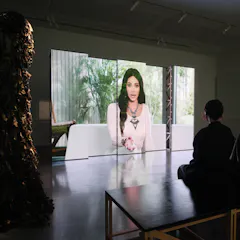
Data Dreams: Art and AI is at the Museum of Contemporary Art brings together artists who make visible the tensions of ever-present AI.

For the original surrealists, dreaming was not a matter of idle fantasy but a tool for political and social transformation.

African artists are not only present on the global stage but are shaping the languages of art itself.

Why scientists still can’t agree what dreams are for.

There’s not a lot of research on whether cutting down on caffeine makes our dreams more vivid. But that doesn’t mean we’re completely in the dark.

Western theories of consciousness tend to assume consciousness is about information.

While people have long believed that food and dreams are connected, scientific research into this notion has been limited.

Researchers have found dreams are most likely to occur during the stage of sleep known as rapid eye movement, or REM.

Changing your evening diet could help reduce nightmares, the latest research suggests.

A new study suggests eating dairy products before bed could be linked to nightmares. Here’s why cheese could be a culprit.

Not everyone who wants to migrate will ultimately do so, but their aspirations matter. Migration aspirations shape education, career choices, family formation and even political engagement.

Researchers are developing theories about the purpose of dreams and learning why some people seem to be better at remembering them.

Dream researcher Başak Türker explains how she was able to communicate with people while they were dreaming. Listen to The Conversation Weekly podcast.
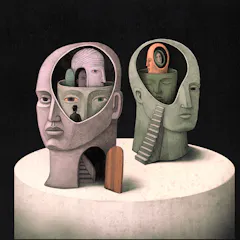
Dreaming differs across cultures, and these differences may hold the clue to how and why dreaming evolved for humans and other species.

It turns out people who sleep well and those who sleep poorly have different kinds of thoughts before bed.
Top contributors
-

Director, Appleton Institute, CQUniversity Australia
-
Postdoctoral Research Fellow, Université de Montréal
-
Professor of Psychiatry, Université de Montréal
-
Sleep Researcher, Appleton Institute, HealthWise Research Group, CQUniversity Australia
-
Lecturer in Psychology, University of East London
-
Associate Professor at Turner Institute for Brain and Mental Health, School of Psychological Sciences, Monash University
-
Lecturer in Psychology, Nottingham Trent University
-
Professor of Psychology, Swansea University
-
Professor of Cognitive Neuroscience and Neuropsychology, University of Surrey
-
Director, Care Collaborate Connect, University of the Sunshine Coast
-
Course Director, Psychology of Advertising Masters Programme, Lancaster University
-
Senior Lecturer in Psychology, RMIT, RMIT University
-
Professor of Cognition, Lancaster University
-
Royal Holloway, University of London
-
Associate lecturer, University of Sussex