

A ban on sugary drinks sale and advertisements in schools is likely to hold more promise in improving the diets of children and help prevent obesity in children than voluntary actions.
Articles on NCDs
Displaying 21 - 40 of 90 articles
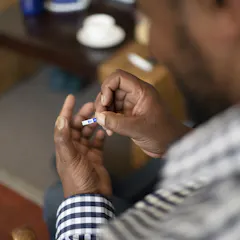
In 2019, 89,834 people died of diabetes. This number exceeds the capacity of Soccer City, the biggest football stadium in South Africa.

Governments must take urgent action to prevent noncommunicable diseases from becoming an uncontrollable epidemic in sub-Saharan Africa. Sugar-sweetened beverage taxation offers a potential solution.

Without reliable, local and timely data, countries will miss the potential of sugar-sweetened beverage taxation as a public health intervention.

Rwanda’s food policies focus on production to make sure people have livelihoods and enough nutritious food. Not much attention is given to overnutrition.

Tension between the government’s economic and public health priorities is preventing stronger fiscal measures to address nutrition-related noncommunicable diseases.

Between 2018 and 2019 Kenya registered a 30% spike in sugar production and an increase in sugar consumption.

Implementing a sugar-sweetened beverage tax in all African countries will require sufficient political will and support from civil society.

The results are in: South Africa’s ground-breaking health promotion levy, introduced in 2018, is working.

Workplace-based interventions could make a substantial contribution to reducing the burden of noncommunicable diseases in the country.

The health and wellbeing effects will go beyond the direct impact of war-related fatalities, and are likely to last for years after peace is fully restored.

A stroke often leads to the sudden onset of weakness involving the face, arm or leg, an inability to speak, difficulty walking or impaired vision. Strokes can cause death and irreversible disability.
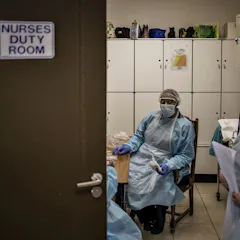
Healthcare providers and governments must recognise the need to invest in diabetes nurse education and training.

The rapid rise in diabetes mustn’t be overlooked, as it could have devastating health and economic effects. Most national health systems are already struggling with infectious diseases.

Being physically active is largely not an individual choice, but a result of what funds, spaces, places and opportunities are available to the individual and communities.
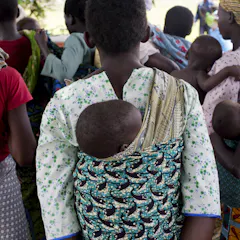
Depression and diabetes can occur together, and put huge strain on patients and health systems. Depression in patients with diabetes can cause poor self-management and poor treatment adherence.

The higher pace of demographic ageing and the noncommunicable diseases that come with it call for new management approaches.
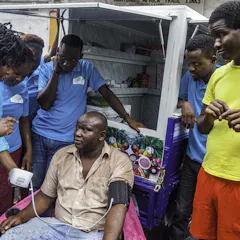
Cardiovascular risk factors like diabetes and hypertension are preventable or relatively easy to treat with inexpensive medication.
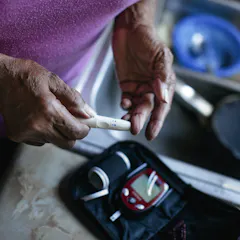
Interventions using apps show promise as they could improve care for patients with chronic conditions. But patients can’t benefit from innovations unless they accept them and use them effectively.

There are multiple health risks in living close to waste sites, with substantial racial and income differences playing a major role.
Top contributors
-

Professor and Programme Director, SA MRC Centre for Health Economics and Decision Science - PRICELESS SA (Priority Cost Effective Lessons in Systems Strengthening South Africa), University of the Witwatersrand
-
Professor of Public Health, The University of Melbourne
-
Associate Professor, Melbourne School of Population and Global Health, The University of Melbourne
-
Postdoctoral fellow, Johns Hopkins University
-
Researcher, SAMRC/Centre for Health Economics and Decision Science- PRICELESS SA, University of the Witwatersrand
-
Professor of Global Health, Institute for Applied Research, University of Birmingham
-
ARC Future Fellow and Sydney Horizon Fellow, School of Public Health, University of Sydney, University of Sydney
-
Director of the Non-Communicable Diseases Research Unit at the South African Medical Research Council, Professor in the Department of Medicine, University of Cape Town
-
Extraordinary Professor, Global Health, Stellenbosch University; South African Medical Research Council
-
Distinguished Professor, Division of Family Medicine and Primary Care, Stellenbosch University
-
D.Phil. Candidate in Population Health, University of Oxford
-
Research Fellow in Medicine, Harvard University
-
Emeritus Professor, Menzies Centre for Health Policy, University of Sydney
-
Associate Professor, School of Public Health, University of the Witwatersrand
-
Research Scientist, African Population and Health Research Center