
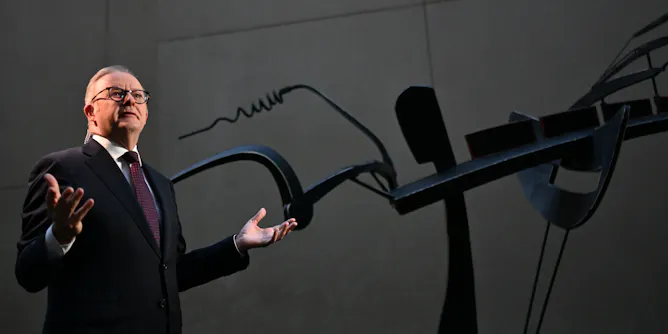
As the federal election looms, Labor is running out of time to show it cares about Australia’s precious natural environment.
Articles on nature repair
Displaying all articles
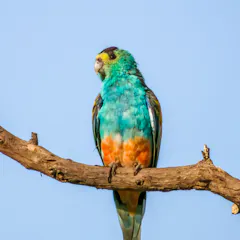
This new research estimates the price and benefits of recovering threatened species – and offers cost-effective ways for environment groups, farmers, governments and others to make a difference.

While governments at COP16 make glacial progress on protecting nature, what billions of people choose to do individually can add up to make a big difference.
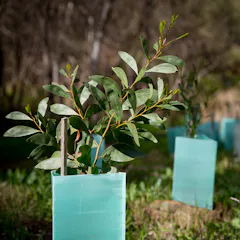
As Australia prepares to host the first Global Nature Positive Summit this week, let’s take a closer look at what ‘nature positive’ really means.
A project in Melbourne’s Royal Park has proved city parks and streets can be used as sites for nature repair that help endangered ecosystems and species to survive.
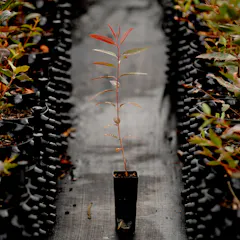
Nature can provide solutions to problems such as biodiversity loss and climate change. But the best nature-based solutions are resilient to disturbance such as fire or drought and future change.
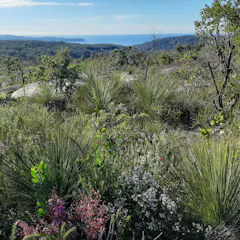
The need to restore native vegetation is clear, but we can’t properly repair nature without good, diverse supplies of native seeds.
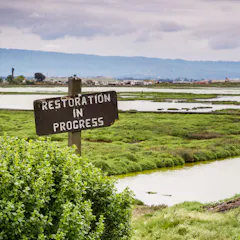
Australia committed to restore 30% of degraded ecosystems by 2030 when we signed the global biodiversity framework. But what does that really mean? It’s open to interpretation. So let’s be ambitious.
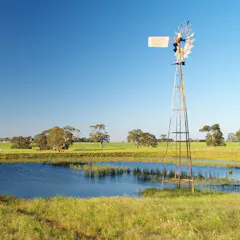
Australia has almost 1.8 million farm dams – and some are home to threatened frog species

A new survey finds Australians care deeply about the environment but many are not aware of the full extent of biodiversity loss.
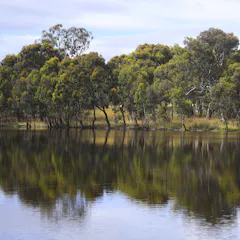
Reparing farm dams helps farmers – and nature. What if farmers could access loans for nature repair work – and only repay them when revenue is high?
Top contributors
-

ARC DECRA Fellow, RMIT University
-
Professor in Terrestrial Ecology, Deakin University
-
Professor of Marine Science & Founder/Director of Blue Carbon Lab, Deakin University
-
Postdoctoral Researcher, Department of Biology, Aarhus University
-
Research scientist, Department of Primary Industries & Regional Development, The University of Western Australia
-
Distinguished Professor of Ecology, Fenner School of Environment and Society, Australian National University
-
Professor, TC Beirne School of Law, The University of Queensland
-
Senior Research Fellow in Social and Political Science, The University of Melbourne
-
Director, BehaviourWorks, Monash Sustainable Development Institute, Monash University
-
Postdoctoral Research Fellow, Hawkesbury Institute for the Environment, Western Sydney University
-
Professor and ARC Future Fellow, Hawkesbury Institute for the Environment, Western Sydney University
-
Research Fellow at BehaviourWorks Australia, Monash Sustainable Development Institute, Monash University
-
Curator, Amphibian & Reptile Conservation Biology, Australian Museum, UNSW
-
Emeritus Professor, College of Business and Economics, Australian National University
-
University Fellow in Biodiversity, Charles Darwin University