
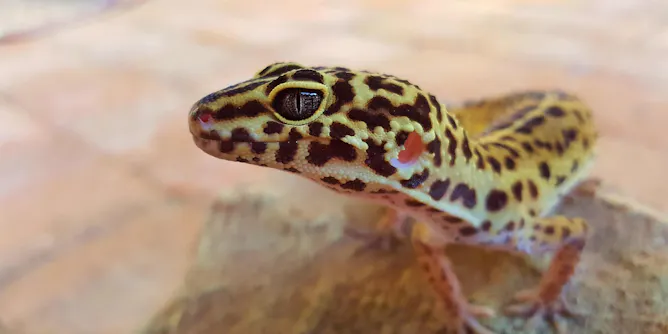
A group of lizards in Brazil have evolved bigger heads in just 15 years thanks to their new environment.
Articles on Natural selection
Displaying 61 - 80 of 83 articles
Many scientists say there’s no purpose to life – but a theoretical study suggests there could be.

We don’t know much about the origins of most human achievements – scientific and otherwise. Like evolution, does progress occur as random insights are selected for or against?

While there is currently interest interest in artificial intelligence, it offers limited achievements, such as the autonomous car. Tomorrow, machines will learn alone and forge solutions.
In science, the word ‘theory’ has a very specific meaning that’s easy for nonscientists to misunderstand or misconstrue. Here’s what a theory must withstand to be accepted by the scientific community.
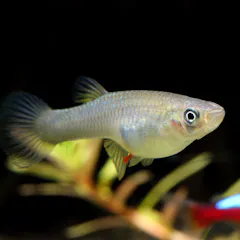
It’s a watery battle of the sexes.
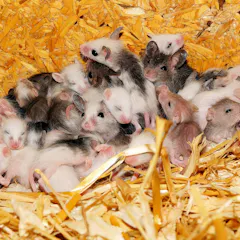
Animals that group together to fight off evolutionary pressure may actually evolve faster.
Scientists of all kinds turn to computer models to investigate questions they can’t get at any other way. Here’s how models work and why we can trust them.
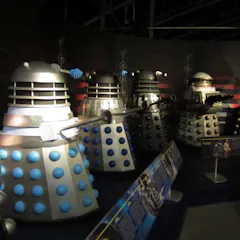
Robots that can reproduce could improve their design in ways we wouldn’t think of but still within our control.

Is a woman’s longing for a child evolution at work, or social conditioning? And what about those who don’t want kids? Are they defying nature? Probably not, as almost everyone wants sex.

Evolution also does not claim humans evolved from primates. Neither does it say non-human primates, including monkeys, baboons, chimpanzees and gorillas, will evolve into humans with time.

Darwin’s insights into life on Earth may have revolutionised biology, but scientists sometimes get carried away. It’s not the only game in town.

Some theorists suggest that such platforms are making our world more efficient by natural selection. The reality is a little more complicated.
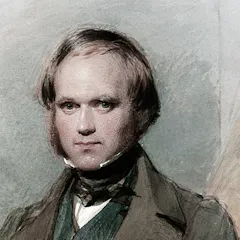
Had the young naturalist not made a great discovery about rock formations in the first half of his career, On the Origin of the Species might never have been written.
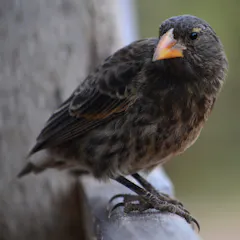
Darwin’s finches are known to be a paragon of evolution by natural selection, but a recent genetic discovery relating to their beaks highlights the evolutionary connectedness of all life.

Invasive species colonize and spread widely in places where they are not normally found. Invasives often affect native species by eating them, out-competing them and introducing unfamiliar parasites and…

Find yourself thinking that the spider living in your garden is the biggest you’ve ever seen? You could be right. New research shows some spiders are getting larger and even doing better in cities than…
Children may understand complex scientific concepts from a significantly younger age that first thought, new research suggests…
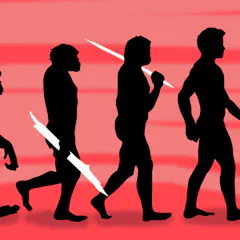
Charles Darwin famously drew upon Thomas Malthus’s treatise on human population growth to build his theory of evolution by natural selection. Malthus was worried about the rising population of the lower…
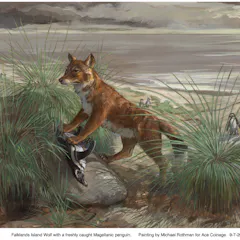
A long-standing natural history mystery has been solved, as my colleagues and I explain today in the journal Nature Communications. The Falkland Islands wolf, or warrah, may have been the world’s loneliest…
Top contributors
-

Professor of Evolutionary Biology and Science Engagement, University of East Anglia
-
Fellow, Keele University
-
Lecturer, School of Biology, University of St Andrews
-
Assistant Professor of Ecology and Evolution, Georgia Institute of Technology
-
Professor of Animal Evolution & Systematics, University of Cape Town
-
Postdoctoral Research Assistant, Earth Sciences, Durham University
-
Professor in Evolutionary Biology, Macquarie University
-
Reader in Evolutionary Ecology, Queen Mary University of London
-
Emeritus Professor of Animal Genetics, University of Sydney
-
Professor of Physics and Astronomy, Bucknell University
-
Adjunct Assistant Professor of Biological Sciences, Columbia University
-
Associate Professor, North Carolina State University
-
Professor of Ecology & Evolutionary Biology, University of California, Santa Cruz
-
Associate research scientist Cambridge Judge Business School and lecturer GEM, GEM
-
Associate Professor in Entomology, University of Sydney