

Because of its historical social and economic significance, conservation of sandalwood should consider cultural diversity.
Articles on Natural resources
Displaying 21 - 40 of 79 articles
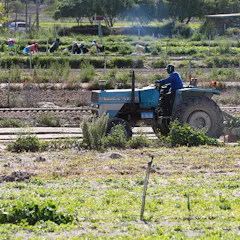
The work done by the campaign before, during and after the drought remains important for the food security of Cape Town

In 1776, with a population of 2.5 million, few imagined that within two centuries, the U.S. would become the dominant superpower. It’s not inconceivable that Canada could do the same by 2223.
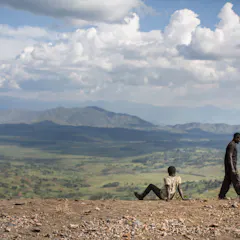
Destructive mining in Congo’s protected areas is rampant because it generates money for citizens, officials and armed groups.

The energy-intensive process of producing cement and concrete contributes significantly to global warming while depleting resources. Much more sustainable alternatives are being developed.
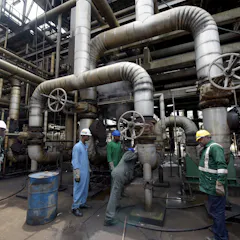
There should be a better long-term strategy for foreign direct investments in Nigeria that’s not tied to its oil reserves.
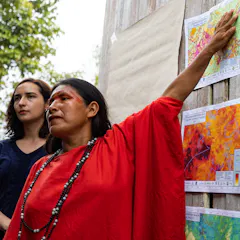
Illegal roads have brought deforestation, fire and other environmental damage to the Amazon. The results of the 2022 presidential runoff could have a major impact for the future.
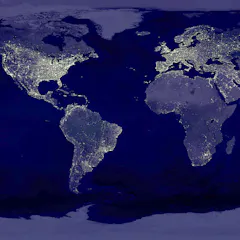
A 1972 report warned that unchecked consumption could crater the world economy by 2100. Fifty years and much debate later, can humanity innovate quickly enough to avoid that fate?

Puerto Rico’s tourism industry is booming as nations lift COVID-19 travel restrictions, but development is displacing people who have lived along its coastlines for years.

As a major conference on the global biodiversity crisis opens in Montreal, a conservation biologist explains how ideas about protecting nature have evolved over the past 40 years.
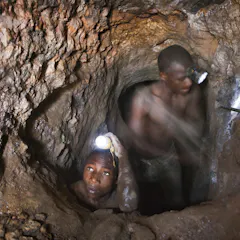
Coltan is indispensable to the making of modern electronic devices but its mining causes human and environmental disasters in the DR Congo.

Degrowth offers the world a new story, one that acknowledges the role economic growth has had in climate change and identifies alternatives.

By mismanaging its forestry road system, Québec and the forestry companies operating in public forests have made significant savings, to the detriment of protecting aquatic environments.

Every time Alberta’s energy-based economy goes into a tailspin, it’s because the price of oil has declined precipitously, and when it booms, it’s because the price has soared.
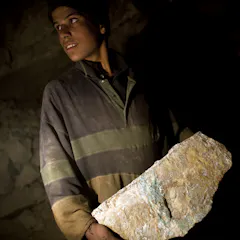
Afghanistan has vast mineral resources that have long attracted interest from outside countries, but a lack of infrastructure and political instability means they’re unlikely to aid its economy now.
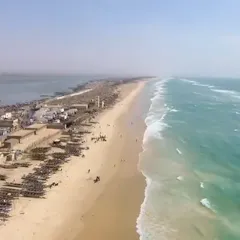
Around the world, fragile coastal ecosystems are under intense pressure, and understanding and managing their complex interactions requires an integrated and interdisciplinary approach.
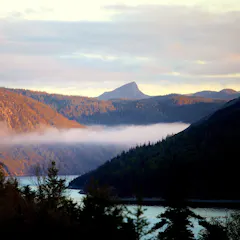
Misconceptions of rural realities can have serious implications. Better use of data can help avoid this and lead to policies that will help rural communities recover in the post-pandemic.
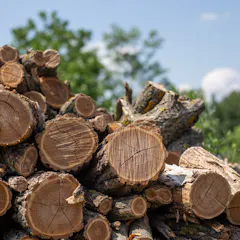
Rural people’s access to fuelwood isn’t determined by the availability of the wood, instead it’s controlled by power dynamics.
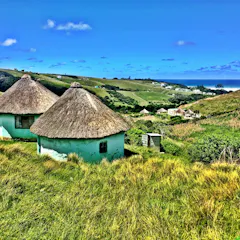
Clashes between mining companies and communities are often about the age-old question of whether mining, with its adverse impacts, can benefit the many or only a selected few.

Other existential risks include the decline of natural resources (particularly water), human population growth beyond the Earth’s carrying capacity, and nuclear weapons.
Top contributors
-

Lecturer in International Studies, University of Washington
-
Professor, Center for Research on North America, Universidad Nacional Autónoma de México (UNAM)
-
Professor of Sustainable Development, Michigan State University
-
Adjunct Professor, School of Environmental Design and Rural Development, University of Guelph
-
Associate Professor and Chair, Communication, Popular Culture and Film, Brock University
-
Founding Director, Institute for Sustainability, University of Surrey
-
Royal Academy of Engineering Chair in Emerging Technologies - Intelligent & Resilient Ocean Engineering, University of Southampton
-
Senior Lecturer in Environmental Management, University of Tasmania
-
Professor of Accounting, Durham University
-
Chair professor - Circular Economy, The University of Melbourne
-
Monash University
-
Assistant Professor of Economics and International Affairs, George Washington University
-
Associate Professor of Earth and Environment, Boston University
-
Professor of Environmental Geography, Northumbria University, Newcastle
-
Chief Research Specialist, Human Sciences Research Council