
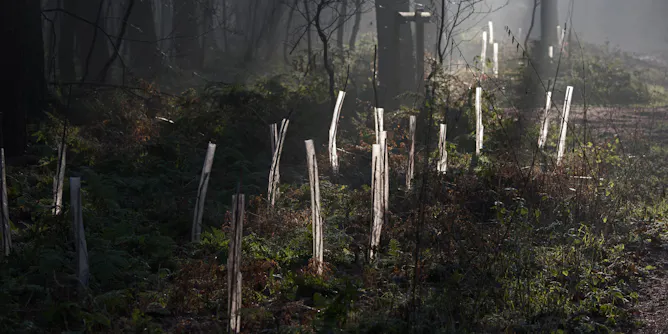
National strategies depend on natural methods to offset emissions – but acknowledge this may not be possible.
Articles on Natural climate solutions
Displaying 1 - 20 of 23 articles

Tropical forests are one of humanity’s best hopes for slowing climate change.
Planting trees and preventing deforestation can store carbon in nature, but the effect may only be temporary. If we also eliminate emissions from fossil fuels, even this temporary effect is important.
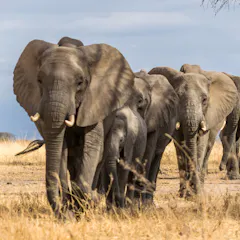
Efforts to preserve biodiversity and slow climate change make natural bedfellows.
The world is a much better place for the extra carbon being absorbed by forests, but it can never entirely offset emissions.
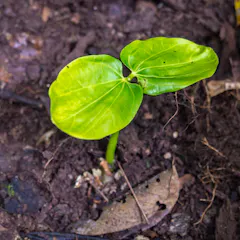
Secondary forests are growing on deforested land in the Amazon – but not enough to offset emissions from logging.

The Army Corps of Engineers is planning a sea wall 6 miles long and flood gates. The infrastructure might protect downtown from a hurricane storm surge, but most of the area will still be vulnerable.
Solve the climate and extinction crises together, or solve neither.

What can gardeners use that isn’t so bad for the climate?
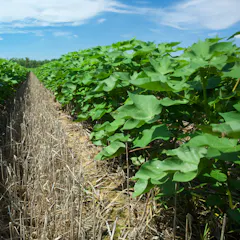
Drilling instead of tilling the soil to plant seeds could help the ground store more carbon.
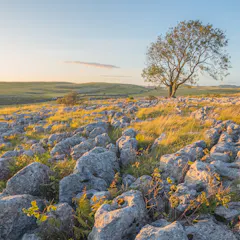
Scientists need to know how much we can rely on the land to offset our emissions.
The UK’s marshes, bogs and fens provided the bare necessities of daily life for many centuries.

Done right, offsetting projects can benefit local people and make a measurable difference to carbon emissions.
Flooding isn’t always destructive – it can be part of our toolkit for restoring ecosystems.

The age of a forest can influence how effectively it offsets our emissions.
The Canadian dialogue on agriculture’s role in climate change is murky. Its time to be more clear and vocal on where challenges and opportunities lie.

The lack of progress by governments in reducing global emissions means bold solutions across multiple fronts are now needed.

Without care, reforestation projects can damage ecosystems and be useless as carbon stores. Here’s how to go about it the right way.

Much of the UK’s farmland is unproductive. It could be put to better use storing carbon, offering recreation and providing wildlife habitat.
Restoring Britain’s woodlands and peatlands isn’t just a utopian dream.
Top contributors
-

Professor of Global Change Science at University of Leeds, UCL
-
Affiliate Professor, Geography, Planning and Environment, Concordia University
-
Emeritus Professor, Advanced Wellbeing Research Centre, Sheffield Hallam University
-
Professor and Climate Scientist, Department of Geography, Planning and Environment, Concordia University
-
Research Fellow in Environmental Science, University of Nottingham
-
Director of the ARC Centre of Excellence for Climate Extremes, UNSW
-
Professor, The University of Western Australia
-
Distinguished Professor of Climate Science, Simon Fraser University
-
Postdoctoral Research Associate, University of Edinburgh
-
Associate Professor of Horticulture, Coventry University
-
Concordia University
-
PhD Candidate in Climate Governance, University of East Anglia
-
Chair Professor in Sustainability, Lancaster University
-
Senior Research Associate in Tropical Forest Ecology, University of Oxford
-
Professor of Teaching and Research in Environmental Biology, Edinburgh Napier University