
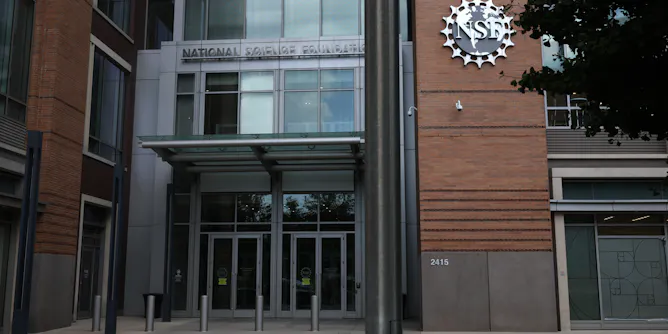
As the National Science Foundation starts giving out fewer grants, people worldwide will potentially lose out from potential research findings that could help improve their lives.
Articles on National Science Foundation
Displaying 1 - 20 of 21 articles

The Trump administration fired the entire board that oversees the National Science Foundation, raising an age-old question about the separation of science and state.

Students who participated in the virtual Research Experience for Undergraduates at Purdue reported stronger gains in research skills than in-person summer interns.
US science lost a great deal in 2025, including tens of billions of dollars of federal funding, entire research agencies and programs, and a generation of researchers.

A scholar reveals the ins and outs of how research gets funded, including the checks and balances that ensure high scientific standards and financial integrity at every stage of a grant’s lifecycle.
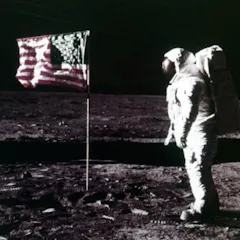
The Trump administration has terminated hundreds of federal grants that support engineering, biology, geology, computer science, STEM education and much more.
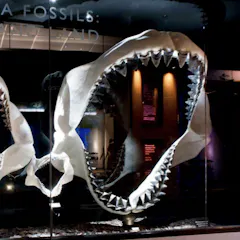
Basic research that doesn’t have a specific industrial or experimental application still adds value outside the lab by engaging people with exciting research.

The jury’s out on whether the US is still at the top of global science. Proposed cuts to major agencies could mean completely ceding that title.

Biden’s legacy includes elevating science’s influence in federal decision-making and considering the social and ethical effects of research.
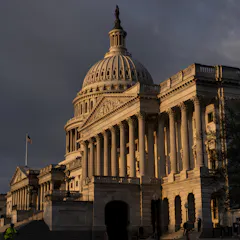
Research funding is down in recent years despite promises made with the CHIPS and Science Act.

Use-inspired research goes beyond translational research to build lasting connections between researchers and communities.

A deal that avoided a shutdown also slashed spending for the National Science Foundation, putting it billions below a congressional target intended to supercharge American science research.

The latest government showdown over the budget risks not only a shutdown but jobs, regional economies and America’s competitiveness in AI and other advanced fields.

A former physics teacher says America could lose its technological edge if it doesn’t do a better job of teaching quantum information science – starting in high school.

The director of the Office of Science and Technology Policy plays a critical role in achieving the president’s science goals. Facilitating cooperation among the dozens of research agencies is key.
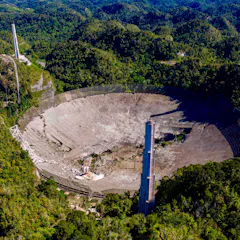
The collapse of the Arecibo Observatory in Puerto Rico was a result of financial neglect – and was a long time coming.

Martian meteorites allow scientists here on Earth to decode that planet’s geology, more than a decade before the first missions are scheduled to bring rocks back home from Mars.

Grant abstracts with more words, more complex language and more storytelling tend to earn more money – even if that’s not exactly what funders say they’d want.
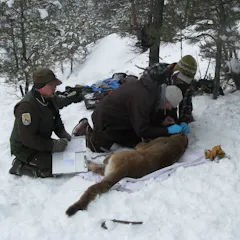
Setting aside personal hardships for workers who don’t see a paycheck during the shutdown, the research enterprise itself loses out, too. And unlike back pay, this lost time can never be made up.

The American Sociological Association is starting a conversation to include “public communication” – work often largely ignored – in the assessment of a scholar’s contributions. Why does it matter?
Top contributors
-

Professor of Sociology, University of Michigan
-
University of Michigan
-
University Distinguished Professor of Astronomy, University of Arizona
-
Associate Professor of Sociology and Co-Director of the Center for Gender in Global Context, Michigan State University
-
Assistant Professor of Health Policy and Administration, University of Illinois Chicago
-
Associate Professor of Chemistry, Carnegie Mellon University
-
Professor of Neurological Surgery, UMass Chan Medical School
-
Professor of Biological Sciences, Boise State University
-
Professor of Philosophy and Environmental Studies and Sciences, Gonzaga University
-
Associate Professor of Obstetrics, Gynecology and Reproductive Biology, Michigan State University
-
Associate Professor of Communication, Michigan State University
-
Emeritus Professor of Science and Technology Policy and Physics and Astronomy, Rice University
-
Assistant Professor of Science and Technology Studies, Rensselaer Polytechnic Institute
-
Associate Professor of Technology Leadership and Innovation, Purdue University
-
Associate Professor in Tropical Plant and Soil Sciences, University of Hawaii
