
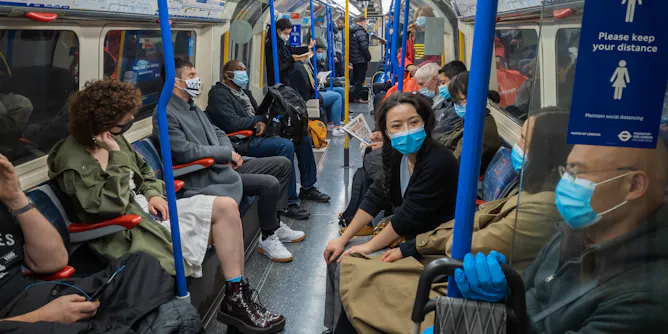
NHS leaders are encouraging people with flu symptoms to mask up in public. Does the science support this advice?
Articles on N95 masks
Displaying 1 - 20 of 27 articles

New draft standards for respirator use recognize the importance of protecting workers and patients in health-care settings, where there is a higher risk of pathogen exposure

A previous review suggested that masks don’t work. We can assure you – they do.

People with a lung condition are among those particularly vulnerable to bushfire smoke. But you can prepare for the season ahead.

The notion that wildfire smoke is ‘natural,’ and therefore less harmful than other types of air pollution, is not supported by the evidence. Wildfire smoke has been linked to adverse health effects.
An updated Cochrane Review suggests face masks don’t reduce the spread of COVID in the community. But there are several reasons why this conclusion is misleading.
They’ve stopped short of mandates, but authorities and experts are strongly suggesting it’s time to cover our mouths and noses again to prevent COVID infection. This time, reach for a respirator.
The CDC’s controversial recommendation changes are based on new studies showing that most omicron transmission takes place within five days of the onset of illness.
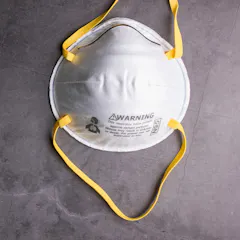
If you’re thinking of upgrading from a cloth or surgical mask to a respirator, here’s what you need to know.
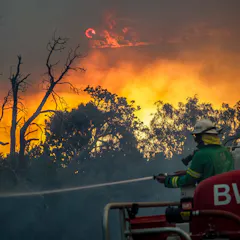
Both affect the lungs. Both can have serious health consequences in vulnerable populations. Both can have long-term health consequences.

Just because we’re in a period of social change, doesn’t mean we have to lose momentum on sustainability. There are six things we can do right now to offset our daily waste from disposable masks.
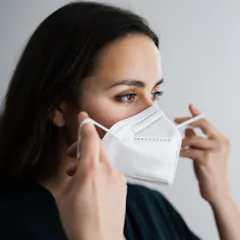
The airborne nature of COVID supports routine use of respirators by the public. Here, experts explain the science behind this recommendation.

Here are some practical tips to keep you comfortable while helping you stay safe.

Wildfire smoke is both inevitable and largely unpredictable. We need to change our activities and behaviours to limit exposure to wildfire smoke and protect health.
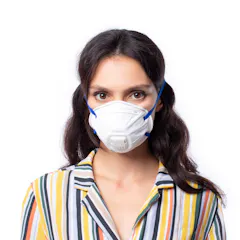
When not properly fitted, high-filtration masks offer only a little bit more protection than cloth or surgical ones.

Whether it’s health-care workers, kids in school or people running errands, Canadians need face masks during COVID-19. There’s no reason they shouldn’t be made here at home.
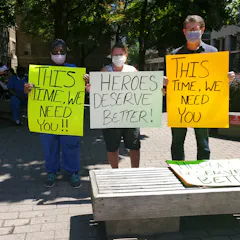
Ontario health-care workers confidentially reported feeling sacrificed on the job and needing protection from COVID-19 and other risky working conditions in a recent study.

Heavier duty fabrics filter more particles – and layering and moisture make a difference too.

From a purely environmental perspective, owning multiple reusable face masks, and machine-washing them together, is the best option.
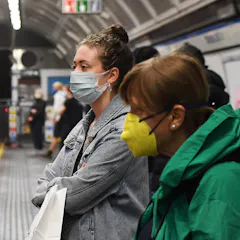
How one of the most effective face masks could be putting others at risk.
Top contributors
-

Professor of Primary Care Health Sciences, University of Oxford
-
Professor Emerita, Nursing, School of Nursing and Midwifery, Griffith University
-
Professor of Global Biosecurity, NHMRC L3 Research Fellow, Head, Biosecurity Program, Kirby Institute, UNSW
-
PhD Candidate, Department of Engineering, University of Cambridge
-
Professor in the Division of Epidemiology, University of Toronto
-
Senior Lecturer/Program Advisor, Griffith Graduate Infection Prevention and Control Program, Griffith University
-
Clinical Associate Lecturer, Northern Clinical School and Lecturer, Internal Medicine. Rural Clinical School (Northern Rivers), University of Sydney
-
Associate professor, ESG UQAM, Université du Québec à Montréal (UQAM)
-
Lecturer in Integrated Crop Management, University of Neuchâtel
-
Professor of Medicine, University of Virginia
-
Professor of Wildland Fire, University of Alberta
-
Professor of Medicine, University of East Anglia
-
Professor, Urban Economics, Université du Québec à Montréal (UQAM)
-
Assistant Professor, Faculty of Health Sciences, Simon Fraser University
-
Assistant Professor of Epidemiology and Biostatistics, University of Nevada, Las Vegas