

Vaccines have successfully curtailed viral diseases for decades. But as COVID-19 vaccination hesitancy shows, mistrust and misinformation continue to put lives at risk.
Articles on mRNA vaccines
Displaying 81 - 100 of 113 articles
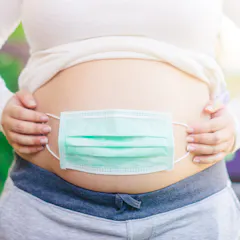
The latest advice is to offer COVID-19 vaccines to women at any stage of pregnancy to protect them from a higher risk of severe disease – and to give their babies an early boost of antibodies.

Hundreds of thousands of Canadians got a shot of AstraZeneca’s COVID-19 vaccine for their first dose. They now have a choice for their second dose: AstraZeneca again, or Pfizer or Moderna mRNA vaccine?

Vaccinated people can still get infected with the coronavirus. So if you have symptoms of COVID-19, getting tested can protect others and help health officials keep an eye on the virus.
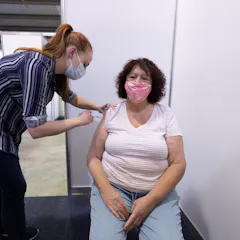
Many over 50s seem to be asking this question. But there are a number of reasons it’s important to go ahead and get the AstraZeneca vaccine now.
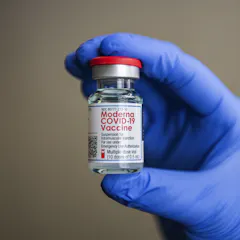
A vaccine expert breaks down everything you need to know about Australia’s newest COVID-19 vaccine candidate.
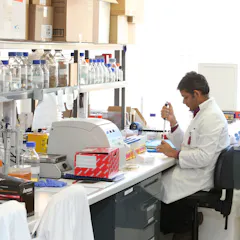
The federal budget contains money for big-ticket items like the SKA telescope and mRNA vaccines. But dwindling funds for universities and fundamental science will leave us vulnerable to future problems.

Canadian public health organizations have run into a serious communication problem about the AstraZeneca vaccine. Crisis management and communication theories explain what’s gone wrong.
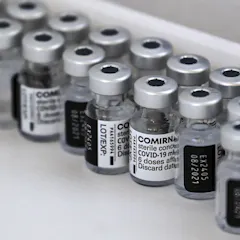
Skyrocketing demand coupled with shortages of vital components is leading to bottlenecks in the supply chain of Pfizer’s and other mRNA vaccines.

We have two mRNA COVID-19 vaccines so far. But what else can this technology do?

In the spotlight for its role in COVID-19 vaccines – and a Nobel Prize – mRNA is not a new invention. It’s a crucial messenger molecule at work every day in every cell in your body.
RNA was used to make COVID vaccines. Now it could lead to more personalised healthcare.

An immunologist explains that you get some protection from the first dose of the mRNA vaccines but you need two to build up strong immunity, particularly to newer coronavirus variants.

So far, most vaccines in the US are mRNA vaccines. These represent a new technology and are likely to take over the vaccine world. But how do they work? What are their weaknesses? Five experts explain.

Chief Scientist Cathy Foley says high-tech manufacturing is the way forward for Australia.
Researchers are already working to improve the current crop of mRNA vaccines. Hopefully this will help them become more practical and affordable for the entire world, not just first-world countries.
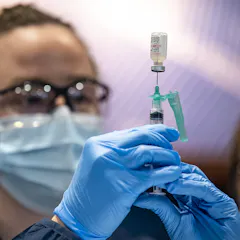
The approval of the first of four COVID-19 vaccines marks the first step in New Zealand’s plans for a Pacific-wide immunisation rollout.
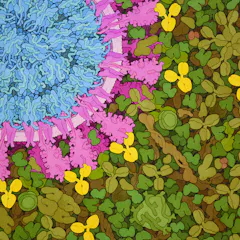
A biologist explains what proteins do in viruses, how they interact with human cells, how the vaccine delivers mRNA into the cell and how antibodies protect us.
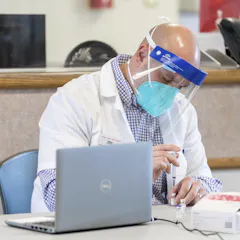
Two pharmacists involved in COVID-19 vaccine preparation explain the role pharmacists are poised to play in expanding vaccine access.
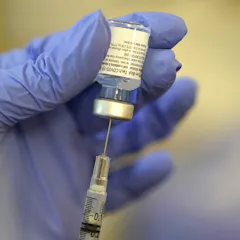
Perhaps you’ve heard mRNA vaccines cause autoimmune disease, or connect you to the internet. Now the Pfizer vaccine has been approved in Australia, it’s important we iron out these misconceptions.
Top contributors
-

Associate Professor and ARC Future Fellow, The University of Western Australia
-
Professor of Microbiology, School of Medicine, University of Washington
-
Professor of Pathology, Microbiology and Immunology, University of South Carolina
-
Professor of Pathology, Microbiology and Immunology, University of South Carolina
-
Research associate, Warren Alpert Medical School, Brown University, Brown University
-
Pediatric Infectious Diseases Fellow, University of Pittsburgh
-
Professor of Medicine, University of Virginia
-
Associate Professor of Biology, Rochester Institute of Technology
-
Senior Research Fellow in Global Health, University of Southampton
-
Bioengineer and Research Fellow, Monash University
-
Australia's Chief Scientist, Office of the Chief Scientist
-
Early Career Research Leader, Emerging Viruses, Inflammation and Therapeutics Group, Menzies Health Institute Queensland, Griffith University
-
Professor and Department Chair of Infectious Diseases and Microbiology, University of Pittsburgh
-
Vice-Chancellor's Research Fellow, School of Health and Biomedical Sciences, RMIT University
-
Professor of Biomedical Sciences, Anglia Ruskin University