
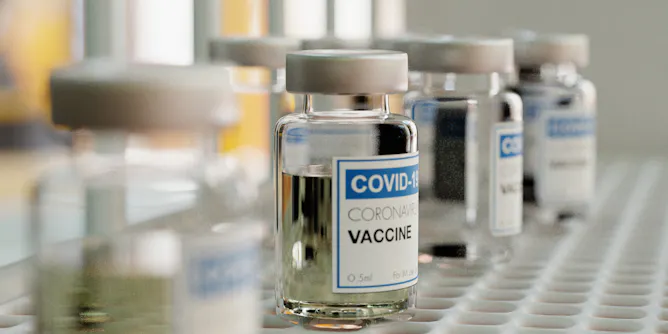
Existing coronavirus vaccines are not as effective against newer variants of the virus. Two vaccine experts explain how new vaccines currently in development will likely offer better protection.
Articles on mRNA vaccines
Displaying 41 - 60 of 113 articles

Moderna co-founder Robert Langer developed the process that made COVID-19 vaccines possible. He spoke about his journey helping develop the science for various lifesaving treatments.
Research suggests that too-frequent immunizations may lead to a phenomenon called “immune exhaustion.”
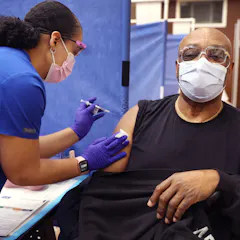
New data on the second booster suggests the older you are, the more you need it.
The COVID-19 pandemic has brought immunology terms that are typically relegated to textbooks into our everyday vernacular. These stories helped us make sense of the ever-evolving science.

Because COVID-19 is a relatively new virus, researchers still aren’t sure exactly how long vaccines and prior infections provide protection.
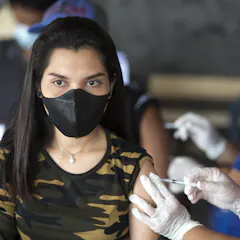
Fewer people reported needing to miss work after their booster, compared to their second dose.

With the manufacturing capacity and access to relevant technology, African countries can reduce their dependency on international manufacturers for vaccines.

Having access to an mRNA vaccine will be critical to China’s ongoing COVID response.
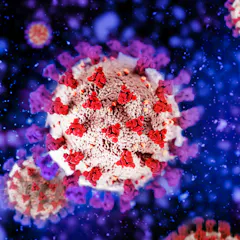
Some of the omicron variant’s unique properties – such as its ability to spread rapidly while causing milder COVID-19 infections – could usher in a new phase of the pandemic.

DNA and mRNA vaccines produce a different kind of immune response than traditional vaccines, allowing researchers to tackle some previously unsolvable problems in medicine.
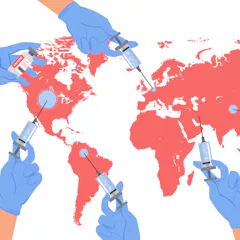
CORBEVAX is anticipated to significantly expand vaccine access to people in low- and middle-income countries.
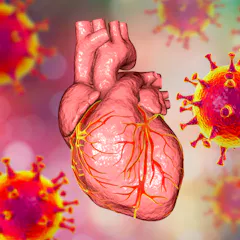
Myocarditis following COVID-19 vaccination is rare, and the risk is much smaller than the risks of cardiac injury linked to COVID-19 itself.
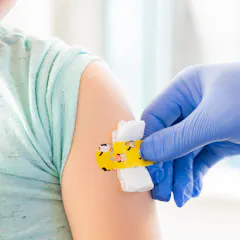
We’re reliant on overseas supply - and the many moving parts of delivery. Each of those parts require staff on the ground – and many workers in this system are likely being affected by Omicron.

Experts give us a science preview for 2022, plus what lies in store for global inequality. Listen to The Conversation Weekly podcast.
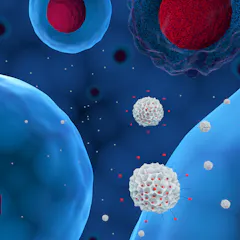
Some vaccine hesitancy is based on a fear of the nanoparticles used in mRNA vaccines. But humans have been interacting with nanoparticles for millennia, and we use nanotechnology-based devices every day.
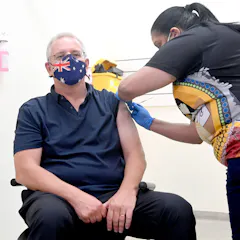
A vaccine manufacturing facility will be built in Victoria to produce mRNA vaccines under an in-principle agreement between the federal government, the state government and global mRNA company Moderna

The new omicron variant of coronavirus has a number of mutations that may require manufacturers to update vaccines. The unique attributes of mRNA vaccines make updating them fast and easy.
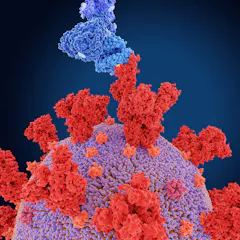
It’s too early to say whether the newly identified omicron variant is going to overtake delta. But particular mutations in the new strain have researchers deeply concerned.

The study found that ticks were unable to feed on guinea pigs vaccinated with an mRNA vaccine, preventing transmission of the pathogen that causes Lyme disease.
Top contributors
-

Associate Professor and ARC Future Fellow, The University of Western Australia
-
Professor of Microbiology, School of Medicine, University of Washington
-
Professor of Pathology, Microbiology and Immunology, University of South Carolina
-
Professor of Pathology, Microbiology and Immunology, University of South Carolina
-
Research associate, Warren Alpert Medical School, Brown University, Brown University
-
Pediatric Infectious Diseases Fellow, University of Pittsburgh
-
Professor of Medicine, University of Virginia
-
Associate Professor of Biology, Rochester Institute of Technology
-
Senior Research Fellow in Global Health, University of Southampton
-
Bioengineer and Research Fellow, Monash University
-
Australia's Chief Scientist, Office of the Chief Scientist
-
Early Career Research Leader, Emerging Viruses, Inflammation and Therapeutics Group, Menzies Health Institute Queensland, Griffith University
-
Professor and Department Chair of Infectious Diseases and Microbiology, University of Pittsburgh
-
Vice-Chancellor's Research Fellow, School of Health and Biomedical Sciences, RMIT University
-
Professor of Biomedical Sciences, Anglia Ruskin University