
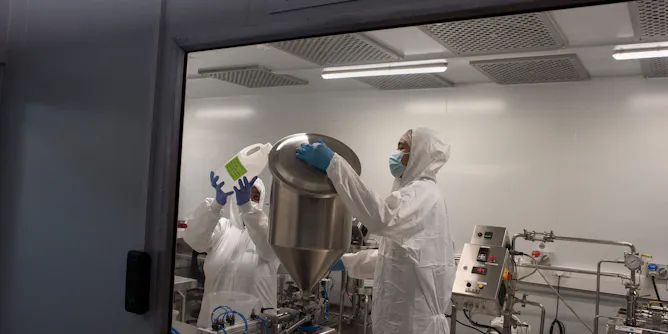
Afrigen will be a technology transfer and training hub: it shares technology and develops skills specifically around how to produce a safe, effective and affordable mRNA vaccine.
Articles on mRNA vaccines
Displaying 61 - 80 of 113 articles

The focus of the government seems to be about how many people can get vaccinated rather than ensuring the greatest protection against severe disease and deaths.

Professor Edward Holmes of the University of Sydney has scooped the top award at last night’s Prime Minister’s Prizes for Science, for his prompt efforts to understand the coronavirus genome.

Pediatric clinical trials for the COVID-19 Pfizer vaccine for children ages 5 to 11 have shown that the Pfizer shot is safe and effective.
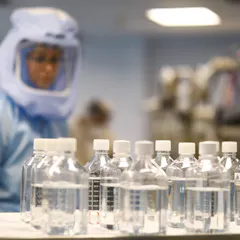
For the first time, the drug substance, or active ingredient for a COVID-19 vaccine - in this case mRNA - will be manufactured on the continent.
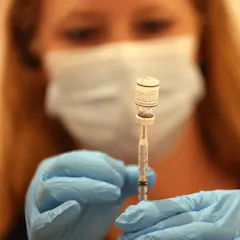
As boosters are authorized for all three COVID-19 shots available in the US, the ability to swap out vaccine types looks to be a boon to the immune system.
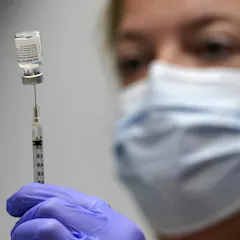
An FDA panel has voted against recommending approval of a booster COVID-19 shot for the general population – disappointing some public health officials.
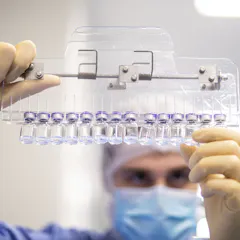
The type of deep-tech ventures behind mRNA vaccines are key to economic prosperity and sustainable development.
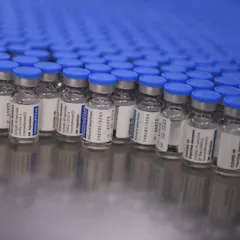
Thanks to the collaborative efforts of governments, funding agencies, academia, biotech and pharmaceutical companies, large-scale manufacturing of mRNA drug products is becoming a reality.
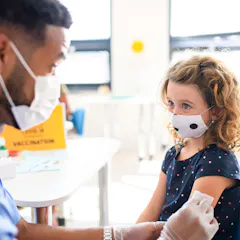
An infectious disease doctor explains the science behind COVID-19 vaccines at a level that children – and adults – of all ages can understand.
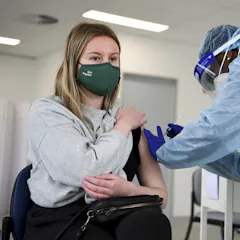
Some countries have started administering third doses of COVID vaccines, or booster shots. But we’re still learning about how long immunity lasts from the first two shots.
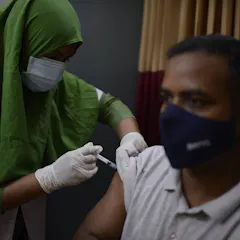
Each dose of Pfizer has a long and complex path involving mixing, storage at temperatures colder than the South Pole and specific protocols that must be followed before it becomes a jab.
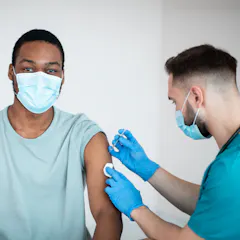
A small number of cases of myocarditis and pericarditis have been reported following the mRNA COVID vaccines developed by Pfizer and Moderna. But this is no reason to avoid the jab.
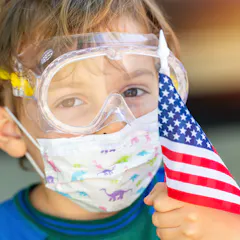
As many teens and adults in the US restart their social lives, parents of children under the age of 12 wonder when their kids will also be able to experience the freedom that comes with vaccination.
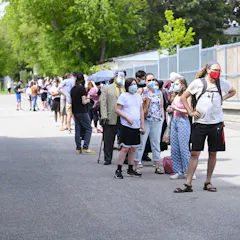
With youth ages 12 and over eligible for COVID-19 vaccination — and as trials for younger children move ahead — parental hesitancy is emerging as the new challenge for COVID-19 vaccine programs.

The question of whether we should be vaccinating children and adolescents against COVID-19 is currently being debated. Here’s why the answer is ‘not yet’.
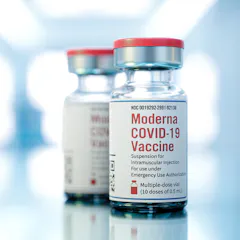
This myth is still circulating online. Here’s why the chance of this happening is next to zero.
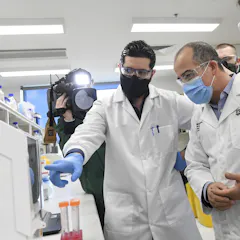
The vaccine works by the same principles as the Pfizer and Moderna vaccines, and could be manufactured in Australia.
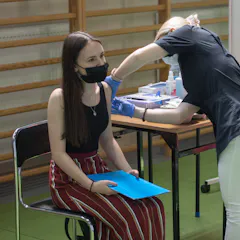
New Zealand’s approval of Pfizer’s COVID-19 vaccine for 12-15 year olds will bring the number of people eligible for the jab to 85% of the population, raising the chance of reaching collective immunity.
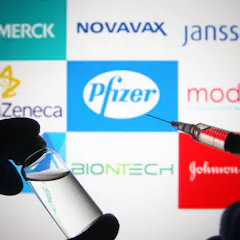
Various companies use different ingredients and different delivery systems in their COVID-19 vaccines. Researchers are investigating whether it’s better for individuals to mix what’s available.
Top contributors
-

Associate Professor and ARC Future Fellow, The University of Western Australia
-
Professor of Microbiology, School of Medicine, University of Washington
-
Professor of Pathology, Microbiology and Immunology, University of South Carolina
-
Professor of Pathology, Microbiology and Immunology, University of South Carolina
-
Research associate, Warren Alpert Medical School, Brown University, Brown University
-
Pediatric Infectious Diseases Fellow, University of Pittsburgh
-
Professor of Medicine, University of Virginia
-
Associate Professor of Biology, Rochester Institute of Technology
-
Senior Research Fellow in Global Health, University of Southampton
-
Bioengineer and Research Fellow, Monash University
-
Australia's Chief Scientist, Office of the Chief Scientist
-
Early Career Research Leader, Emerging Viruses, Inflammation and Therapeutics Group, Menzies Health Institute Queensland, Griffith University
-
Professor and Department Chair of Infectious Diseases and Microbiology, University of Pittsburgh
-
Vice-Chancellor's Research Fellow, School of Health and Biomedical Sciences, RMIT University
-
Professor of Biomedical Sciences, Anglia Ruskin University