
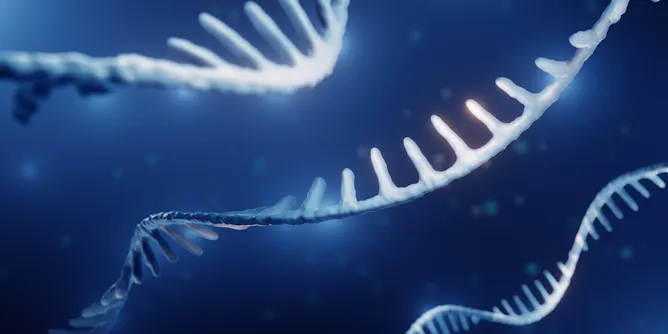
Considered a pipe dream not too long ago, research on RNA therapeutics is progressing rapidly. Now a new manufacturing protocol will help researchers to advance the technology.
Articles on mRNA vaccines
Displaying 21 - 40 of 113 articles
The goal of mRNA technology is to harness the power of the cell to potentially prevent infections and treat diseases.
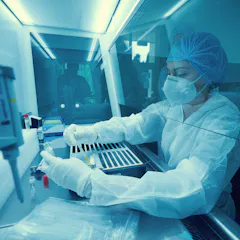
The winners of the 2023 Nobel Prize in physiology or medicine made a discovery that helped create the COVID-19 vaccines. They couldn’t have anticipated the tremendous impact of their findings.
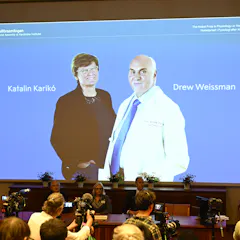
The prestigious prize was awarded to Dr Katalin Karikó and Dr Drew Weissman from the University of Pennsylvania.
This study further highlights the potential of mRNA vaccines in cancer treatment.
While mRNA vaccines are designed to last longer in the body than mRNA molecules typically would, they are also tested to ensure they are eliminated from livestock long before milking or slaughter.
Cancer vaccines are an emerging personalised treatment for cancer. Using the same mRNA technology as COVID vaccines, they stimulate the immune system to destroy cancer cells.

Here’s why it’s taken so long to develop a vaccine for respiratory syncytial virus and what we can expect next.
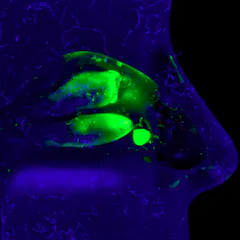
Vaccination is often combined with an injection. It can also take the form of a nasal spray: an approach that is still rare, but which could be effective against Covid. Here’s why.

Annual flu vaccines are in a constant race against a rapidly mutating virus that may one day cause the next pandemic. A one-time vaccine protecting against all variants could give humanity a leg up.

Preventive and therapeutic vaccines both train the immune system to fight disease, but they are used in different ways.
The XBB.1.5 subvariant — nicknamed ‘Kraken’ — is arguably the most genetically rich and most transmissible SARS-CoV-2 Omicron subvariant yet.
The UK government announced that it is partnering with BioNTech to trial personalised cancer vaccines.

As the virus that causes COVID evolves, keeping up with it remains a challenge for variant-specific vaccines. The booster you can get now is the best one to get.

When COVID-19 and the flu co-infect, it’s ‘flurona.’ But such cases are rare, and there are effective ways to protect yourself from both viruses.

Canadian scientists have made significant contributions during the pandemic response, including vital roles in developing COVID-19 vaccines. But underfunding puts the future of science in Canada at risk.
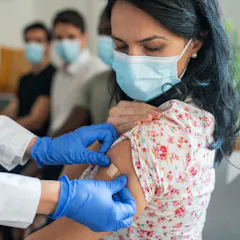
The CDC’s endorsement of the reformulated COVID-19 booster shots represents a major step in the effort to get more Americans boosted.

Waiving patent rights on COVID-19 vaccines and drugs is still crucial to ensure access globally, but the waiver on the table at the June World Trade Organization meeting doesn’t do the job.
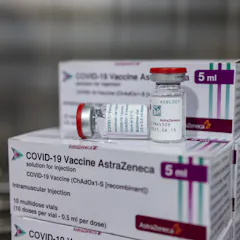
Despite being an excellent vaccine, the use of AstraZeneca in the UK has declined over the course of the COVID pandemic.
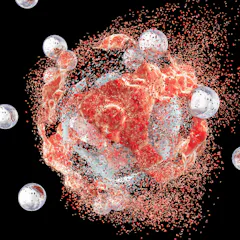
The COVID-19 mRNA vaccines put nanomedicine in the spotlight as a potential way to treat diseases like cancer and HIV. While the field isn’t there yet, better design could help fulfill its promise.
Top contributors
-

Associate Professor and ARC Future Fellow, The University of Western Australia
-
Professor of Microbiology, School of Medicine, University of Washington
-
Professor of Pathology, Microbiology and Immunology, University of South Carolina
-
Professor of Pathology, Microbiology and Immunology, University of South Carolina
-
Research associate, Warren Alpert Medical School, Brown University, Brown University
-
Pediatric Infectious Diseases Fellow, University of Pittsburgh
-
Professor of Medicine, University of Virginia
-
Associate Professor of Biology, Rochester Institute of Technology
-
Senior Research Fellow in Global Health, University of Southampton
-
Bioengineer and Research Fellow, Monash University
-
Australia's Chief Scientist, Office of the Chief Scientist
-
Early Career Research Leader, Emerging Viruses, Inflammation and Therapeutics Group, Menzies Health Institute Queensland, Griffith University
-
Professor and Department Chair of Infectious Diseases and Microbiology, University of Pittsburgh
-
Vice-Chancellor's Research Fellow, School of Health and Biomedical Sciences, RMIT University
-
Professor of Biomedical Sciences, Anglia Ruskin University