
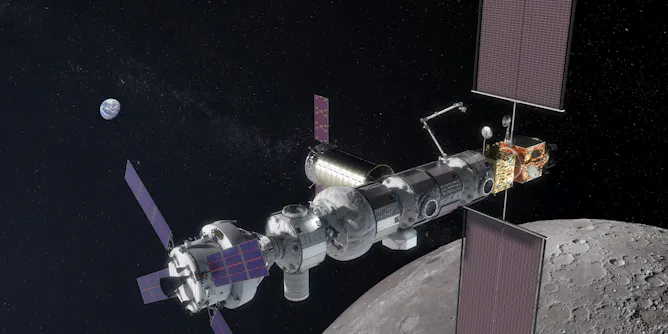
By 2069, we could be seeing the start of regular journeys from the moon to Mars.
Articles on 50th anniversary of Moon landing
Displaying 1 - 20 of 32 articles
CC BY-ND30.8 MB (download)
The fifth episode of the To the moon and beyond podcast series explores where we will be travelling in 2069.
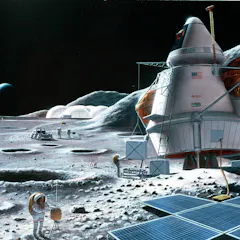
Any base on the moon would need very thick walls.
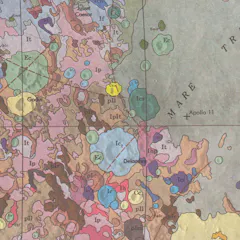
We have the Apollo missions to thank for a lot of our geological knowledge about the moon.
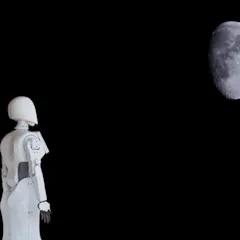
The future of lunar exploration and space travel will be possible only through advances in robotic design and implementation.
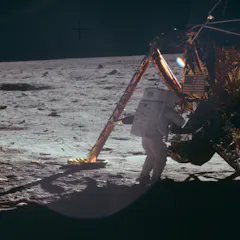
When Neil Armstrong stepped on to the Moon 50 years ago this month, Australians saw the images first. Australia even defied bad weather to bring the historic images to the world.
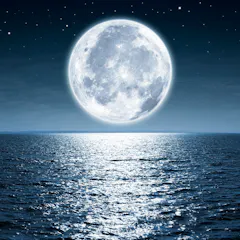
Women have been there in their imaginations.
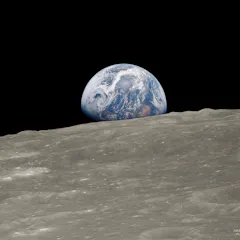
‘Saving the planet doesn’t make compelling TV.’ A philosopher gives his take on the legacy of the Apollo 11 moon landings.
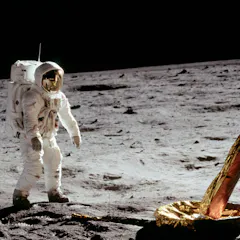
Just 12 people stepped on the Moon during the Apollo missions, but they left more than just footprints. It’s a legacy that needs protecting from damage by any future Moon missions.

Just 12 people have walked on the Moon and they’ll know better than anyone just how big (or small) the place is. But we can make some comparisons with things on Earth to get a measure of the Moon.
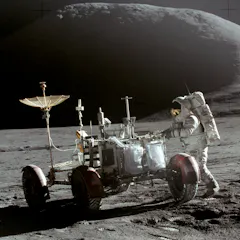
In its Cold War race to the moon, the US played Russian roulette with solar storms.
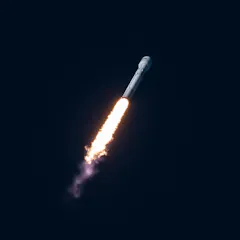
CC BY-ND44.7 MB (download)
Episode 3 of the To the moon and beyond podcast takes a look at who some of the key players are in the 21st century space race and what they are competing for.
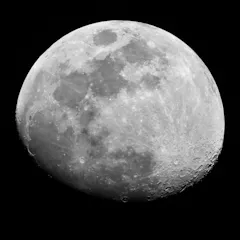
The Apollo missions to the Moon helped our understanding of the cosmic origin of craters on our lunar neighbour, and here on Earth.
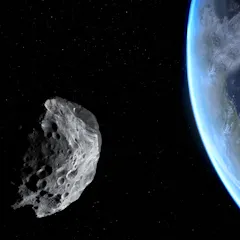
Luxembourg is creating a business environment to service the growing number of space start-ups.
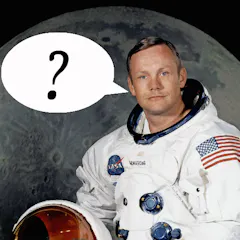
Armstrong always insisted that he said, ‘That’s one small step for a man.’ Yet everyone omits the ‘a’ when they repeat the quote. A linguist tries to get to the bottom of what happened.
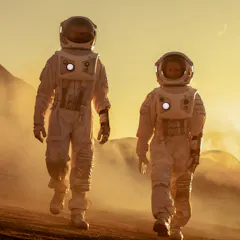
Americans need a new multi-decade Moonshot that will inspire several generations to shoot for the stars and pursue careers in space engineering and exploration.
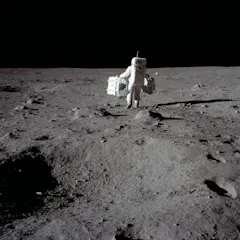
The first humans to land on the Moon, and the team that got them there, get all the glory. But what about the people who laid the foundation for this effort by mapping the Moon? Who were they?
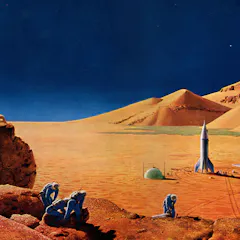
While the 50th anniversary of the first Moon landing is an opportunity to celebrate a remarkable technological achievement, it’s worth reflecting upon the creative vision that made it possible.
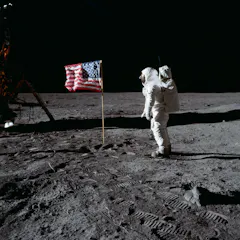
Conspiracy theorists claim NASA used the Apollo special camera to stage the moon landings in a studio and then slowed down the footage to make it look like there was less gravity.
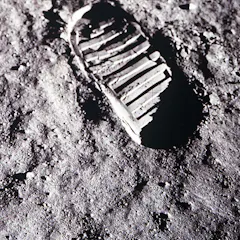
They reflect wider concerns about the US – and its leaders.
Top contributors
-

Podcast host, The Conversation
-
Space Plasma Physicist, Imperial College London
-
Associate Professor in Archaeology and Space Studies, Flinders University
-
Professor Emeritus of Political Science and International Affairs, George Washington University
-
Professor of Planetary and Space Sciences, The Open University
-
Professor of American Studies, University of Manchester
-
Professor of Business Studies, Trinity College Dublin
-
Lecturer in Astronomy, Nottingham Trent University
-
Postdoctoral research associate, University of Oxford
-
ARC Future Fellow, School of Earth and Planetary Sciences, Curtin University
-
Professor (Astrophysics), University of Southern Queensland
-
Operations Scientist, CSIRO
-
Professor of Philosophy, University of Sheffield
-
Associate Professor of Health Promotion, Swinburne University of Technology
-
Professor of Space Physics, Lancaster University
