
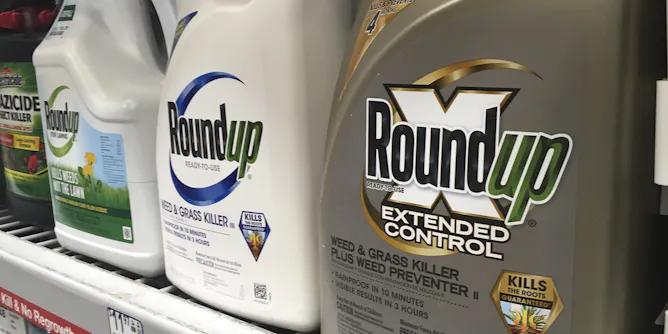
The U.S. Supreme Court’s decision on glyphosate relieves the sellers of hundreds of pesticides from obligations to warn customers about potential dangers.
Articles on Monsanto
Displaying 1 - 20 of 24 articles
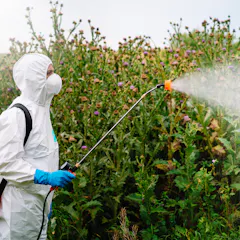
New Zealand’s approval of Roundup is based on reviews shaped by Monsanto. But one has now been retracted and others are under investigation.
A case involving the potential dangers of glyphosate, the active ingredient in the weed killer Roundup, relates to broader efforts to protect consumers.

A case involving the potential dangers of glyphosate, the active ingredient in the weed killer sold as Roundup, could affect broader consumer-protection efforts.
Mexico waffles on glyphosate ban but support for Agroecology stays strong.

Corporations restrict what farmers can do with their own seeds, as well as their farm equipment when it breaks down.

The ravages of climate change and hunger do not occur in isolation, but are part of the system we have built.
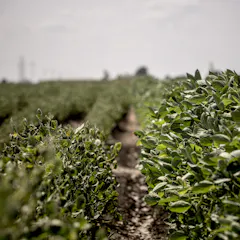
Farmers are stuck in a chemical war against weeds, which have developed resistance to many widely used herbicides. Seed companies’ answer – using more varied herbicides – is causing new problems.

Farmers worldwide say Monsanto’s policy of charging for every use of its genetically modified seeds violates their planting rights. But judges in these patent law cases aren’t so sure.

What is proof? In both law and science, it’s basically a consensus of experts – but they work at very different speeds. That means juries may reach verdicts on an issue before the science is settled.
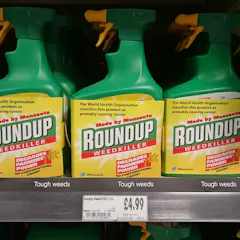
Thousands of people are suing Monsanto, claiming that its Roundup herbicide gave them cancer. A California judge has reduced the first damage award but let the verdict against Monsanto stand.
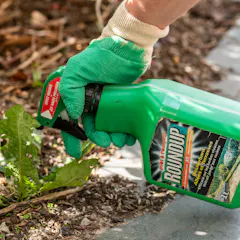
A US court recently ruled the weed killer Roundup contributed to a former gardener’s cancer. Juries don’t decide science. The weight of evidence shows Roundup has little association with cancer.

Bayer, the new owner of Monsanto, will need to up its PR efforts, in the wake of last week’s legal ruling on glyphosate weedkillers.
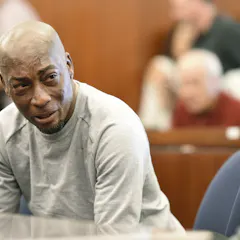
A jury concluded on Aug. 10 that exposure to the herbicide Roundup caused Dewayne Johnson’s cancer and ordered the company to pay $289 million in damages. Thousands more claims are pending.
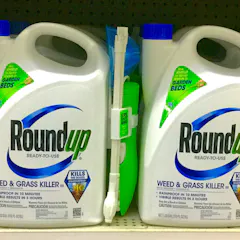
Hundreds of lawsuits against Monsanto contend that its popular Roundup weed killer gave users cancer. But proving this kind of connection is challenging in both science and law.
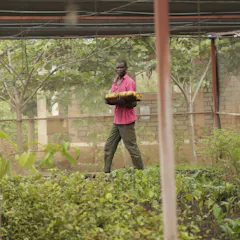
At present on the African continent, the politics of persuasion are especially consequential in the area of agri-food research and development.

The use of Agent Orange in Vietnam had deep impacts, including a poisoned water supply, birth defects and cancer. Despite decades of attempted litigation, justice for spraying victims seems unlikely.

The global food system has been operating in post-truth mode for decades.

Microbial-based solutions are perhaps the best-kept secret in agricultural innovation.

Ensuring the next 10 billion people are fed fairly will require a radical restructuring of global agri-tech.
Top contributors
-

Professor, School of Medicine, University of Connecticut
-
Professor of Law and Associate Dean for International Affairs, Wake Forest University
-
Teaching Fellow at the Centre for Food Policy, City St George's, University of London
-
Associate Professor, Department of Entomology; African-American Studies, University of Illinois Urbana-Champaign
-
PhD Candidate in Science and Society, Te Herenga Waka — Victoria University of Wellington
-
Director, Agri-Food Analytics Lab, Professor in Food Distribution and Policy, Dalhousie University
-
Senior Lecturer, Department of Media and Communications, Faculty of Arts and Social Sciences, University of Sydney
-
Visiting Professor of Biotechnology, King's College London
-
Lecturer in Information Studies, University of Sheffield
-
Associate Professor, Political Science, University of Guelph
-
Lecturer in Law, Queen's University Belfast
-
Professor of Food Policy, City St George's, University of London
-
Associate Professor, Florida Institute for Built Environment Resilience, University of Florida
-
Associate Professor, Department of Sociology and Anthropology, University of Guelph
-
DeWitt Wallace Professor of Geography, Director of Food, Agriculture & Society Program, Macalester College