
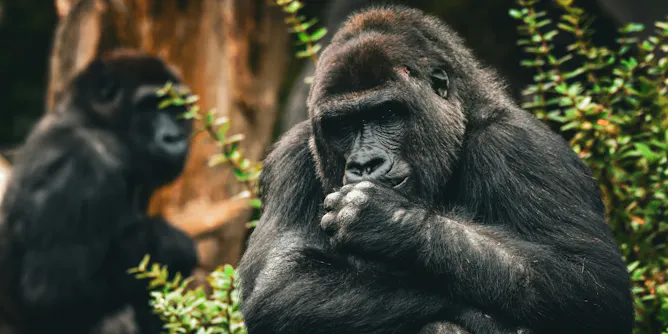
Among primates, reconciliation quickly follows conflict. Among humans, the ego gets in the way: protecting one’s image often takes precedence over repairing social bonds.
Articles on Monkeys
Displaying 1 - 20 of 75 articles
It’s rare for a completely new primate species to be named.

Punch’s attachment to his plushie isn’t just the subject of a heart-wrenching video. It harks back to the story of a very famous set of 1950s psychology experiments.
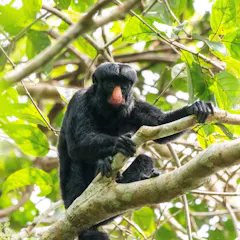
The red-nosed cuxiu monkey is like no other on the planet.
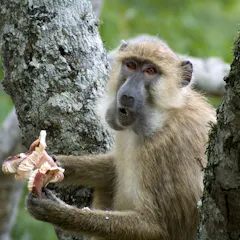
Mushrooms make up a crucial part of some monkeys’ diets, offering insights into the past.
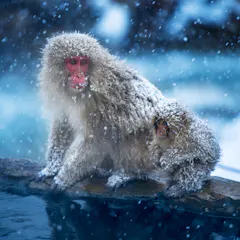
New research overturns decades of assumptions about how – and where – our lineage began.

A 25-year-old local scientist captured rare footage showing how one of the world’s deadliest viruses could jump from bats to humans.
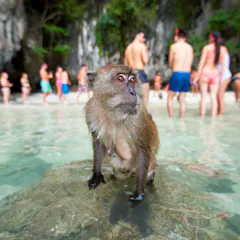
Recent research explores what drives this human behaviour.

How apes make sense of actions is shedding new light on the evolution of a key component of human language.
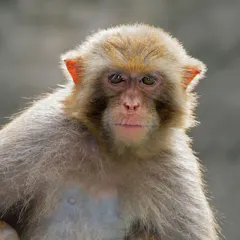
Every human brain still holds primitive instincts that we share with our monkey ancestors. Is that part of your brain in charge when you cast your ballot?
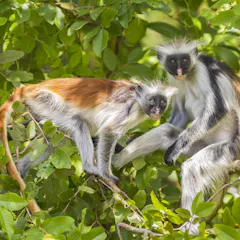
The 17 types of red colobus monkey living in Africa’s forests are among the first large mammals to be killed off by hunters. Protecting the red colobus could therefore protect the entire forest.
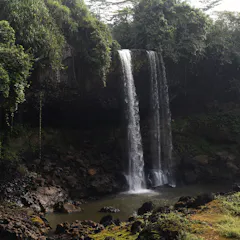
Freshwater biodiversity receives less conservation attention, especially in Nigeria.
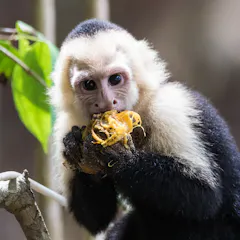
The bigger the brain, the better we are at finding fruit. But is that true? A new study on wild primates refutes this idea.
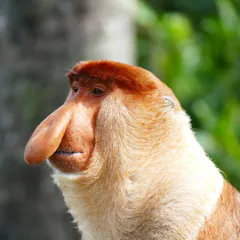
Male proboscis monkeys are known for their large, bulbous nose appendages. It’s a strange feature to evolve – with new research shedding light on their unlikely origin story.
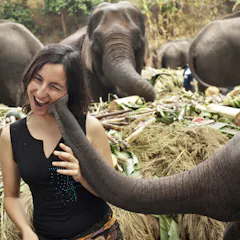
Even self-proclaimed ethical tourism programs can widen economic gaps and harm communities they claim to protect. Here are a few steps you can take as an ethical tourist.
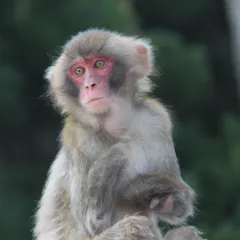
A community of macaques in Japan has a high rate of disabled individuals who survive with behavioural flexibility and maternal care. Globally, primate disabilities are often related to human causes.

New fossil studies tell us our ancient ancestors enjoyed a diet of soft, sweet fruits. This would have influenced where they lived and spread to – and even the evolution of colour vision.
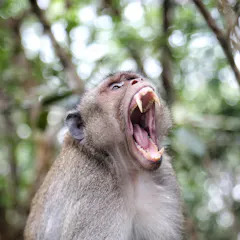
Tourists can do a number of things to avoid dangerous encounters with monkeys.
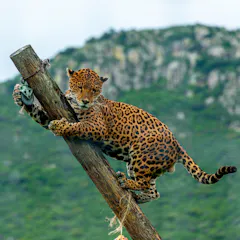
The results could indicate populations of more typical prey in southern Mexico are shrinking.
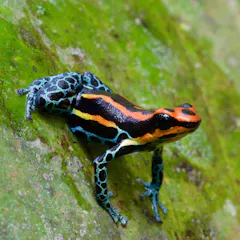
New research looks at how different species have managed to cross geographic barriers throughout history and whether their individual traits played a crucial role in these journeys.
Top contributors
-

Senior Lecturer in Biological Anthropology, University of South Wales
-
Asso. Professor in Anthropology, University College London, UCL
-
Lecturer in Wildlife Conservation
-
Senior Lecturer in Zoology, Bangor University
-
Associate Professor, Liverpool John Moores University
-
Research fellow at the Department of Anthropology, Durham University
-
Professor of Anthropology, Durham University
-
Research Fellow in Biological Anthropology, Monash University
-
PhD Candidate in Environmental Science, Concordia University
-
Associate Professor of Evolutionary Biology, Anglia Ruskin University
-
Emeritus Professor of History, La Trobe University
-
Researcher at the Evolution & Ecology Research Centre, UNSW
-
PhD Researcher, Plymouth Marjon University
-
Research Fellow, Department of Psychology, Nottingham Trent University
-
Professor of Wildlife Conservation, University of Salford