
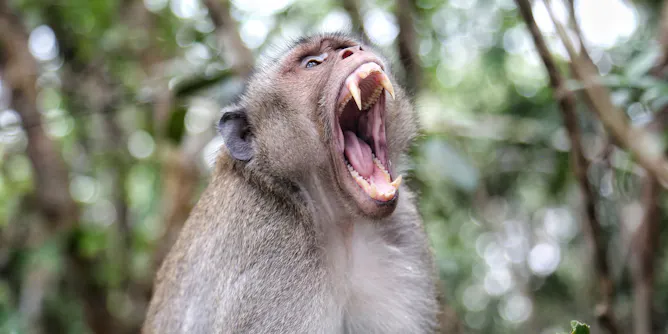
Tourists can do a number of things to avoid dangerous encounters with monkeys.
Articles on Non-human primates
Displaying 1 - 20 of 22 articles
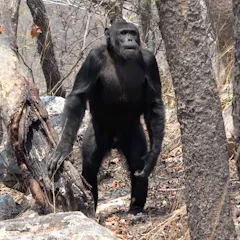
Almost all theories of human bipedalism explain it as a terrestrial adaptation. A new study does not support that view.
Nonhuman primates like rhesus monkeys share certain characteristics with people that may make them better study subjects than mice for research on neurodegenerative diseases.
Differences between male and female skulls in some species of gibbon may shed light on how our extinct ancestors lived.

About 60 per cent of monkeys, apes, lemurs, lorises and tarsiers are threatened with extinction. Climate change will only make it more difficult for them to survive.

Medical research to benefit people is first conducted in animals. Creating a new biomedical model by inserting human immune cells into pigs may lead to new insights and treatments.
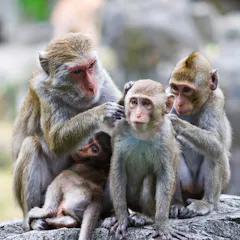
Primates have evolved behavioural strategies that can minimise the risk and costs of conflict.
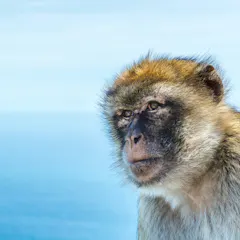
New research suggests African monkeys crossed the ocean to South America earlier than previously thought.
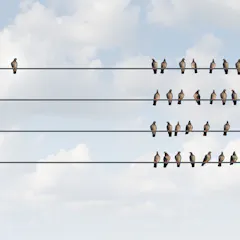
The evolution of the strong human bond.

Scientists don’t ask how some people evolved to be tall. In the same way, asking how homosexuality evolved is the wrong question. We need to ask how human sexuality evolved in all its forms.
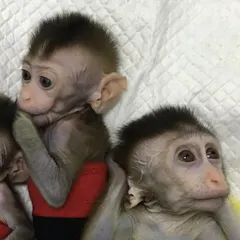
Researchers in China have produce a world first: gene edited, cloned macaque monkeys. They say such animals will be vital for research on human health – but ethical concerns remain.
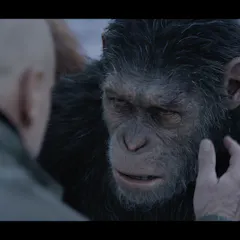
Using real apes and monkeys as actors in film and TV encourages people to see them as pets.
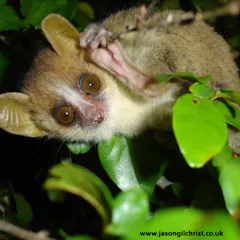
As Donald Trump prepares to enter the White House, there may be dark days ahead for some of the world’s rarest and most beautiful primates.
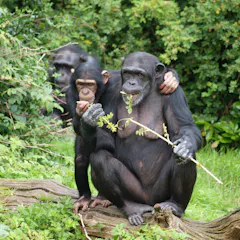
A number of monkey species eat rough leaves, soils and charcoal to treat or prevent diseases.
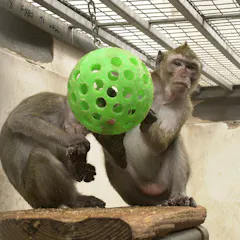
The media regularly report impressive medical advances, but not the animal research that plays a critical role in developing the new treatment or giving us insights into basic science.

Evolution also does not claim humans evolved from primates. Neither does it say non-human primates, including monkeys, baboons, chimpanzees and gorillas, will evolve into humans with time.
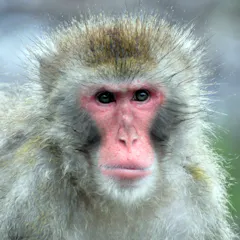
We can learn a lot about ourselves and our evolutionary history by looking at the personalities of our primate cousins.
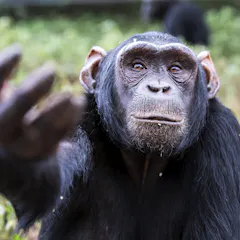
Chimps might be cute and cuddly but it’s their human drama that obsesses us.
Draft guildelines for the use of non-human primates in research will dilute what protections these animals have, despite numerous reasons to stop the practice entirely.
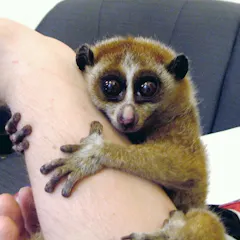
It may come as a surprise to discover that it is perfectly legal in the UK to keep primates, such as marmosets, loris, capuchins or squirrel monkeys, as pets. Perhaps more surprising still is that there…
Top contributors
-

University of Hull
-
Senior Lecturer in Zoology, Bangor University
-
PhD Researcher, Plymouth Marjon University
-
Professor of Wildlife Conservation, University of Salford
-
Professor of Animal Evolution & Systematics, University of Cape Town
-
Professor, Department of Optometry and Vision Sciences and Honorary Professorial Fellow at the Florey Department of Neuroscience & Mental Health, The University of Melbourne
-
Research Fellow, Department of Psychology, Nottingham Trent University
-
Honorary Associate, Australian Institute for Primary Care and Ageing, La Trobe University
-
Lecturer in Psychology, Newcastle University
-
Associate Research Scientist, Yale University
-
Professor of Psychology, University of Wisconsin-Madison
-
Asso. Professor in Anthropology, University College London, UCL
-
Lecturer in Wildlife Conservation
-
Senior Lecturer in Biological Anthropology, University of South Wales
-
PhD Candidate in Environmental Science, Concordia University