

On your mental number line, are the numbers smaller on the left or on the right? Two comparative cognition researchers explain how culture may influence the orientation – but also may not.
Articles on Apes
Displaying 1 - 20 of 29 articles
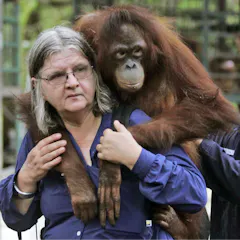
With Jane Goodall and Dian Fossey, Galdikas changed the face of science and opened the world’s eyes to how similar humans are to orangutans and other primates.

Tails may have disappeared from our earliest ape ancestors due to a genetic mistake.
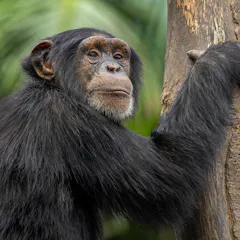
The fascinating exceptions in the animal kingdom to patterns of longevity.
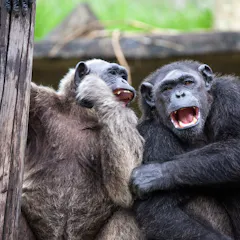
Alcohol consumption is common across human societies, but do animals other than humans regularly drink alcohol?
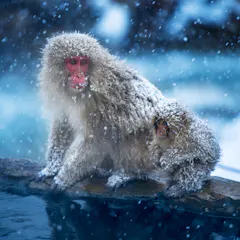
New research overturns decades of assumptions about how – and where – our lineage began.
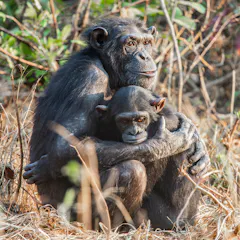
It may be time to move on from species stereotypes.
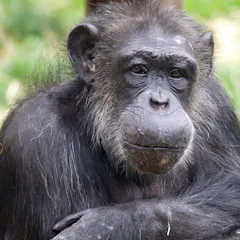
The study allowed researchers to assess the impact of changing zoo practices over the last 50 years.

There has been much debate over the years as to exactly how “Lucy” walked.

How apes make sense of actions is shedding new light on the evolution of a key component of human language.

New fossil studies tell us our ancient ancestors enjoyed a diet of soft, sweet fruits. This would have influenced where they lived and spread to – and even the evolution of colour vision.
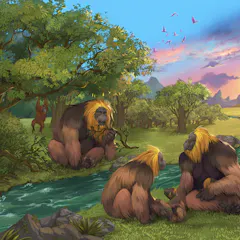
What happened to the three-metre tall apes that once lived alongside orangutans? A new study suggests they were too slow to adapt to a changing world.
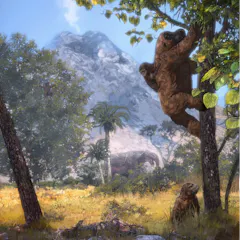
Contrary to the idea that apes evolved their upright posture to reach for fruit in the forest canopy, the earliest known ape with this stature, Morotopithecus, lived in more open grassy environments.
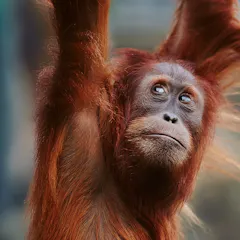
Orangutans, gorillas and chimpanzees seem to enjoy the buzz of getting dizzy.

Most of us have heard of the dangers of deforestation but there are other more subtle ways that human beings can endanger monkeys, apes and lemurs.
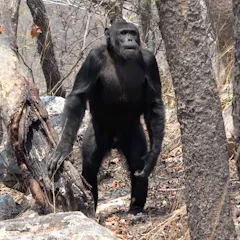
Almost all theories of human bipedalism explain it as a terrestrial adaptation. A new study does not support that view.

Friendships between these two very different primates likely outlasted your promise to be best buds forever with your school classmates.
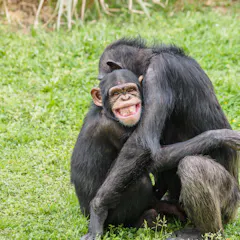
We studied 8,000 primate teeth and finally confirmed that humans are not the only living primate to suffer from cavities. But there are interesting differences.

Studying the lower back allows researchers to understand how the species’ anatomy was adapted for different kinds of movement.

About 60 per cent of monkeys, apes, lemurs, lorises and tarsiers are threatened with extinction. Climate change will only make it more difficult for them to survive.
Top contributors
-

Asso. Professor in Anthropology, University College London, UCL
-
Lecturer in Wildlife Conservation
-
Research Fellow in Biological Anthropology, Monash University
-
John Evans Professor of Moral and Intellectual Philosophy, Northwestern University
-
Associate Professor of Evolutionary Biology, Anglia Ruskin University
-
Senior Lecturer in Evolution and Social Behaviour, Nottingham Trent University
-
Professor Emeritus of Sociology, University of Hamburg
-
Senior Lecturer in Oral Biology, University of Otago
-
Senior Lecturer in Biological Anthropology, University of South Wales
-
Vertebrate Paleontologist, Rutgers University
-
Research professor in palaeontology, Chinese Academy of Sciences
-
Lecturer in English Language and Linguistics, University of Birmingham
-
University of Hull
-
Researcher in Cognitive Science, Lund University
-
Researcher in Cognitive Science, Lund University