
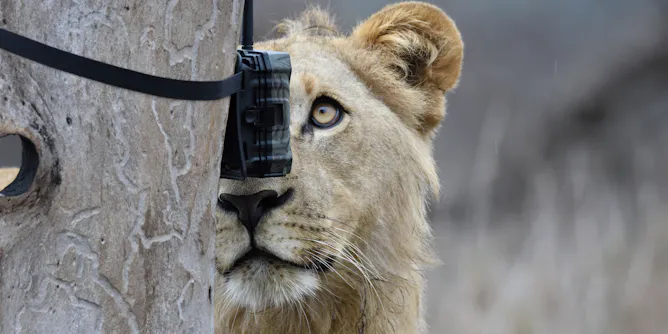
Data from camera traps around the world provide a strong case to support the designation of protected wilderness areas.
Articles on Monitoring
Displaying 21 - 35 of 35 articles
Monitoring volcanoes is a bit trickier when they’re deep under the ocean’s surface.

Keeping an eye on your oxygen levels at home can give you early warning your COVID is deteriorating.

Automated content moderation using algorithms are quick and cheaper. But, they’re not necessarily better than human beings. They are prone to errors and can impose bias in a systemic scale.
COVID-19 kept many scientists from doing field research in 2020, which means that important records will have data gaps. But volunteers are helping to plug some of those holes.

A new plan targets areas around the world that can store carbon and protect large numbers of species. It calls for preserving these lands, working with Indigenous peoples and connecting wild areas.
A new study shows that while fine particle air pollution has declined nationwide over the past 40 years, the health and environmental benefits haven’t been shared evenly.

The Australian National University is turning to digital proctoring to replace the role of a walking invigilator. But who watches the proctor, what are the risks, and what data will be collected?

‘Smart cities’, featuring networks of automatic lights, video cameras and environmental sensors, have been hailed as an enhancement to urban life. But they are also tools of surveillance and control.

A new study lays out a road map for protecting and restoring 50% of Earth’s surface, targeted to preserve biodiversity and maximize natural removal of carbon from the atmosphere.
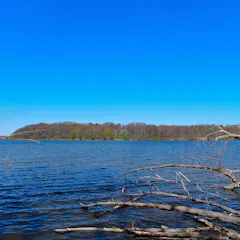
It’s cheaper to prevent biological invasions than to react after they happen. But it’s hard to detect invaders while there are still just a few of them. Knowing when and where to look can help.
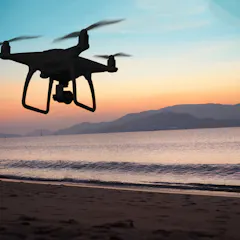
Drones are low cost and easy to operate. They give quality, high resolution outputs, and can be deployed fast and often.

Red tide and a blue-green algae outbreak are fouling hundreds of miles of coast, killing fish and driving tourists away from beaches. Some of the causes are natural, but human actions play a big role.
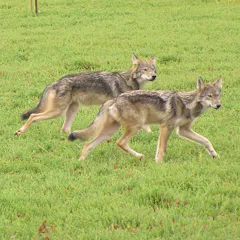
Tracking wild animals can provide lots of valuable data. New research suggests audio recordings of wild wolves can replace the typical radio collars, which can be expensive and intrusive.
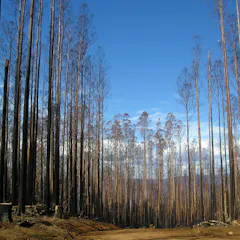
In the aftermath of fires or logging, conservation needs to focus on recovering the health of the remaining vegetation, not just the size of the forest or woodland.
Top contributors
-

Senior Research Scientist in Reef Ecology, Australian Institute of Marine Science
-
Reef Fish Ecologist, Australian Institute of Marine Science
-
Director, Center for Global Discovery and Conservation Science and Professor, Arizona State University
-
Professor, Director of Florida Sea Grant, University of Florida
-
Director, USA National Phenology Network, University of Arizona
-
Associate Professor of Geography and Sustainability, University of Tennessee
-
ARC Future Fellow, Queensland University of Technology
-
Professor Emeritus of Chemical and Biological Engineering, Biomedical Engineering, and Public Health, Colorado State University
-
Associate Professor, Department of Critical Care, The University of Melbourne
-
Outreach Coordinator and Liaison to the U.S. Fish & Wildlife Service, University of Arizona
-
Canada Research Professor, School of Journalism and Communication, Carleton University
-
Senior Research Fellow (ARC DECRA), Emerging Technologies Research Lab, Faculty of Information Technology, Monash University
-
Research Scientist, University of Arizona
-
Professor, Conservation Biology, The University of Queensland
-
Lecturer in Marine and Fisheries Sciences, University of Ghana