
Understanding where and how memories are formed could lead to more ways to treat conditions like PTSD and addiction.
Articles on Microscopy
Displaying 21 - 40 of 42 articles
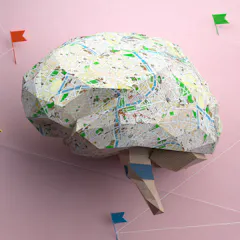
Scientists have been mapping the brain for centuries. New visualization tools bring them one step closer to understanding where thoughts come from and new ways to treat neurological disorders.

The NanoMslide causes potentially cancerous cells to ‘light up’ with vivid colour contrast. It has already been successful in finding early-stage breast cancer cells in human tissue.
DNA has been storing vast amounts of biological information for billions of years. Researchers are working to harness DNA for archiving data. A new method uses light to simplify the process.
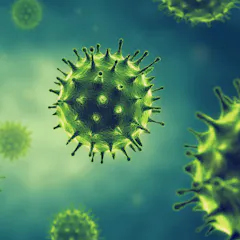
Viruses are too small to visualise with traditional microscopes.

New scientific research reveals how Thomas Cromwell’s Machiavellian manoeuvring influenced his own depiction on the front of The Great Bible.

Born on July 18, 1635, this polymath broke ground in fields ranging from pneumatics, microscopy, mechanics and astronomy to civil engineering and architecture.

Sometimes photographic images are not able to capture and accurately represent science – especially at very tiny scales. This is where scientific visualisation comes in.
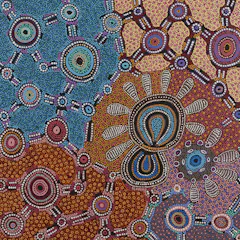
A new exhibition pairs paintings by Indigenous Australian artists with microscopic images captured by scientists. The parallels, as this gallery of pictures shows, are intriguing.
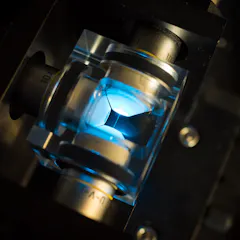
Shaped light enables deeper imaging of biological samples under the microscope and avoids damage to the tissue.
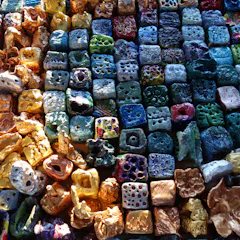
Research is not just about producing papers.
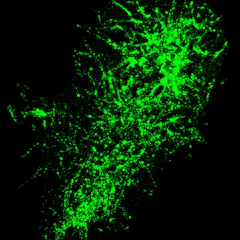
Working with an embedded artist for a year helped one physicist realise that art and science share a lot of common ground
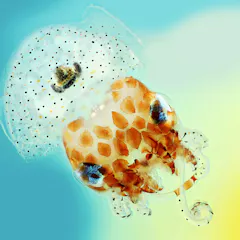
A better understanding of science among ordinary people validates the vast amounts of public funds spent on scientific research.
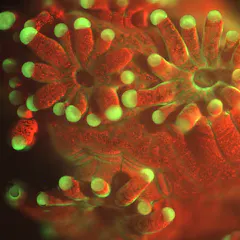
Could this new technology do for the microscopic marine world what the first telescopes did for the heavens above?
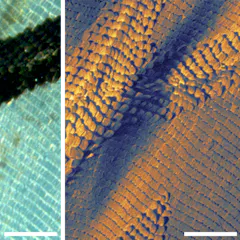
A new scanning helium microscope offers the potential for capturing images with finer resolution than optical microscopes, but without damaging samples as with electron microscopes.
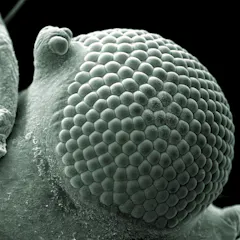
Winners of the Wellcome Images Award 2015 tell us about how they got their special shot.
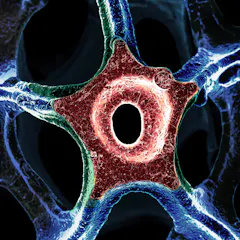
We all know engineering is useful, functional, even ingenious. But the engineering photography competition we hold each year provides us a chance to wander outside its merely utilitarian aspects into dimensions…
Robert Hooke was a pioneer of microscopy, when back in the 17th century he drew stunning images of insects, plant cells and fossils. Since then microscopes that use light to magnify things we can’t see…
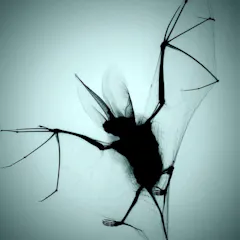
Widening our view of the world can mean taking a much closer look at the familiar. And technology from MRI to Scanning Electron Microscopes, which use focused beams to interact with a sample’s surface…
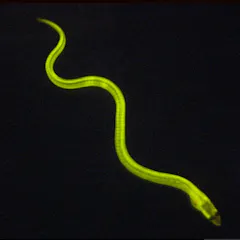
Researchers have discovered a fluorescent protein in a Japanese eel consumed as a popular sushi snack. The discovery could help develop simpler and more sensitive tests to detect jaundice and other diseases…
Top contributors
-

Scientific Program Leader at Gladstone Institutes, University of California, San Francisco
-
Associate Professor of Neural and Behavioral Sciences, Penn State
-
Professor of Computational and Systems Biology, Associate Senior Vice Chancellor for Science Strategy and Planning, University of Pittsburgh
-
Senior Lecturer in Nanomedicine, King's College London
-
Reader in Engineering, University of Cambridge
-
Ph.D. Student in Electrical and Computer Engineering, University of California, San Diego
-
Junior Research Fellow, Imperial College London
-
Microscopy and Histology Core Facility Manager, University of Aberdeen
-
Assistant Professor in Physics, Heriot-Watt University
-
Head of Marine Imaging Lab, University of Haifa
-
Postdoctoral Fellow, Massachusetts Institute of Technology (MIT)
-
Associate Professor of Physics, Griffith University
-
University of Sydney
-
Professor of Science Communication and Chemistry, University of Hull
-
Nanoartist and creative-practice based researcher in Media, Curtin University