
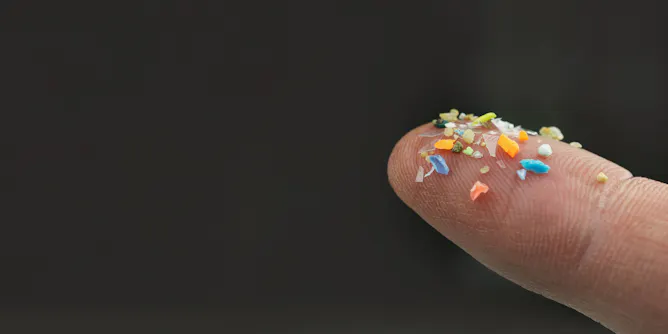
Global action is urgently needed to tackle microplastic – and the problem has never been more pressing.
Articles on Microplastics in food
Displaying all articles
We don’t yet know the health effects of microplastics in the brain. But until we find out more, it’s best to limit our exposure to plastics where we can.
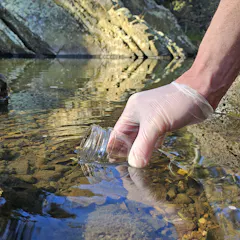
If you’re worried about pollution in the air we breathe, water we drink and food we eat, take time out to explore the evidence of harm and digest some practical advice on how to reduce your exposure.
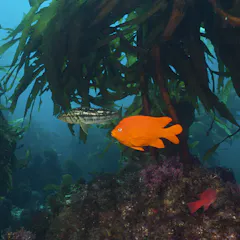
Humans rely on the ocean for food, jobs and other resources, but these systems are being stressed to the brink.

It’s estimated that 1.63 million tons of material will be produced in 2023 for wet wipes.
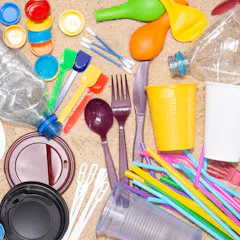
Alternative food containers, such as those made of bioplastics, are being promoted as a way to reduce our exposure to plastic in food. But there is still a lack of knowledge around their impacts.
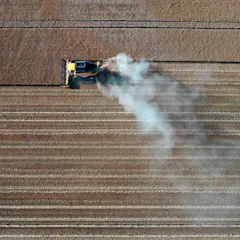
Synthetic fertiliser prices have shot up amid the war in Ukraine. Could organic fertilisers provide a worthy alternative?
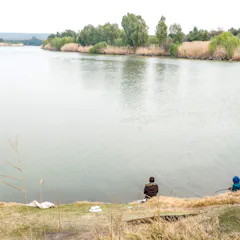
The Vaal River, which serves more than 11 million people, is considerably polluted with microplastics.

Normally land-bound pathogens that cause deadly diseases for both humans and animals can cling to microplastics and end up in your seafood.

The Nigerian government must do more to combat increasing plastic pollution in the country.
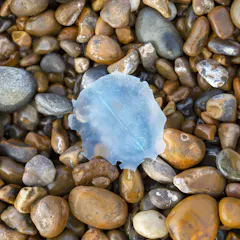
After soil, water and food, microplastics have now entered the atmosphere, where they influence the climate system and may even change atmospheric chemistry.
Top contributors
-

Research Engineer, Laboratoire d’Economie Rouen Normandie, Université de Rouen Normandie
-
Researcher in Ecosystem Dynamics, University of California, Santa Cruz
-
Professor of Business Law and Ethics, Indiana University
-
Senior Research Fellow in Aquatic Ecology, Charles Darwin University
-
Professeur de Toxicologie et de Biochimie, Université Paris Cité
-
Professor, Obafemi Awolowo University
-
Professeur du MNHN, Muséum national d’histoire naturelle (MNHN)
-
Professor of Chemistry, RMIT University
-
Professor of Environmental and Energy Policy, Indiana University
-
Associate Professor of Pathology, Microbiology and Immunology, University of California, Davis
-
Chercheur en Toxicologie, Inrae
-
Royal Society Dorothy Hodgkin Research Fellow and Lecturer in Environmental Chemistry, University of Bristol
-
Director, Woods Hole Oceanographic Institution
-
Ingénieure de Recherche, Université Paris Cité
-
Professor of Atmospheric Chemistry, University of Canterbury