
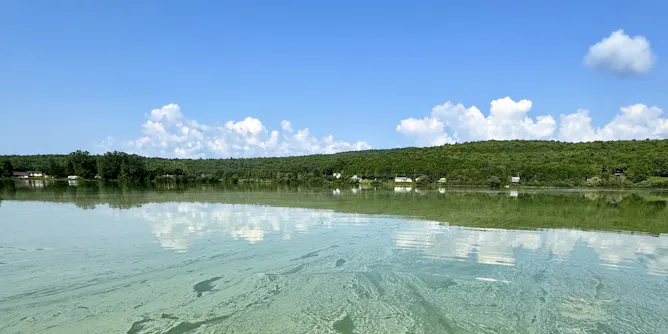
New techniques monitor the health of lakes in real time by analyzing their microbiome to anticipate and respond to environmental threats such as cyanobacteria.
Articles on Metagenomics
Displaying all articles

From ice cores extracted from the Tibetan Plateau, scientists recovered the equivalent of 1,705 virus species. Reading their genomes tells the story of 41,000 years of climate change.
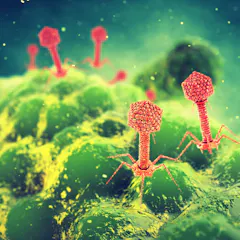
You could say there are a ‘crapload’ of viruses in the human gut. Luckily, most of these do not attack our cells, but instead feed on bacteria.
Miniaturized laboratory equipment is making it easier to identify airborne pathogens in the field, but there’s still work ahead to be able to instantly determine if a room is safe or contaminated.
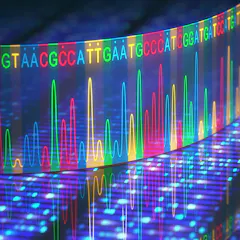
Superfast DNA analysis is now being used to crack medical mysteries when physicians can’t figure out whether an infectious microbe is causing the disease.
Massive online DNA databases can be used as a resource to discover viruses – even if the data had not been explicitly collected for that purpose.

Microbes have the ability to survive in extremely hot and cold conditions. This makes them invaluable tools for research: they can teach us how life has evolved and how we survive.

Forget the pith helmet and butterfly net. Discovering biodiversity now is much more about metagenomics and the 0’s and 1’s of digital databases.
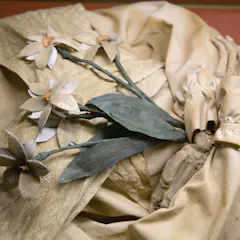
In 1994, a crypt containing 242 bodies was discovered in Vác, Hungary. Many of the bodies were naturally mummified, including the remains of a woman, Terézia Hausmann, who died apparently from tuberculosis…
Top contributors
-

Director, Genomics Research Institute; Director, Centre for Microbial Ecology and Genomics, University of Pretoria
-
Honorary Senior Lecturer, UCL
-
Junior research fellow in virus evolution, University of Oxford
-
Research Professor of Ecosystem Science and Management, Penn State
-
Professor of Laboratory Medicine, University of California, San Francisco
-
Professor of Microbiology, School of Chemistry and Molecular Biosciences, The University of Queensland
-
Postdoctoral Research Fellow, The University of Queensland
-
Associate Professor of Biology, Clarkson University
-
Research Associate, Center for Air and Aquatic Resources Engineering and Science, Clarkson University
-
Bayard D. Clarkson Distinguished Professor of Mechanical and Aeronautical Engineering, Clarkson University
-
Distinguished University Professor, Earth Sciences, The Ohio State University
-
Research Associate at the Polar and Climate Research Center, The Ohio State University
-
Professor of Microbiology, The Ohio State University
-
Professor of Geography, The Ohio State University
-
Associate Professor of Microbiology, The Ohio State University