
Big tech doesn’t just fund research into itself – it also controls researchers’ access to data. Even big tobacco didn’t have this kind of power.
Articles on Meta
Displaying 101 - 120 of 236 articles
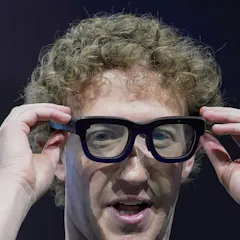
Smart glasses are already being used in many industrial settings – and may be a common item by the end of the decade.

Meta leader Mark Zuckerberg has given the world a sneak preview of the Orion glasses – but will they change the world?

Ray-Ban Meta smart glasses are equipped with a camera and powered by AI. Are the current privacy policies sufficient when it comes to the use of wearable cameras in public spaces?

Meta has revised how teenagers will experience Instagram. It’s a win – especially if it prompts parents to talk to their kids about online safety.

A new report shows Alphabet, Google’s parent company, is worth more here than News Corp and Nine combined.

The early internet was like the coolest club around. Then, big tech companies swept in. But the alternative to a corporate online world has always existed.

The law makes many of the same mistakes as the government’s other recent attempts to reduce online harms.

There are three key steps people can take to protect their data from big tech.

In terms of paying for content and regulating content, the federal government gets a mixed report card.

Children under 14 would be banned from social media, while teens aged 14–15 would need parental consent. But this law will be challenging to implement.

Modern journalism is already heavily dependent on the platforms offered by big tech. Adding new financial dimensions to this relationship raises urgent questions about press independence.

Meta wants Apple and Google to force parents to approve apps on their child’s phone. A better solution would be for the tech giants to cooperate.

A tech tax on companies like Google and Meta might be another way to make them pay for the news they use to win customers and make money.

CrowdTangle helped researchers and journalists track viral online falsehoods. Its closure in a key election year is dangerous
Open-source AI models promise a more democratic and transparent future. They can also be open to misuse – and ethical concerns remain.

Gaming or watching sports in the metaverse might be fun, but these ‘immersive online environments’ are also enabling new kinds of crime. To tackle this problem, we must first understand it better.

Canadians have been engaging less with news on Facebook since Meta’s decision to block journalistic content on some of its platforms.
Google, Microsoft and Meta have all reported significant emissions increases due to AI.

The government has revived the Fair Digital News Bargaining Bill, but the way AI may be skewing news results and visibility is off the table for now. My new research suggests it should be a priority.
Top contributors
-

Senior Research Associate in Media and Communications, University of Sydney
-
Professor of Information Sciences & Director, Social Change Enabling Impact Platform, RMIT University
-
Senior Lecturer in Economics, Lancaster University Management School, Lancaster University
-
Professor of Information Systems, Michigan State University
-
Professor of Internet Studies, Curtin University
-
Professor of AI and Behavioral Data Science, University of Technology Sydney
-
Senior Lecturer in Data Analytics in the Social Sciences, Deputy Director of the Centre for AI, Trust and Governance, University of Sydney
-
Adjunct Senior Lecturer, Applied Ethics and CyberSecurity, Griffith University
-
Associate Professor of Digital Communication, RMIT University
-
Professor, School of Journalism, Writing, and Media, University of British Columbia
-
Senior Lecturer, School of Engineering, Australian National University
-
Professorial Fellow, University of Canberra
-
Professor of Digital Communication, Director of QUT Digital Media Research Centre, Queensland University of Technology
-
Associate Professor, Digital and Social Media, School of Communication, University of Technology Sydney
-
Associate Professor of Visual Communication & Digital Media, RMIT University