
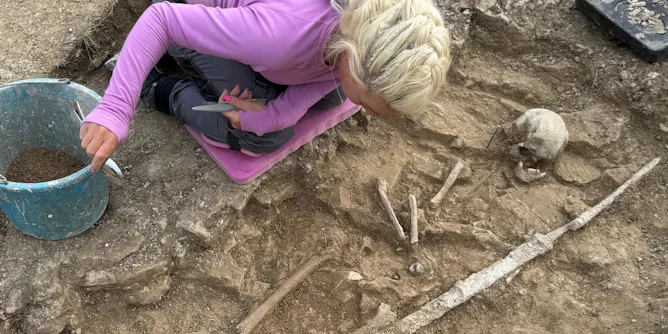
Swords found in early medieval graves show the complex cultural meanings that weapons can hold.
Articles on Medieval
Displaying 21 - 40 of 113 articles
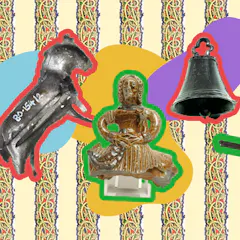
Medieval Londoners were importing toys, treats and trinkets
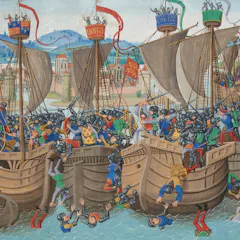
We created the database in order to challenge assumptions about the lack of professionalism of everyday soldiers.
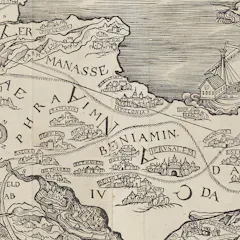
The map of the Holy Land in Christopher Froschauer’s 1525 Old Testament has the Mediterranean to the east of Palestine instead of to the west.
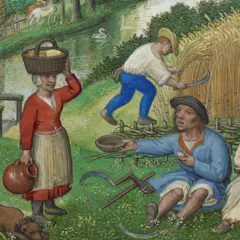
Some peasants were entitled to up to a year and a day of leave if they were sick.
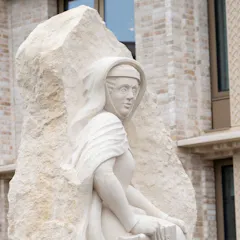
As creators of educational, religious and charitable institutions, women of means found ways to circumvent the patriarchal power structures of medieval society.
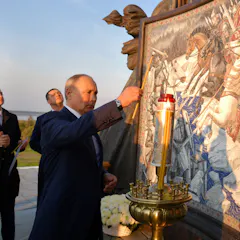
Moscow’s framing of its enemies as ‘Anglo-Saxon’ follows a strategy of misusing history to justify the invasion of Ukraine.
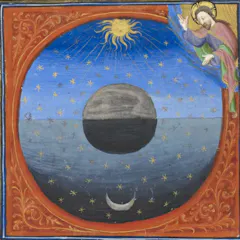
As a symbol, the Moon did not have an easily decipherable meaning – which encouraged medieval people to read it in playful ways.
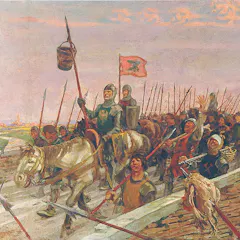
History and myth are different narrative techniques, and both can be used to stimulate national pride and cohesion and to celebrate events that defined a people.
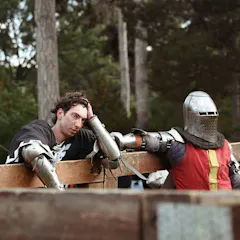
Patrick Marlborough’s debut novel Nock Loose combines satire with a rather gnarly plot.
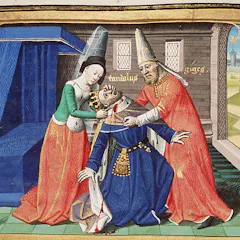
In the 14th century, Sundays were particularly deadly.
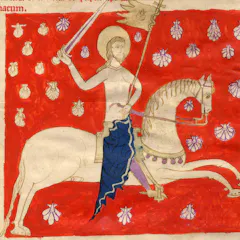
Many people exaggerate their experiences of travel and pilgrimage, but such fabrications date back to the Middle Ages.
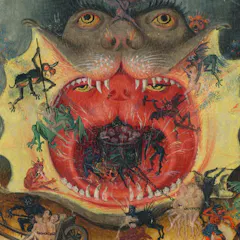
Over the course of three nights in 1422, the woman had visions of aggressive pets and insatiable worms tormenting a beloved friend.
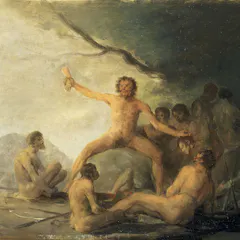
Cannibalism has been documented across Western Europe, from prehistory into the 1800s.
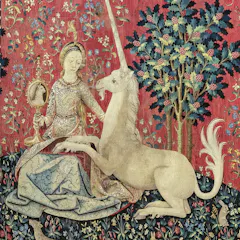
Surgery was rare and risky in the medieval period. Though medical options were limited, trans people were able to take transitioning into their own hands.
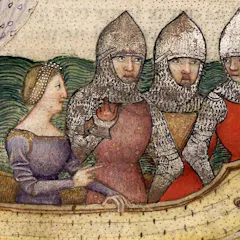
While the princess was often powerless, the snippets of evidence that we have about her present the life of a young woman with the resolve and tenacity to survive and thrive.
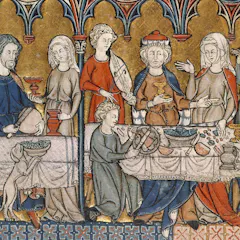
Margaret Paston’s reference to playing cards in her letter to her husband on Christmas Eve 1459 is the earliest recorded reference to the activity in England.
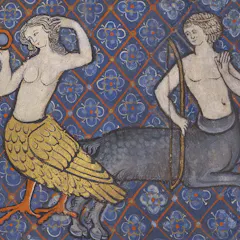
Demons were considered very real and very threatening throughout the medieval and early-modern periods.
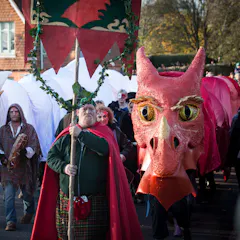
Folklorists created a through line from the Celtic pagan festival of Samhain to Halloween. But the Halloween we know today has more to do with the English, a 9th century pope and American consumerism.
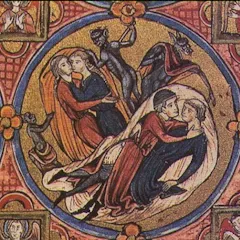
A property agreement between two men, signed in 1061, includes heartfelt declarations of lifelong trust and faithfulness.
Top contributors
-

Associate Professor of Medieval History, Durham University
-
Professor in High Medieval History, Durham University
-
Assistant Professor in Medieval Literature and Director, Trinity Centre for the Book, Trinity College Dublin
-
Lecturer in English, University of Liverpool
-
PhD Candidate, Medieval Literature, Bangor University
-
Professor of English, University of Surrey
-
Teaching Fellow in Medieval Studies, University of Leeds
-
Professor of English, Macquarie University
-
Research fellow, University of Oxford
-
Senior Lecturer, School of Philosophical, Historical & International Studies, Monash University
-
Senior Lecturer in History, University of Aberdeen
-
Professor of Medieval Literature and English Literature, Bangor University
-
Heritage Partnerships Coordinator, University of Oxford
-
Professor and Tutorial Fellow in English, University of Oxford
-
Associate Lecturer in Medieval Literature, University of York