
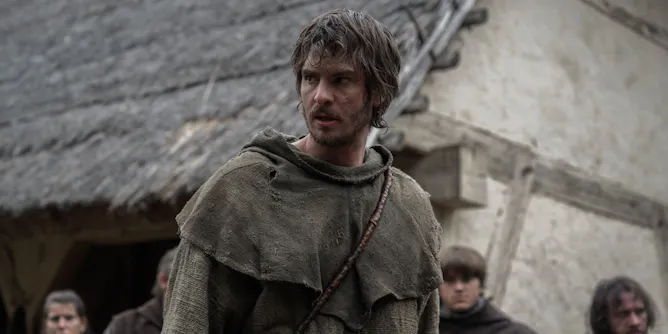
Government corruption and misspending inspired the medieval rebels depicted in The Uprising.
Articles on Medieval
Displaying 1 - 20 of 113 articles

It’s easy to say now that paying the Vikings to go away ‘didn’t work’. But this obscures the fact paying off one Viking band didn’t ensure another would stop coming.
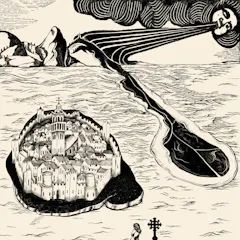
A medieval island that was home to a wealthy city continues to fascinate 800 years after it disappeared beneath the waves.
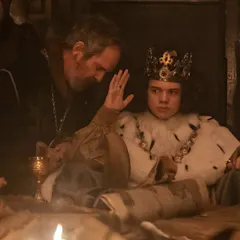
The English Peasants’ Revolt of 1381 wasn’t an isolated outburst. Across medieval Europe, ordinary people challenged the authority of rulers who failed to live up to their end of the bargain.
This exhibition is not so much about the middle ages, more about the aesthetic tropes we associate with it.
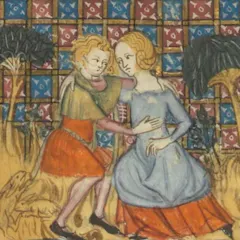
Both families and the church assumed that the purpose of marriage was to have children. Couples who did not conceive often faced questions and scrutiny.

The most famous Scottish cannibal was Sawney Bean, a 16th-century man who, with his wife and children, supposedly killed and ate travellers to the Ayrshire coast.
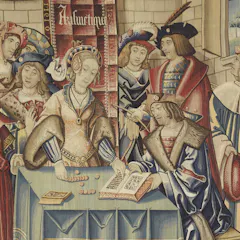
Rumour and gossip of sexual impropriety abounded in medieval society. Defamation offered a legal way of protecting a person’s good name.
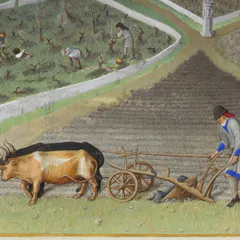
Monks wrote chronicles about the devastating heat of the 13th century, and detail what happened.
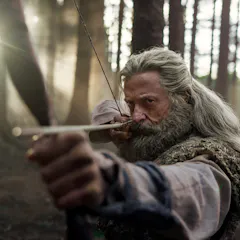
Everyone knows Robin Hood – but almost no one has heard of the medieval outlaws who may have inspired stories about him.
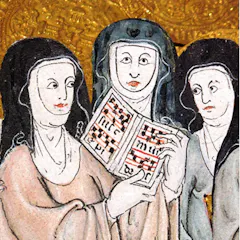
Convent lending formed part of the everyday functioning of Vienna’s economy in the 15th century.
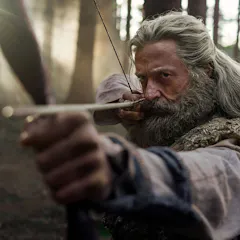
Who was the ‘real’ Robin Hood – community champion or violent criminal? Those in power and the people who shared his tales in pubs have long disagreed.
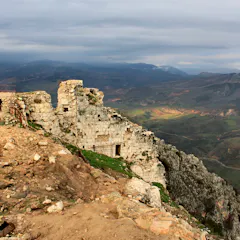
This has historically been a very strategic site, especially during the Crusades.

Medieval Irish bees had a legal status because they were classified as domestic livestock.

The manuscript had long been presumed lost and, as a result, had never previously been examined in detail by Bede scholars.
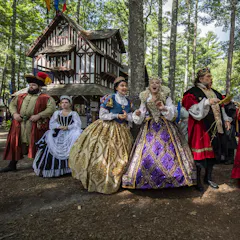
To what extent has the line between playful community space and commercial spectacle been blurred?
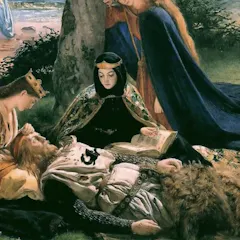
Morgan’s powers fall under two key branches of natural philosophy: the science of medicine, and the science of necromancy according to physics.
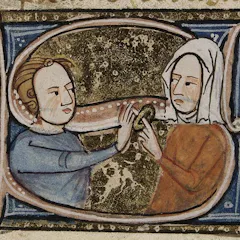
The medieval church’s acknowledgement that signs were equivalent to a spoken language was transformative for deaf people.
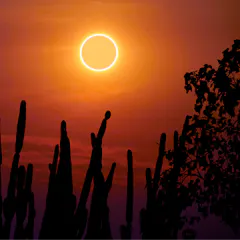
Historically, what made eclipses politically dangerous was the speculation often attached to them.
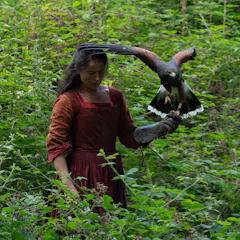
Hawks offered women both real and symbolic means to express gender, power and status within a male-dominated world.
Top contributors
-

Associate Professor of Medieval History, Durham University
-
Professor in High Medieval History, Durham University
-
Assistant Professor in Medieval Literature and Director, Trinity Centre for the Book, Trinity College Dublin
-
Lecturer in English, University of Liverpool
-
PhD Candidate, Medieval Literature, Bangor University
-
Professor of English, University of Surrey
-
Teaching Fellow in Medieval Studies, University of Leeds
-
Professor of English, Macquarie University
-
Research fellow, University of Oxford
-
Senior Lecturer, School of Philosophical, Historical & International Studies, Monash University
-
Senior Lecturer in History, University of Aberdeen
-
Professor of Medieval Literature and English Literature, Bangor University
-
Heritage Partnerships Coordinator, University of Oxford
-
Professor and Tutorial Fellow in English, University of Oxford
-
Associate Lecturer in Medieval Literature, University of York