
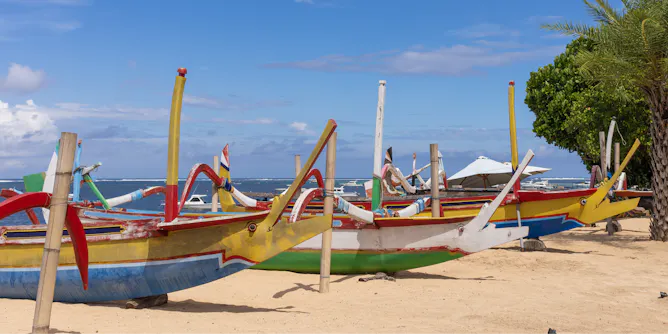
Bali’s traditional elephant-fish canoes embody generations of craftsmanship, spiritual belief and maritime knowledge. But only a handful remain.
Articles on Maritime history
Displaying all articles
Hantavirus cruise ship passengers have left Perth quarantine. But how might quarantine affect them? History has some answers.

Pharaohs may have used this vessel to hunt hippopotami.
They battled scurvy, amputated limbs and treated deadly fevers, all while enduring the chaos of storms and warfare.
Researchers have uncovered new evidence about the sinking of HMS Stephen Furness in 1917, solving a century-old mystery.
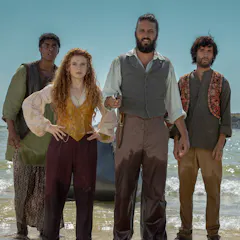
The show is based on Verne’s classic novel
20,000 Leagues Under the Sea. But unlike the book, the series is derivative, didactic and not very deep.
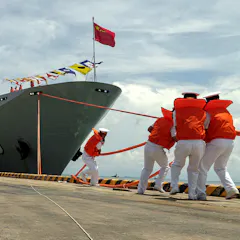
Recent tensions between the US and China can be explained by the geopolitics of sea power and the geography of near and far waters.
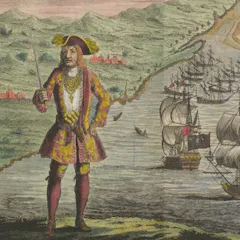
This 18th-century history of piracy mixes fanciful invention with accurate accounts taken from contemporary newspapers and court records.
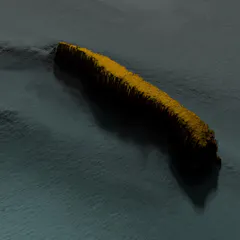
The SS Hartdale was sunk by a German U-boat in 1915 and its final resting place had long been unknown.
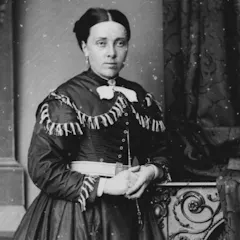
Cranogwen was a trailblazer who challenged expectations of women during the Victorian era.
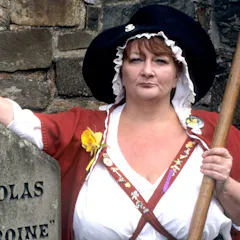
The last invasion of Britain involved bungled military plans, sozzled soldiers and a legendary Welshwoman wielding a pitchfork.

Ukraine has been able to challenge Russia’s dominance of the Black Sea, and this will be key to success in its counteroffensive.
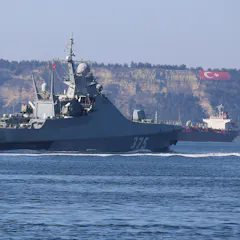
The Montreux Convention Regarding the Regime of the Straits gives Turkey control over the water route between the Black Sea and the Mediterranean.
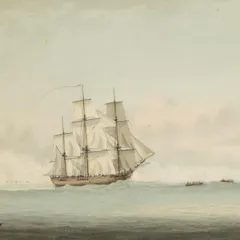
I have worked on many shipwreck investigations and have been involved in the discovery of a couple of shipwreck sites of this period. Here’s what’s usually involved in identifying a ship.
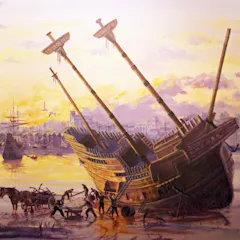
When a shipload of puritan colonisers set sail for the New World, maritime science and navigation were fairly unsophisticated.
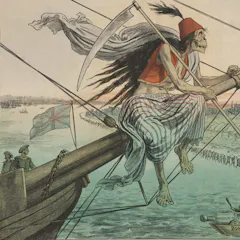
Some 1,500 years ago, the Plague of Justinian spread via ships from North Africa to Europe and Asia, killing up to 50 million people.
Top contributors
-

SEACAMS R&D Project Manager, Centre for Applied Marine Sciences, Bangor University
-
Professor, History, Dean of Arts, Australian Catholic University
-
Visiting Professor, Oxford Centre for Maritime Archaeology, University of Oxford
-
Director, Oxford Centre for Maritime Archaeology, University of Oxford
-
Senior Lecturer in Maritime Archaeology, Flinders University
-
Emeritus professor of English, University of South Wales
-
Head of Engineering, Faculty of Creative Industries, Architecture and Engineering, Southampton Solent University
-
Post-Doctoral Research Associate and Project Coordinator, Aberystwyth University
-
Dean of Jimmy and Rosalynn Carter School for Peace and Conflict Resolution, George Mason University
-
Professor of International Security, School of Global Affairs, Lancaster University
-
Distinguished Professor of Political Science, Utah State University
-
Lecturer in Communications and Media, University of Notre Dame Australia
-
Lecturer in Early Modern History, Cardiff University
-
Doctoral Researcher, Centre for Heritage and Museum Studies, Australian National University
-
Associate Professor in Social and Maritime History, University of Reading