
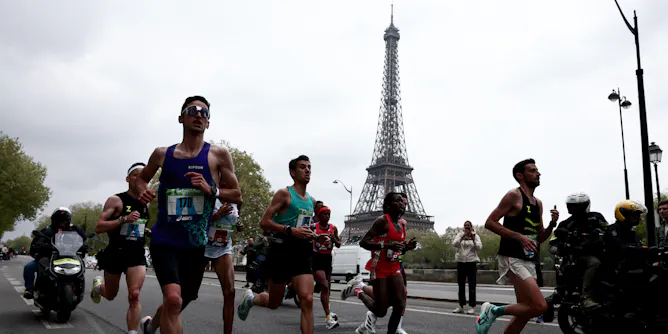
Amateur runners and professional athletes differ greatly in demand and support, yet both remain vulnerable to running-related injuries.
Articles on Marathons
Displaying all articles
Marathon running pushes the heart hard – but for most runners, the stress leaves no lasting damage.

Running doesn’t have to be all or nothing. Jeffing, the run-walk strategy developed in the 1970s, is helping people achieve their running goals.

The standard advice is to replace your runners after 500–800 kilometres. But science shows it could be more or less – here are the three signs to look out for.

The shoes have sparked controversy, but they seem to be here to stay.
To better measure their activity and become members of a sports community, many amateur athletes are adopting smartwatches and digital tools. But others are giving them up.
Running a marathon a day can have a major impact on your physical and mental health.
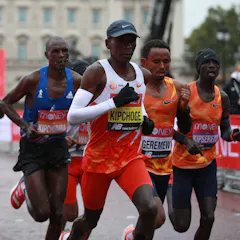
The right pacing is key.
All event organizers should be prepared for emergencies and have a communication plan.
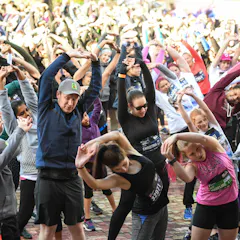
Australians love mass sporting events and raising money for charity. Under COVID, these activities have taken a major blow.
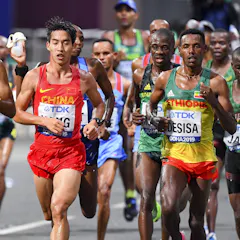
The marathons in next year’s Tokyo Olympics have been moved to Sapporo, because of concerns around Tokyo’s extreme heat. The move, though controversial, will reduce risks to the athletes’ health.
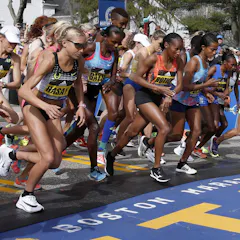
Women endurance runners are being celebrated in the advertising world yet the ads also create negative sentiments by focusing on ‘ideal’ running bodies - long, lean and masculine.

Taking more exercise is a New Year’s resolution to stick to. Exercise reduces risks of depression, cancers, heart disease, stroke and sudden death.
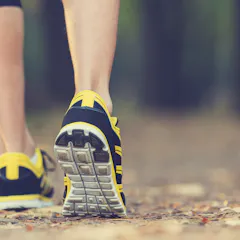
Running shoes with springs in the soles have been touted as the next big thing in shoe design. But they won’t turn a weekend warrior into an Olympian.

Why is work making us miserable?
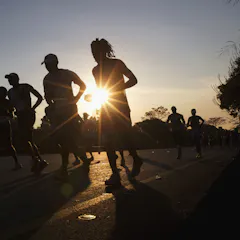
Runners have a greater risk of developing skin cancer because they are more likely have sun damage on their skin as a result of chronic sun exposure.
Top contributors
-

PhD Candidate, Exercise Physiology, Anglia Ruskin University
-
PhD Candidate, Sport and Exercise Science, Anglia Ruskin University
-
Professor of Exercise Physiology, Anglia Ruskin University
-
A/Prof in Exercise and Sport Science, The University of Queensland
-
Research Fellow, The University of Queensland
-
Lecturer in Business Operations and Management, University of Bradford
-
Professor, Educational sciences, Université du Québec à Chicoutimi (UQAC)
-
Senior Lecturer in Chemical Pathology, University of Westminster
-
Professor, Faculty of Kinesiology and Recreation Management, University of Manitoba
-
Professeur de physiologie humaine au département STAPS, chercheur au laboratoire Motricité, Interactions, Performance, Le Mans Université
-
Professor of Social Sciences & Public Health, Torrens University Australia
-
Maître de conférences en sociologie du sport, Université Claude Bernard Lyon 1
-
Senior Lecturer, Sociology, University of Tasmania
-
Senior Lecturer in Sport and Exercise Science, Western Sydney University
-
Professor, Department of Tourism and Marketing, Griffith Business School, Griffith University