

The Supreme Court’s public reputation is strong in part because people see it as less political than other government branches. What can text analysis tell us about how accurate that perception is?
Articles on Machine learning
Displaying 321 - 340 of 367 articles
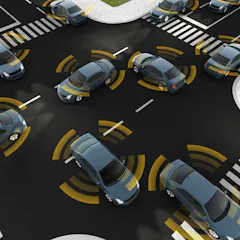
We should all learn from mistakes. Driverless cars must do the same when it comes to any accidents they’ve been involved in on our roads, no matter who was to blame.
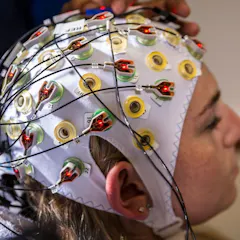
Brain-computer interfacing is a hot topic in the tech world, with Elon Musk’s announcement of his new Neuralink startup. Here, researchers separate what’s science from what’s currently still fiction.

Rather than replace humans, AI could actually boost our creativity.

A former animal trainer explains how we might usefully think about the limitations of artificial intelligence systems.
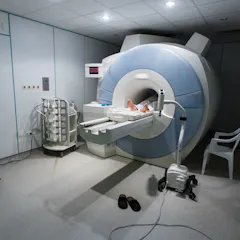
Talking therapy or antidepressants? An MRI scan could reveal what would work for you.

The technology needed to create a real Star Trek-like Holodeck is not that far out of reach.
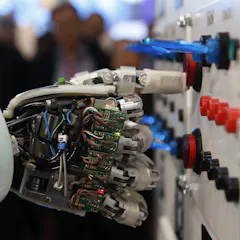
Artificial intelligence is surrounded by fear and mystery because very few understand its inner workings. But it’s actually rather intuitive and far simpler than it seems.

The value of machine learning is not only that it is more accurate than humans. It is also cheaper and more consistent in its diagnoses.
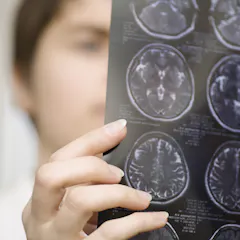
Artificial intelligence is already transforming a range of industries but it has still to make an impact on healthcare. So what’s the hold up?
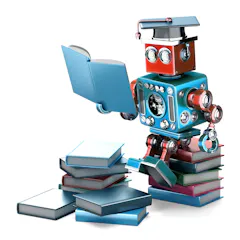
We need to do more than teach machines to learn. We need to overcome the barriers that separate machines from us – and us from them.
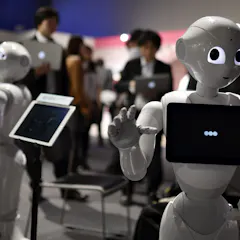
Business Briefing: why the future is workless
The Conversation18.1 MB (download)
We need to embrace a future where machines do our jobs for us and the government gives us a basic income as a safety net, author Tim Dunlop says.

New HBO series reimagines a group of life-like robots programmed with hope but marred in violence. They might be more human than we think.

Auto-translation software has been pretty frustrating to use. But news of vast improvements to Google’s translation software raises the prospect that websites will soon be browsable in any language.

Algorithms that learn from large data sets can pick up inherent social biases. That could perpetuate the biases, or even worsen them.

Computer-aided decision-making has been shown to help in clinical contexts. But winning over doctors and patients is a different matter.

The Australian census is just one way to gather data on people. We also freely give out information in other ways that can be used to study many things, and maybe even predict an election result.
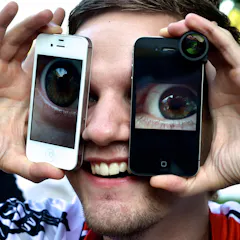
Artificial intelligence gives technology the ability to learn and adapt. But they can learn a lot more if they can share their learning with other smart devices.

Machine learning is being used to see if it’s possible to predict whether someone will commit a crime some time in the future. But does this risk condemning people for a crime they haven’t committed?

The technological goals are lofty. But fitting the new tech into the social and political landscape might pose the bigger challenge.
Top contributors
-

Senior Research Fellow in AI Accountability, Queensland University of Technology
-
Professor of Statistics and Professor of EECS, University of Michigan
-
Professor of Information Systems, Michigan State University
-
Professor in Robotics, Queensland University of Technology
-
Professor of Chemistry, Connecticut College
-
Professor of Artificial Intelligence, University of Bath
-
Research Assistant Professor of Industrial & Systems Engineering, University of Southern California
-
Professor of AI and Behavioral Data Science, University of Technology Sydney
-
Head of the Marketing Innovation and Distribution Program at EMLV, Pôle Léonard de Vinci
-
Professor of Computer Science, Queen Mary University of London
-
Professor of Marketing and Consumer Behaviour, Queensland University of Technology
-
Assistant Professor of Integrative Biology & Computer Science and Engineering, Michigan State University
-
Associate Professor of Law and Analytics, Georgia State University
-
Adjunct Senior Lecturer, Applied Ethics and CyberSecurity, Griffith University
-
Professor of AI, Research Group Leader, UNSW