
The history of human-machine collaboration suggests that AI will evolve into a “cognitive partner” to humankind rather than as all-powerful, all-knowing, labour replacing robots.
Articles on Machine learning
Displaying 301 - 320 of 367 articles

Does big data threaten how humans explore the natural world? We need to protect our impulses to observe, compare, play, discover and love, no matter what technological capabilities are available.

Predicting human behavior is big business. But science may never be able to do so with perfect certainty.

Google’s artificial intelligence has been taught to look for planets around other stars. It’s already making new discoveries that scientists have missed.
DeepMind’s machine learning collaboration with another NHS trust (this time, it’s applying the tech to breast cancer) kicks up more questions of trust.
For future machines to be as smart as we are, they’ll need to be able to learn like we do.
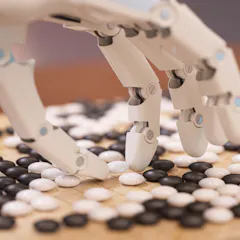
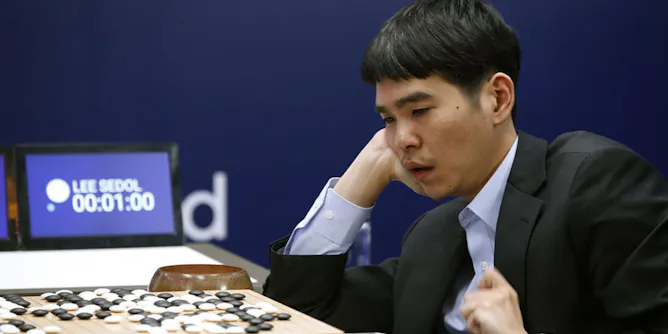
The new AlphaGo Zero artificial intelligence took just days to learn to play Go from scratch, with no human intervention. It even learned strategies never seen before in human play.

Blade Runner 2049 misses modern strides in artificial intelligence, which is now capable of performing creative work alongside humans.

Creating an ethical machine learning system is no simple task, but maths can help.
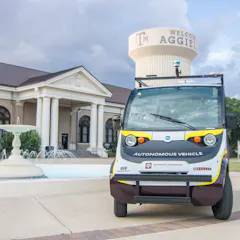
Combining machine learning, artificial intelligence and autonomous vehicles could revolutionize how people with disabilities get around their communities.
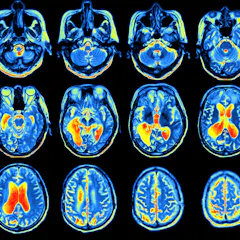
Computers today are fast and powerful but they still can’t think like a human when it comes to some tasks we find easy. That’s why tech companies are turning to neuroscience for help.

Digital games now know you so well they can predict your behaviour.

The future and the past, money, technology and politics documented and imagined in fact and fiction, in an economist’s recommended reading.

How the idea of a hyper-connected society could quickly go from utopia to dystopia and why neither scenario is likely to last.

Self-driving vehicles will need to communicate and work together.

Methods stemming from decades of research on disordered materials are used to describe algorithmic phase transitions, and to design new algorithms in machine-learning problems.

Nobody can understand the legal language in privacy policies. Can artificial intelligence digest the text and produce a human-readable explanation?
While there is currently interest interest in artificial intelligence, it offers limited achievements, such as the autonomous car. Tomorrow, machines will learn alone and forge solutions.

Important advances have been made in the areas of automatic language processing and emotional computing, and that could have big implications for business.

Text and video ‘mining’ could be used to automatically detect violent language and behaviour.
Top contributors
-

Senior Research Fellow in AI Accountability, Queensland University of Technology
-
Professor of Statistics and Professor of EECS, University of Michigan
-
Professor of Information Systems, Michigan State University
-
Professor in Robotics, Queensland University of Technology
-
Professor of Chemistry, Connecticut College
-
Professor of Artificial Intelligence, University of Bath
-
Research Assistant Professor of Industrial & Systems Engineering, University of Southern California
-
Professor of AI and Behavioral Data Science, University of Technology Sydney
-
Head of the Marketing Innovation and Distribution Program at EMLV, Pôle Léonard de Vinci
-
Professor of Computer Science, Queen Mary University of London
-
Professor of Marketing and Consumer Behaviour, Queensland University of Technology
-
Assistant Professor of Integrative Biology & Computer Science and Engineering, Michigan State University
-
Associate Professor of Law and Analytics, Georgia State University
-
Adjunct Senior Lecturer, Applied Ethics and CyberSecurity, Griffith University
-
Professor of AI, Research Group Leader, UNSW