
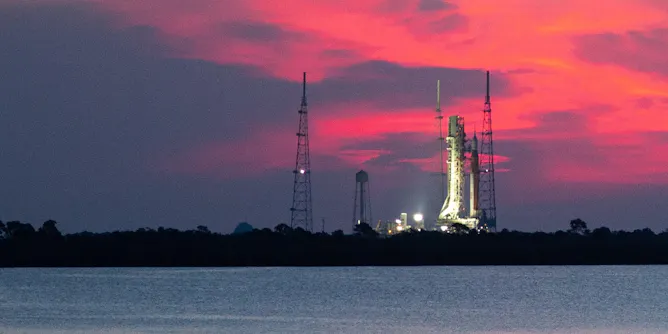
Lunar mining and geopolitical squabbles are set to play key roles in humanity’s return to the Moon.
Articles on Lunar exploration
Displaying 41 - 60 of 60 articles
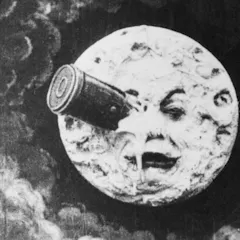
When a hunk of space junk smashes into the Moon in a few weeks, it will join a long history of lunar collisions.
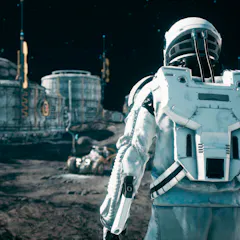
A space station on the Moon could be built out of lunar concrete.

A 10kg rover, due to land on the Moon by 2024, will be fitted with an advanced robotic arm design and manufactured in Australia.
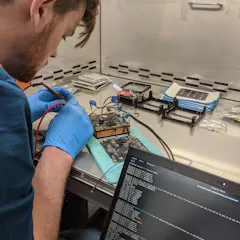
The Binar-1 mission is the first in a series that will hopefully culminate in a mission to the Moon, with satellites developed using know-how gained from designing tough instruments for the WA outback.

Companies and space agencies alike will have to compete for very few useful sites on the Moon.
Researchers have long suspected there’s water - or ice, to be precise - on the Moon. New research now confirms it, and suggests it lurks in sun-starved nooks and crannies called ‘cold traps’.
Two new studies significantly advance our understanding of water on the Moon and where to find it.
Some nations are concerned the Artemis Accords represent a US power grab.
From solar sail-powered spacecraft, to laser communications, to asteroid detection systems, there is no shortage of Australian ideas and expertise to help NASA explore the Moon and Mars.
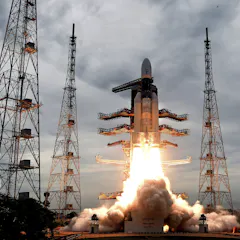
Are India and China engaged in a new space race? India’s increasingly ambitious space ventures, including its Chandrayaan-2 lunar mission, are evidence of the country’s interest in space exploration.
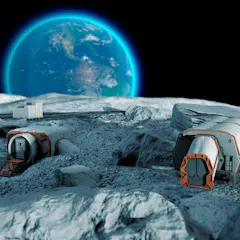
CC BY-ND49.4 MB (download)
In the fourth episode of our podcast series, we look at the practical, legal and ethical questions about going to set up base on the moon – and mining its resources.
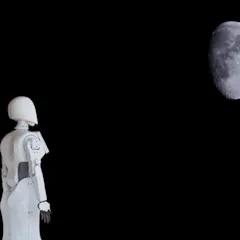
The future of lunar exploration and space travel will be possible only through advances in robotic design and implementation.
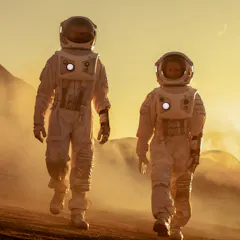
Americans need a new multi-decade Moonshot that will inspire several generations to shoot for the stars and pursue careers in space engineering and exploration.
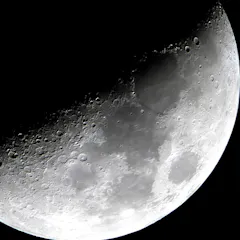
Tourism, mining and new settlements are possibilities for our Moon. But what rules and regulations should govern our behavior there?
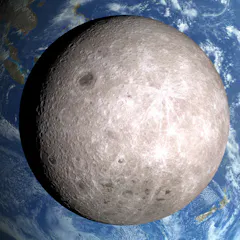
The far side of the Moon sees its share of sunlight – it’s dark only in the sense that it’s mysterious because it’s never visible from Earth. Here’s why.
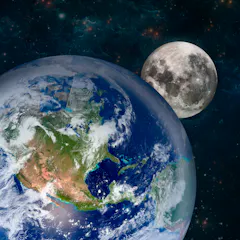
Compared to other governments’ support of lunar business and technology, Canada needs to be more strategic and active in lunar exploration or we will be left behind.
Great discoveries await.
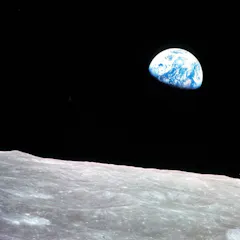
The moon might harbor bits of the Earth that blasted off our planet billions of years ago. These lunar time capsules could hold secrets about conditions here at home back when life was first emerging.
To date, all human economic activity has depended on the material and energy resources of a single planet; understandably, perhaps. It is conceivable though that future advances in space exploration could…
Top contributors
-

Senior Lecturer in Physics, Nottingham Trent University
-
UKSA Mars Science Fellow, Department of Physics, University of Oxford
-
Professor of History, University of Lancashire
-
Reader in Astrophysics, Keele University
-
Associate Professor of Health Promotion, Swinburne University of Technology
-
Postdoctoral research associate, University of Oxford
-
Professor of Strategy and Security Studies, Air University
-
Professor of Planetary Science and Astrobiology, Birkbeck, University of London; Honorary Associate Professor, UCL
-
Professor of Air and Space Law, University of Mississippi
-
Professor of Astrophysics, Macquarie University
-
Andrew Dempster is a Friend of The Conversation.
Director, Australian Centre for Space Engineering Research; Professor, School of Electrical Engineering and Telecommunications, UNSW
-
Professor of Robotics, Head of Centre for Robotics Research, King's College London
-
PhD Candidate, School of Earth and Planetary Sciences, Curtin University
-
Chief Executive Officer, Australasian Centre for Space Governance; Associate Expert, National Security College, Australian National University
-
Podcast host, The Conversation
