

A psychologist explains why the dark humor around Mangione’s case isn’t evidence of nihilism but of what happens when demands for moral seriousness stop feeling credible.
Articles on Luigi Mangione
Displaying all articles

A psychologist explains why dark political humor doesn’t prove young people are nihilistic, but rather reveals what happens when moral seriousness no longer feels credible.

Leveraging political hot topics can make crowdfunding campaigns more successful. A recent proposed ostrich cull garnered a lot of attention from high-profile people.

Three high-profile cases exemplify how courtroom fashion can affect perceptions of credibility.
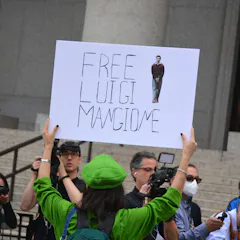
Our research found a link between burnout and support for extremist violence.

Memes don’t just mock or mythologize — they shape political feeling. From Trump and Musk to Mangione, viral images remake our sense of identity and justice.

Low-cost, untraceable firearms can now be made in suburban garages. Laws to deal with them are inconsistent and put community safety at risk.

Henry James’ ‘The Princess Casamassima’ tells a story of political radicalism in a time of economic inequality. But even James ran up against the limits of putting himself in the mind of a killer.
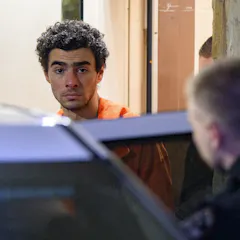
Comparisons between our current era and the societal rot of the Gilded Age abound. But it might be more useful to explore how Americans escaped the crises of the late-19th century.
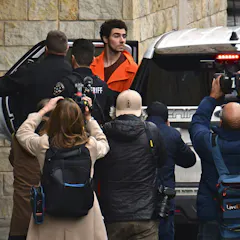
Why is the accused killer of UnitedHealthcare CEO Brian Thompson, being likened to a modern-day Robin Hood? The criminal justice system’s focus on street crime over corporate crime may explain it.

Ted Bundy, the Menendez brothers and Bonnie and Clyde are other criminals who captivated observers because of their intriguing personal stories – and the violent nature of their crimes.
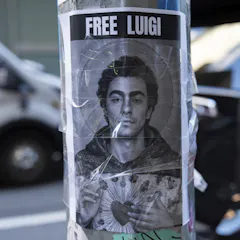
The slaying of UnitedHealthcare CEO Brian Thompson — and the support his accused killer has received on social media — is similar to previous U.S. manhunts, trials and criminal spectacles.
Top contributors
-

Assistant Professor of Experimental Psychology, Utah Valley University
-
Assistant Professor of Criminal Justice, Quinnipiac University
-
Associate Professor, Criminology, Ontario Tech University
-
Professor of American History, Stanford University
-
Research Fellow, Boston University
-
Associate Professor of Law, School of Law and Justice, University of Southern Queensland
-
Full Professor of Criminology & English Literature, Western University
-
Associate Professor of Social Psychology, University of Crete, University of Crete
-
Postdoctoral Fellow, Modern Literature and Culture Research Centre, Toronto Metropolitan University
-
Professor, Health Sciences, Simon Fraser University
-
Masters Student, Public Health, Simon Fraser University
-
Professor of Rhetoric and Ethics | Professeur titulaire en rhétorique et éthique, Carleton University