

A psychologist explains why the dark humor around Mangione’s case isn’t evidence of nihilism but of what happens when demands for moral seriousness stop feeling credible.
Articles on US health care
Displaying 1 - 20 of 69 articles

A psychologist explains why dark political humor doesn’t prove young people are nihilistic, but rather reveals what happens when moral seriousness no longer feels credible.

Three questions can help patients get a better handle on drug and health care options. But many Americans still hold back from asking providers for information.

The US health insurance system requires that people make strategic and often risky decisions about how much health insurance they can afford and how much coverage they might need.

Nurses are leaving the profession faster than they’re being replaced – in part due to the emotional and physical toll they endure from disrespectful patients or their loved ones.

About 1 in 4 doctors practicing in the US were born abroad.

High prescription drug costs are leaving many patients frustrated and unable to afford their medications.

Addressing the financial and personal aspects of aging proactively helps to ensure that you will receive the care you need – and want – as you age.

The current US health care system burdens doctors with heavy patient loads, more administrative work and additional off-hour demands. Doctor-patient interactions suffer as a result.

Those signs about surprise insurance charges are intended to keep patients informed – but new research points to a negative side effect.
Listen to disability surveillance expert Amy Gaeta on The Conversation Weekly podcast.

When that important link is broken, your health gets worse and the costs borne by the whole health care system for your treatment rise.

Research shows that decades of policy choices shaped today’s fragmented health care system – which is precisely why reform is so difficult.

Medicare Advantage − the private option that costs taxpayers extra and requires prior approval − is the default for some state agencies and corporations.

A health insurance alliance proved to lower costs for individuals and employers.

Two health law scholars explain how the public health insurance program for low-income people and people with disabilities works, and why cutting its cost would be hard to pull off.

Thousands of American pharmacies have shuttered over the past five years.
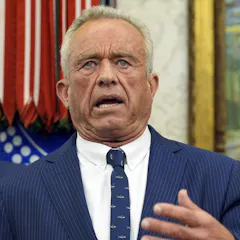
Robert F. Kennedy Jr has been confirmed as the US health secretary. Here’s why this is bad news for America and the world.

At a moment of soul-searching about health care in the US, an expert on global health puts the American system in perspective.

Why is the accused killer of UnitedHealthcare CEO Brian Thompson, being likened to a modern-day Robin Hood? The criminal justice system’s focus on street crime over corporate crime may explain it.
Top contributors
-

Associate Professor of Public Health, The Ohio State University
-
Research Scientist of Health Policy and Economics, University of Southern California
-
Research Scientist and Director of Research Training in Health Policy and Economics, University of Southern California
-
Assistant Professor of Marketing, Indiana University
-
Directeur de recherche CNRS au CEE, Sciences Po
-
Associate Professor of Marketing, Texas Tech University
-
Assistant Professor of Experimental Psychology, Utah Valley University
-
Associate Professor of Surgery and Public Policy, University of Virginia
-
Eli Broad Endowed Professor, Department of Supply Chain Management, Michigan State University
-
Associate Professor & Director of Global Programs, Indiana University
-
Assistant Professor of Public Health, University of Iowa
-
Professor of Economics, University of Minnesota Duluth
-
Clinical Associate, Tufts University
-
Professor of Law, Director of UNLV Workplace Law Program, University of Nevada, Las Vegas
-
Associate Professor of Public Policy, Director of MSc in Public Policy, UCL