

More than 15,000 families in Michigan have received cash support from Rx Kids. Participants say the program helps them pay bills and maintain their health.
Articles on Low-income
Displaying 1 - 20 of 44 articles

Deed fraud is a persistent problem in the Detroit area. Only a fraction of victims get justice.
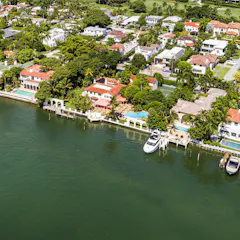
Subsidized insurance makes waterfront property seem safer than it is for wealthier buyers, while many low-income homeowners face repeat disasters with no help.

Cutting the state gas tax, as some have suggested, could lead to budget shortfalls down the line.

Opponents of guaranteed-income programs often argue that recipients will simply take the money and be less motivated to do any work whatsoever.
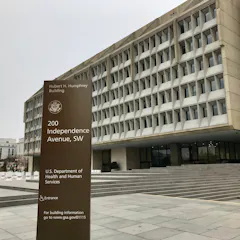
Cuts to Medicare and Medicaid may harm vulnerable populations that depend on government-funded care. Proponents of such cuts often frame them in a different way.
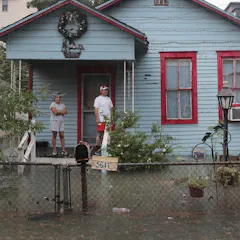
Low-income neighborhoods have the hardest time recovering from disasters without help. FEMA used to require cities to pay attention to them, but that’s changing.

The problem of high energy prices and rising numbers of people unable to afford them isn’t lost on the Trump administration.
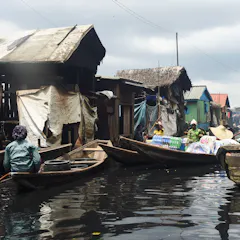
Classifying people as either ‘poor’ or ‘not poor’ based on income oversimplifies poverty.
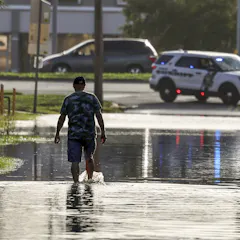
Researchers tracked power outages after 8 major storms to see how wealth corresponded to recovery time.
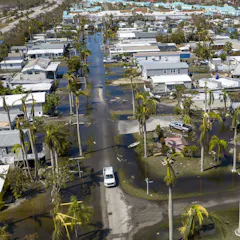
Fast population growth has left more people in flood-prone areas of Gulf Coast communities, including Houston and New Orleans. Often, those residents at most risk are the most socially vulnerable.

One in 4 American households is at risk of losing power because of the high cost of energy. Over 30% of those disconnections are in summer, when heat gets dangerous.

A new study finds that hiring practices, not a bachelor’s degree, may be the ‘great equalizer’ of opportunity for some soon-to-be grads.
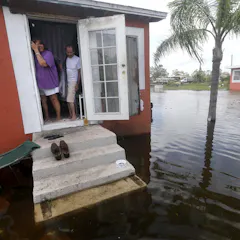
Researchers tracked power outages after 8 major storms to see how wealth corresponded to recovery time.
Massachusetts is establishing the first US green bank dedicated to sustainable affordable housing. Three experts in climate finance explain why better housing can help rein in global warming.
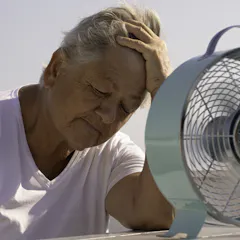
One in 4 American households are at risk of losing power because of the high cost of energy. Over 30% of those disconnections are in summer, when heat gets dangerous.
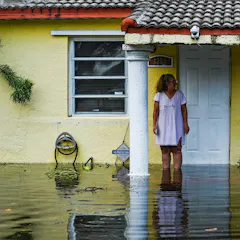
Nationally, 57% of the population says they’re not prepared for a flood disaster. Surveys and disasters show that those most at risk are least prepared.
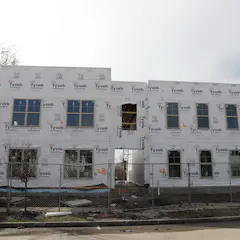
The concentration of subsidized low-income housing developments isn’t as bad as residents fear: It actually increases property values – at a faster rate than other neighborhoods.
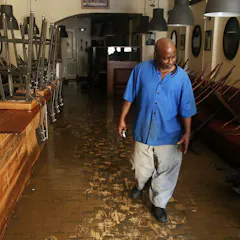
Research shows that coastal businesses’ hurricane recovery depends on workers being able to return.
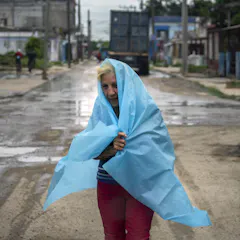
For some people, the risks associated with leaving can seem more dangerous than the storm.
Top contributors
-

Professor of Landscape Architecture and Urban Planning, Texas A&M University
-
Associate Teaching Professor of Business and Economics, Georgetown University
-
Lynton K. Caldwell Professor of Public Affairs, Indiana University
-
Associate Professor of Landscape Architecture and Urban Planning, Texas A&M University
-
Associate Professor of Engineering, Georgia Institute of Technology
-
Presidential Distinguished Professor of Energy Policy and City Planning, University of Pennsylvania
-
Associate Professor of Economics, Carleton University
-
Associate Professor in Invertebrate Biology, University of Reading
-
Assistant Professor of Economics, The University of Texas at Austin
-
Assistant Professor of Public Health Nutrition, University of Vermont
-
Assistant Professor of Social Work, The Ohio State University
-
Associate Professor of Sociology, Duke University
-
Venable Professor of Law, University of Baltimore
-
Adjunct Professor of Pediatrics and Health Policy and Management, University of California, Los Angeles
-
Professor & Greenbaum/Ferguson/NJAR Endowed Chair in Real Estate Policy, Monmouth University