
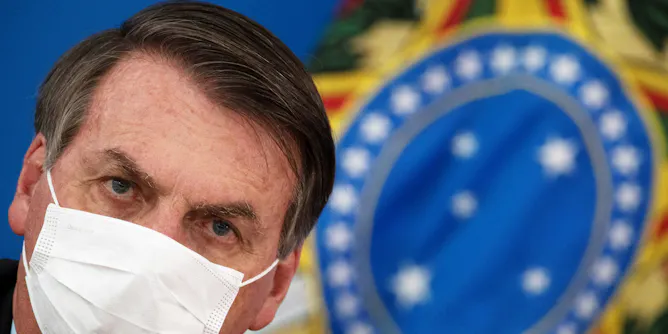
He once called it a ‘little flu’ – now Brazil’s president, Jair Bolsonaro, has tested positive for COVID-19.
Articles on Latin American politics
Displaying 21 - 40 of 110 articles
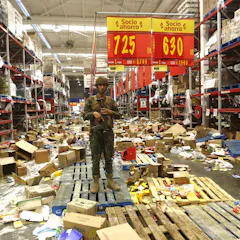
Latin American history shows that sending out troops to quell unrest is a perilous move even in strong democracies. Usually, protesters die. Sometimes, the end result is authoritarianism rule.
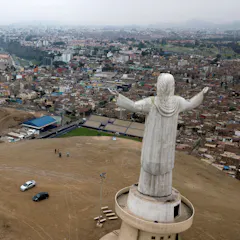
After a bribery scandal that took down four presidents and led Congress to dissolve, some Peruvians are putting their faith in an austere religion called the Israelites of the New Universal Pact.
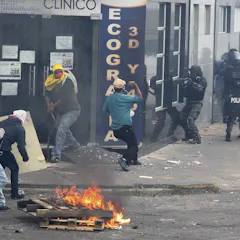
All those democracy protests in South America may be having some unintended consequences.

Evo Morales is at least the ninth Bolivian president to by forced out of office by a mass uprising. But even in exile he remains by far the most popular politician in the country.

As protests raged across Chile last month, President Piñera repeatedly addressed the nation. Researchers fed his speeches into an AI system to assess the emotions behind his words.
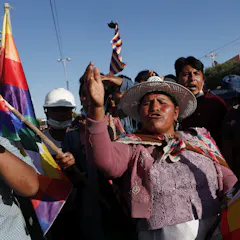
Indigenous people, symbols and religious practices filled the halls of power in Bolivia during Evo Morales’ 14-year tenure. Now a new conservative Christian leader seems to be erasing that legacy.
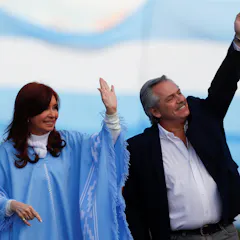
Argentina has voted for change. Alberto Fernández, a 60-year-old lawyer, defeated President Mauricio Macri with a campaign emphasizing economic recovery, social inclusion and national unity.

Progressives are leading in the presidential elections of Argentina, Uruguay and Bolivia, bucking the region’s recent rightward trend. But there are lessons in the failures of leftists past.
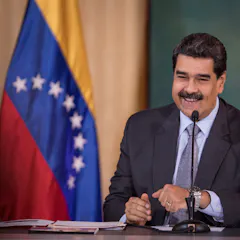
When the Rio Treaty was signed in 1947, an opportunity was missed to promote democracy in Latin America.
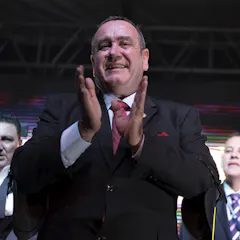
Conservative Alejandro Giammattei beat former first lady Sandra Torres with 60% of the vote. But turnout was the lowest in Guatemala’s modern history, in apparent protest of both candidates.
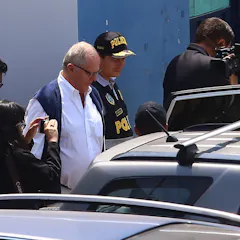
Four former presidents have been accused of corruption after Operation Carwash.
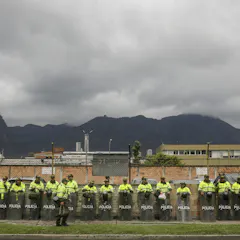
Colombia’s new president opposes the 2016 peace deal with the FARC guerrillas. As trust between the government and militants erodes, at least 1,700 former insurgents have returned to armed struggle.
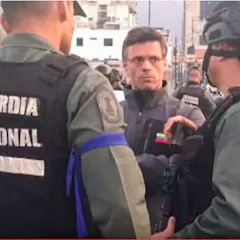
Venezuela is on the cusp of a coup, and a familiar face has emerged from house arrest to lead the charge against President Nicolás Maduro.
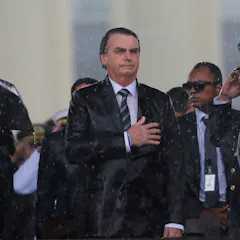
Bolsonaro was elected to bring Brazil a ‘better future.’ Instead, his first months in office have been marked by mismanagement, legislative gridlock and protest.
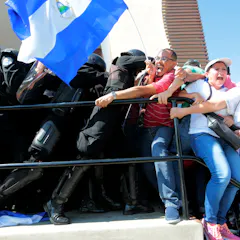
A massive protest movement exploded across Nicaragua in April 2018, threatening to topple the country’s authoritarian regime. What happened to Central America’s ‘tropical spring?’
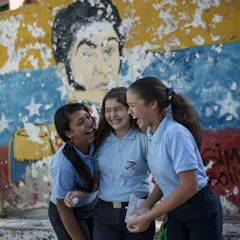
The rise of black comedy to explain Venezuela’s chaos recalls an old saying in the crisis-stricken South American country: ‘Laugh so you don’t cry.’
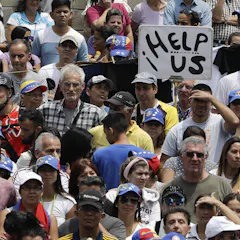
As rival factions vie for control over Venezuela, many of the country’s 31 million people are suffering prolonged power outages, food and water shortages, and limited access to medicine.
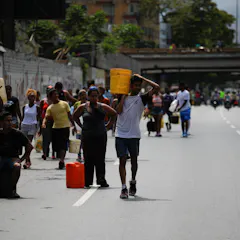
Citing security concerns, the US is evacuating its embassy in Caracas, where President Maduro blames the US for a calamitous power outage. Venezuela’s relations with Brazil are eroding quickly, too.
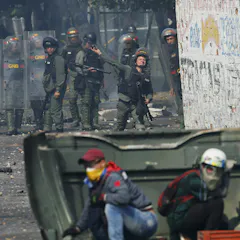
The Trump administration says President Maduro’s ‘days are numbered’ after Venezuelan security forces killed four protesters. But any US-led operation to oust him is likely to be extremely unpopular.
Top contributors
-

Honorary Research Associate, Department of Political and International Studies, Rhodes University
-
Senior Lecturer in Human Rights, Constitutional Law and Legal Theory, University of Wollongong
-
Professor of Management and Organization, University of Southern California
-
Professor, Universidade Federal da Bahia (UFBA)
-
Postdoctoral Researcher, Latin American Political Processes, Universidad Nacional de la Plata
-
Associate Professor of Politics, Occidental College
-
Executive Director of the Stone Center for Latin American Studies, Tulane University; King's College London
-
Associate Professor of Sociology, Fort Lewis College
-
Professor, African, African American, and Diaspora Studies, University of North Carolina at Chapel Hill
-
Research Associate, Department of Development Studies, SOAS, University of London
-
Professor of Sociology, Tulane University
-
Professor of Global Politics, University of Southampton
-
Richard von Weizsäcker Fellow na Bosch Academy e Co-fundador, Instituto Igarapé; Princeton University
-
Associate Professor, Universidad Central de Venezuela
-
Professor of Government, American University School of Public Affairs