
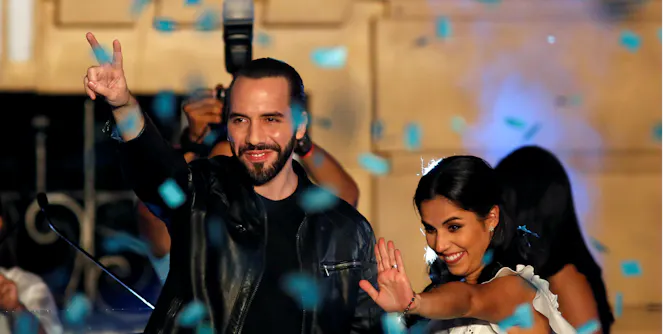
Thirty-seven-year-old Nayib Bukele is the first modern president who doesn’t represent either of El Salvador’s two mainstream parties. Can he fix what ails this troubled Central American country?
Articles on Latin American politics
Displaying 41 - 60 of 110 articles
Assertive politics is not enough.
Mexico’s new president has reduced his own salary and demanded that all federal workers
– including lawmakers and judges – take a massive pay cut, too. That may be illegal.
At least a dozen countries are supporting the Venezuelan opposition lawmaker Juan Guaidó, who has declared himself Venezuela’s legitimate leader while President Maduro rejects calls to resign.
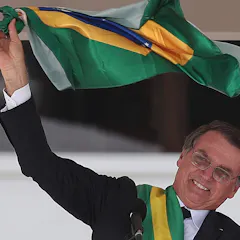
The Brazilian president used WhatsApp and other social media to smear his opponents and sow division in the electorate.
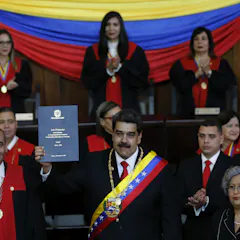
Maduro, who was sworn in for his second term on Jan. 10, has rigged elections, jailed rivals and plunged Venezuela into crisis. But Trump’s proposed ‘military option’ to remove him remains unpopular.
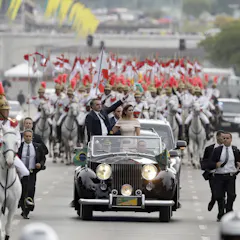
Brazil’s new president – often called the ‘Trump of the tropics’ for his inflammatory, right-wing rhetoric – won over poorer voters by stoking fear and resentment. Can he make them happy?
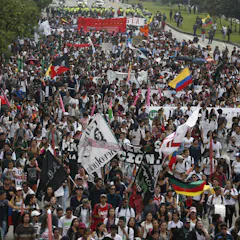
Strikes and rallies have gripped Colombia for months. That’s bad news for its new government but a sign of progress in a country that had little tolerance for dissent during its 52-year civil war.
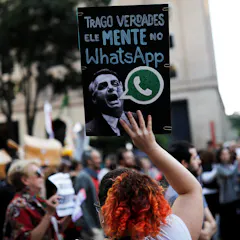
Facebook retired its ‘Move fast and break things’ slogan – perhaps because, as new research from Brazil confirms, democracy is among the things left broken by online misinformation and fake news.
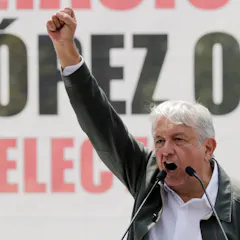
Mexicans want leftist Andrés Manuel López Obrador to transform the country. But the months leading up to his inauguration sent worrying signs about how he he will use the massive power of his office.
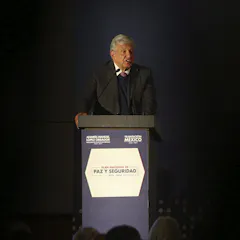
The success or failure of Mexico’s new president will have an impact on politics in the rest of Latin America as right-wing forces reclaim power. Is a brighter future for the region possible?
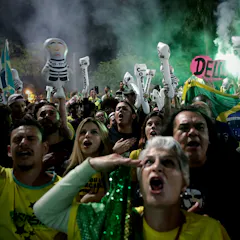
Left-wing governments failed to articulate a convincing alternative to neoliberal democracy – and the backlash has begun.
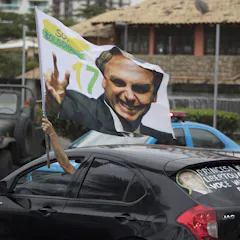
Bolsonaro promised angry Brazilians he would transform their crisis-stricken country. But he didn’t say how. Five Brazil experts examine his policies on crime, the economy, women, the Amazon and more.
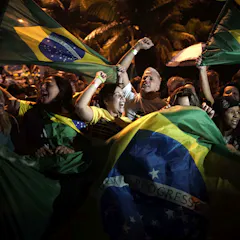
Jair Bolsonaro, a right-wing congressman and former army captain, is Brazil’s next president, with 56 percent of votes. Critics see a threat to democracy in his scathing attacks on Brazilian society.
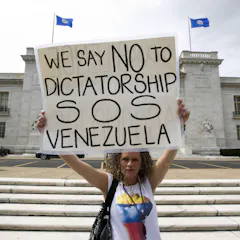
Trump has called Venezuela a ‘human tragedy’ and threatened invasion while quietly deporting and denying asylum to Venezuelan refugees. His anti-socialist rhetoric may make for good midterm politics.
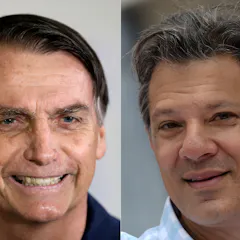
After four years of economic crisis and corruption, Brazilians have never trusted their government less. They showed their frustration Sunday, voting for two ideologically opposed candidates.
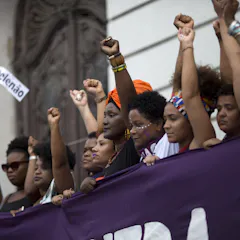
In Brazil, a record 1,237 black women will stand for office in Sunday’s general election. As in the US, their campaigns reflect deep personal concern about rising racism and sexism in politics.
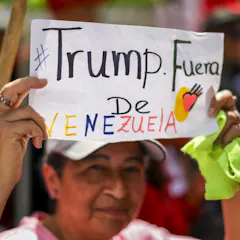
The US has meddled in Latin America so much that its influence there is viewed there with deep suspicion.

A dejected public and a crowded, unpopular field of candidates make for an unhappy election.
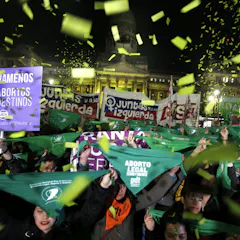
Abortion support is high in Argentina, even among Catholics. That puts the church, which opposes an abortion bill up for vote on August 8, in the awkward position of fighting a law its members demand.
Top contributors
-

Honorary Research Associate, Department of Political and International Studies, Rhodes University
-
Senior Lecturer in Human Rights, Constitutional Law and Legal Theory, University of Wollongong
-
Professor of Management and Organization, University of Southern California
-
Professor, Universidade Federal da Bahia (UFBA)
-
Postdoctoral Researcher, Latin American Political Processes, Universidad Nacional de la Plata
-
Associate Professor of Politics, Occidental College
-
Executive Director of the Stone Center for Latin American Studies, Tulane University; King's College London
-
Associate Professor of Sociology, Fort Lewis College
-
Professor, African, African American, and Diaspora Studies, University of North Carolina at Chapel Hill
-
Research Associate, Department of Development Studies, SOAS, University of London
-
Professor of Sociology, Tulane University
-
Professor of Global Politics, University of Southampton
-
Richard von Weizsäcker Fellow na Bosch Academy e Co-fundador, Instituto Igarapé; Princeton University
-
Associate Professor, Universidad Central de Venezuela
-
Professor of Government, American University School of Public Affairs