

In a case study, parents responded positively to their children being taught science in two languages.
Articles on Mother tongue
Displaying all articles

Home languages can help children learn English and become stronger readers.

The way African language courses are offered at South African universities keeps social divisions in place.
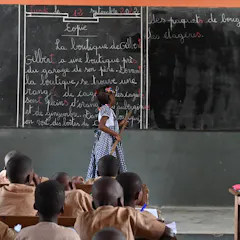
Bilingual education can improve learning outcomes but it’s important to consider local context.
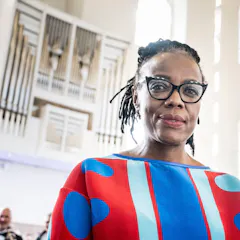
It reads powerfully in the Shona language, and is one of two of her books newly translated into it.

Students’ fears were not unfounded. I recorded many instances of laughter punctuating student responses in class.

Amid all the stresses of lockdowns, our research found there was some good news: children had the chance to better develop their home language.

Canada’s population is more diverse than ever, with many different languages represented. Government policy must reflect that diversity and offer meaningful support to minority languages.

Investing in bilingual education can reduce grade repetition, drop-out rates, and improve literacy outcomes.

There is something beautiful about African languages carrying science, fictionalised of course, into imagined futures.

Findings show that income transfer programmes must operate in deliberate coordination with ancillary social service institutions to deliver the maximum benefits for women’s empowerment.

Researchers have been calling for the extension of mother-tongue instruction beyond the current status quo in South African schools, but parents seem to prefer an even earlier transition to English.

The fact that teachers in Uganda’s rural schools weren’t trained in the local language means they can’t teach children in their mother tongue and this leads to poor literacy acquisition.

On International Mother Language Day, Canadians can celebrate multilingual heritage by recognizing flexible uses of languages.
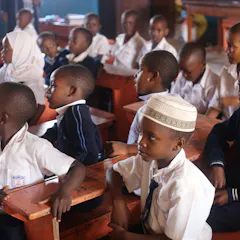
Uganda’s English language policy is at odds with the situation on the ground in the country’s rural schools.

South African parents want their children be taught in English despite the fact that research shows that academic progress is hindered if a child is taught in a language they aren’t proficient in.

The ability of multilingual children to learn and advance academically from pre-primary has little to do with their English proficiency.
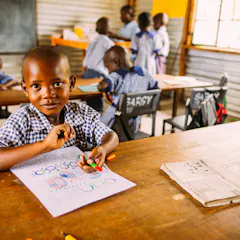
Research shows that mother tongue teaching is the most ideal tool for early child education.

Children need more than school resources and qualified teachers to attain academic success.
Top contributors
-

PhD student, Developmental Psychology and Education, University of Toronto
-
Associate Professor, Applied Psychology and Human Development, University of Toronto
-
Lecturer, Department of African Languages, Makerere University
-
Education researcher, Stellenbosch University
-
Assistant Professor, Anthropology, University of British Columbia
-
Researcher, Human Sciences Research Council
-
Lecturer, University of Strathclyde
-
Associate Professor, University of Johannesburg
-
Professor of Social Development Studies, University of Johannesburg
-
Associate Professor of Law and former Director of the Human Rights Research and Education Centre (2014-2025), L’Université d’Ottawa/University of Ottawa
-
Associate Professor of Literatures in English, Cornell University
-
Post-doctoral fellow. Rhodes University, Rhodes University
-
Assistant Professor, Harvard University
-
Lecturer, Makerere University
-
Chief Research Specialist., Human Sciences Research Council