

There is very little evidence that overall labour market insecurity is getting any worse. Trends are stable for rates of casualisation, churn, self-employment and multiple job holders.
Articles on Labour market
Displaying 81 - 100 of 149 articles

A two-year study finds dissatisfaction with current arrangements, but also identifies small changes that can make a big difference in helping to find suitable jobs for older workers.

A long read on the decimation of British jobcentres – and why it puts the rollout of Universal Credit at risk.

New data shows another drop in the number of EU citizens coming to the UK since Brexit.

The government claims university degrees are failing businesses, but analysis of the latest graduate outcome and employer satisfaction surveys tells us the problem is with underemployment.

The idea that automation and robotics will lead to huge job losses is wrong. Big business likes the sweat of cheap labour too much.

Unemployment levels are low, but many people are being pushed into inadequately paid jobs by a punitive benefit system and lack of choice.

New research shows just how key grandparents are to childcare.

Workers are getting ABNs and being employed as contractors responsible for their own tax payments. This is undercutting conditions and eroding the most important part of the nation’s tax base.

Supply chains are much clearer than they used to be but the same can’t be said about labour.

Data show that people don’t feel more insecure in their jobs now. In fact, that feeling is decreasing.

Until you reach 25, employers can pay you less than your older colleagues.
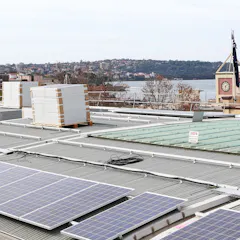
Estimates released by the Australian Bureau of Statistics suggest that the number of direct full-time equivalent jobs in renewable energy activities has continued to fall from its 2011-12 peak.
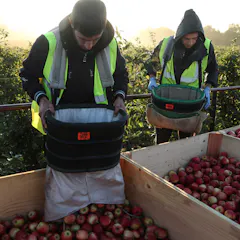
Economic arguments against immigration often rest on simplistic arguments of supply and demand. The data show immigration has a negligible effect on wages, employment or hours worked.

Sweden is not suffering a crime wave because of immigrants, but there are real obstacles to overcome in getting refugees into employement.

The new NSW premier is right to identify housing affordability as a priority for the people and economy of Sydney. It’s not just housing supply that’s the problem – action is needed on many fronts.

Ahead of the Mid Year Economic and Fiscal Outlook, minister for defence industries Christopher Pyne said a lot of jobs were created in 2016 and Australia has the highest growth rate in the G7. Is that true?

Analysis shows China’s GDP per capita would fall by 21% in 2050 under the new two-child policy.

Despite media reports that single parents might find relying on welfare payments more appealing than working, analysis shows they are better off working and more than half in Australia are.

Past attempts to help Latrobe Valley workers weather economic changes haven’t made a difference, so the closure of Hazelwood presents a challenge.
Top contributors
-

Professor of Economics, The University of Melbourne
-
Professor of Economics, University of Canberra
-
Professorial Fellow and Co-Director, HILDA Survey, Melbourne Institute of Applied Economic and Social Research, The University of Melbourne
-
Scientia Professor of Economics, UNSW
-
Deputy Program Director, Migration and Labour Markets, Grattan Institute
-
Program Director, Housing and Economic Security, Grattan Institute
-
Associate Professor, Bankwest Curtin Economics Centre, Curtin University
-
Professor of Sociology and Founding Director of The Future of Work Lab, Podcast at MissPerceived, The University of Melbourne
-
Research Associate, School of Social Sciences, Monash University
-
Research associate, Grattan Institute
-
Associate Professor, Department of Political Economy, University of Sydney
-
Research Fellow, Institute for Social and Economic Research, University of Essex
-
Associate Professor UTS Centre for Business and Social Innovation, University of Technology Sydney
-
Laurie Carmichael Distinguished Research Fellow at the Centre for Future Work, Melbourne; and Professor Emeritus, Griffith Business School, Griffith University
-
Director, Bankwest Curtin Economics Centre (BCEC) and John Curtin Distinguished Professor at Curtin Business School, Curtin University